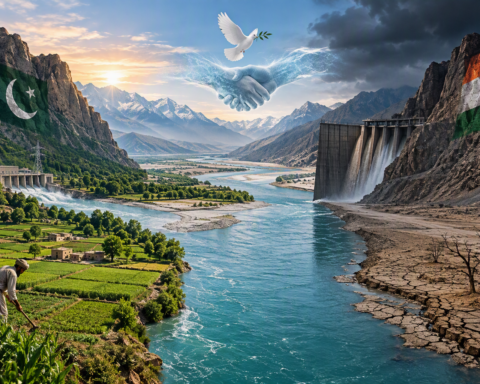
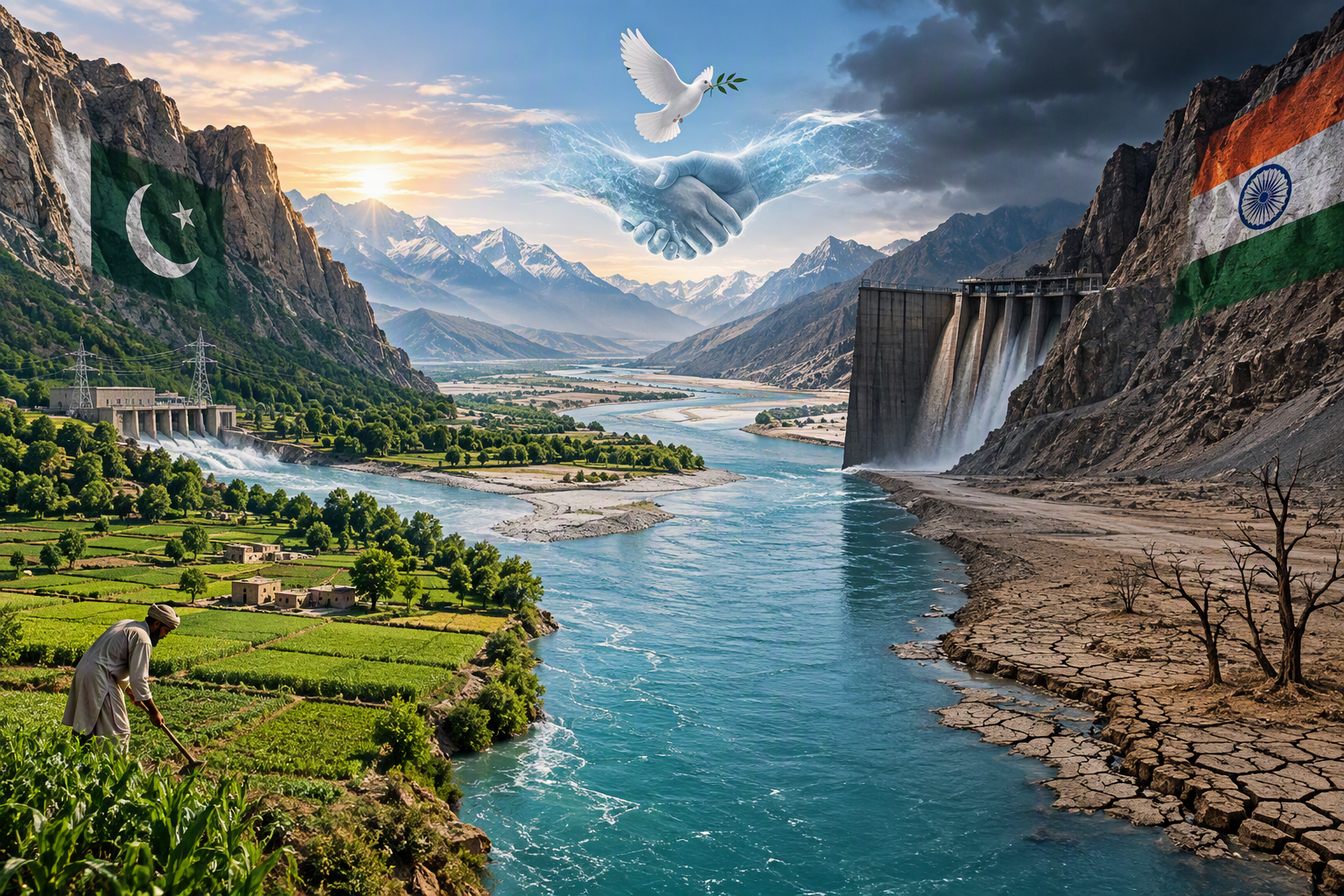

There is an old saying that civilizations are born beside rivers. What is less often acknowledged is that they can also perish there, not because the water runs out, but because the trust does.
For sixty five years, the Indus Waters Treaty held. It held through three wars. It held through Kargil, through Mumbai, through countless diplomatic freezes where ambassadors were recalled and trade routes slammed shut. The IWT endured through wars, diplomatic freezes, and border conflicts, and that endurance was itself the point. It demonstrated that two nuclear armed neighbors, however adversarial, could maintain at least one channel of functional cooperation. That channel has now been deliberately severed.
On April 23, 2025, India temporarily suspended the Indus Waters Treaty with Pakistan, citing national security concerns following the Pahalgam attack. The move was packaged as a security response. But what it actually did was transform one of the world’s most durable transboundary agreements into collateral damage in a bilateral confrontation, and in doing so, it opened a door that will be very difficult to close.
The consequences landed immediately and practically. With the suspension, India put an immediate halt to all facets of the treaty, including data sharing, joint oversight and any form of dialogue or cooperation, leaving Pakistan without any advance information on river flows, flood forecasts, or drought risks. For a country already teetering on the edge of water insecurity, this was not an abstract diplomatic gesture. Pakistan faces grave consequences as a downstream country heavily reliant on the Indus Basin, where declining groundwater and erratic surface flows have already been pushing the country toward a state of absolute water scarcity. About 27% of its electricity comes from hydropower sourced from IWT rivers, and 80% of food production relies on Indus irrigation. Halting hydrological data sharing in the lead up to a severe monsoon season is not leverage, it is recklessness.
The legal picture is equally stark. The term “suspension” does not appear in the treaty’s text. Article XII stipulates that the treaty can only be modified or terminated by mutual agreement between the two governments. India did not seek mutual agreement. It acted alone, and in doing so it didn’t merely stretch the treaty, it broke with one of the foundational principles of international law: that binding commitments cannot be discarded unilaterally when they become inconvenient.
The international legal response has been unambiguous. In a unanimous decision issued on August 31, 2026, a five member court at The Hague found that the treaty “remains fully in force” and that India “must observe its obligations” under it, including those governing the design and operation of hydropower projects on rivers that flow into Pakistan. The court was not ambiguous. It was not split. It was unanimous. The Hague Court of Arbitration ruled that the Indus Waters Treaty remains in force and that India could not unilaterally place the treaty in “abeyance” under the treaty framework or applicable international law.
India’s response? New Delhi categorically rejected the award, calling the body “illegally constituted” and asserting that its decisions would have no effect on India’s sovereign actions or hydroelectric projects. India did not participate in the hearings.
It did not contest the proceedings. It simply dismissed the verdict, and continued its suspension.
This is where the stakes expand beyond the subcontinent. When a major democracy rejects an international tribunal’s jurisdiction in a case it chose not to contest, and continues its disputed conduct anyway, it sends a message that carries far beyond South Asia. The rules based international order is not sustained by the rules themselves, it is sustained by the willingness of powerful states to observe them even when observance is costly. Once that willingness erodes, smaller states everywhere are left with nothing but the mercy of their more powerful neighbors.
The practical dangers are compounding. The suspension has stripped away the early warning infrastructure that both countries depended upon for disaster management. The halt in Indian data sharing is critical for flood forecasting, and disrupts irrigation planning and disaster preparedness within Pakistan, especially given that the 2025 monsoons were predicted to be severe. Every season that passes without restored cooperation is a season in which floods go unwarned and droughts go uncoordinated. The human cost of that gap is not hypothetical.
There is also a longer strategic logic that deserves naming plainly: upstream control over shared rivers is, in the modern world, a form of power. When that power is exercised outside any treaty framework, it becomes coercive. The result is a treaty that is legally in force but increasingly dysfunctional in practice. A dysfunctional treaty is, in many ways, worse than no treaty at all, because it creates the illusion of a framework while providing none of the stability that framework was designed to guarantee.
With mounting water pressures on both sides, there is no alternative to Indus water cooperation, it requires both sides to re engage and update the treaty or create a new framework. That is the hard truth that political rhetoric on both sides tends to avoid. Water does not respect ceasefire lines. The Chenab and the Jhelum do not pause for diplomatic standoffs. The rivers will keep flowing, the question is only whether they flow as a shared resource or as a contested weapon.
The Indus Waters Treaty was never simply a water agreement.
It was proof that even hostile states can build durable institutions when the stakes are high enough. Dismantling that proof does not just harm Pakistan, it impoverishes the entire architecture of peaceful dispute resolution that the international community has spent decades constructing. Restoring full treaty implementation, returning to hydrological data sharing, and respecting the Hague ruling’s findings are not gestures of weakness. They are the minimum conditions for a region that cannot afford another crisis ignited by something as fundamental as water.
The rivers are still there. The question is whether the political will to share them can be rebuilt before the cost of not doing so becomes irreversible.