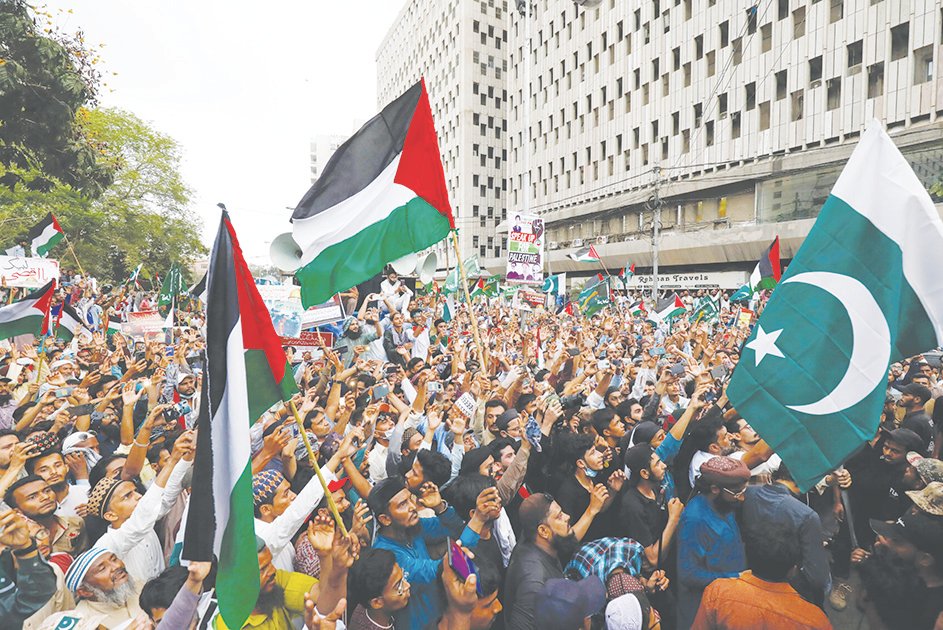
Pakistan’s position on Palestine has always been rooted in principle, law and moral clarity. Unlike positions shaped by temporary diplomatic convenience, Pakistan’s support for the Palestinian people reflects a consistent foreign policy tradition that places justice, self-determination and international legality at the centre of global peace. From the earliest years of its independence, Pakistan has viewed the Palestine question not merely as a regional dispute but as an unresolved issue of occupation, dispossession and denied nationhood. Its support for an independent, sovereign and viable Palestinian state based on the pre-1967 borders, with Al Quds Al Sharif as its capital, remains one of the clearest expressions of this principled approach.
This position is not symbolic rhetoric. It is anchored in the resolutions of the United Nations Security Council, international humanitarian law and the widely accepted principle that no durable peace can be built on occupation or injustice. Pakistan has repeatedly argued that peace in the Middle East will remain fragile as long as the Palestinian people are denied their legitimate rights. The expansion of illegal settlements, repeated violations of humanitarian norms and the continued denial of Palestinian statehood have only strengthened Pakistan’s conviction that the international community must move beyond statements of concern and work toward a just and enforceable settlement.
One of the most significant features of Pakistan’s Palestine policy is its continuity. Successive governments, despite domestic political differences, have maintained the same broad national consensus on Palestine. This consistency gives Pakistan’s position unusual credibility. In a world where foreign policy is often shaped by shifting alliances and strategic calculations, Pakistan’s stance has remained firm.
It has continued to support Palestinian self-determination in the United Nations, the Organization of Islamic Cooperation and other international forums, while calling for accountability, restraint and respect for international law
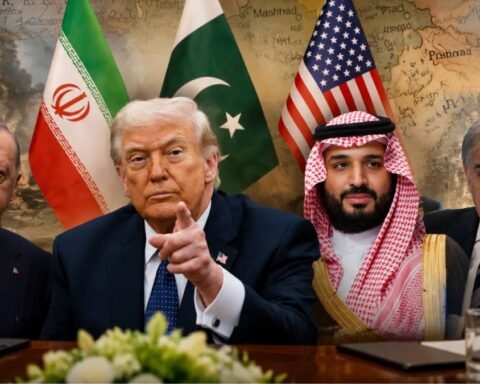
The current regional tensions involving the United States, Israel and Iran have further underlined the importance of balanced and principled diplomacy. Pakistan’s response to the crisis has demonstrated maturity and restraint. Rather than becoming part of bloc politics or encouraging confrontation, Pakistan has emphasized de-escalation, dialogue and peaceful settlement of disputes. This approach is important because the Middle East does not need further militarization or reckless escalation. It needs responsible voices capable of reducing tensions while upholding justice. Pakistan’s position shows that a state can oppose occupation and injustice while still advocating peace, restraint and diplomacy.
This balanced conduct has strengthened Pakistan’s image as a responsible regional actor. At a time when many countries are either silent, divided or constrained by geopolitical pressures, Pakistan has attempted to maintain a clear moral position without abandoning diplomatic prudence. Its support for Palestine is firm, yet its broader regional approach remains focused on stability. This combination of principle and responsibility is precisely what gives Pakistan greater diplomatic relevance.
It allows the country to speak not only as a supporter of Palestinian rights but also as a state committed to preventing wider regional conflict
Pakistan’s emerging diplomatic role is also important within the Muslim world. The Muslim Ummah today faces the challenge of fragmentation, competing national interests and inconsistent responses to major crises. In this environment, Pakistan’s voice carries weight because it combines historical commitment with diplomatic restraint. Its advocacy for Palestine is not new, nor is it opportunistic. It is grounded in decades of policy continuity and public sentiment. This gives Pakistan the moral space to encourage greater unity among Muslim countries and to push for a more coordinated diplomatic response to the suffering of the Palestinian people.
Pakistan can use its enhanced diplomatic standing to mobilize international opinion more effectively. It should continue to raise the Palestine issue in global forums, support humanitarian relief, call for accountability for violations of international law and work with like-minded states to revive serious efforts toward a just settlement. The goal must not be limited to temporary ceasefires or short-term crisis management. The real objective should be a political solution that guarantees Palestinian dignity, sovereignty and security.
Without justice for Palestinians, any peace arrangement will remain incomplete and unstable
At the same time, Pakistan’s own credibility depends on continuing to act through peaceful and diplomatic means. Its strength lies in its ability to argue from the ground of law and morality rather than coercion or unilateral action. This is why Pakistan’s position is respected by many: it does not seek escalation, but it refuses to normalize injustice. It supports dialogue, but not at the cost of denying Palestinian rights. It calls for peace, but not a peace built on silence, occupation or inequality.
In an increasingly polarized international system, Pakistan’s principled and balanced approach offers an important model of constructive diplomacy. Its position on Palestine reflects not only solidarity with an oppressed people but also a broader belief that global order must be governed by law, justice and collective responsibility. As regional tensions continue to test the international community, Pakistan has an opportunity to strengthen its role as a credible diplomatic voice for peace, accountability and Muslim unity. By remaining firm on Palestine and responsible in regional diplomacy, Pakistan reinforces its identity as a state committed to justice, stability and the legitimate rights of oppressed peoples.