
The renewed protests by political leaders from Indian Illegally Occupied Jammu and Kashmir during the Indian Parliament’s monsoon session have once again brought the question of statehood to the centre of political debate. Nearly seven years after the unilateral revocation of Article 370 on 5 August 2019, the region remains without the political status it previously enjoyed. The former state was divided into two Union Territories, Jammu and Kashmir and Ladakh, and placed under tighter control of the central government. The continuing refusal to restore statehood is no longer viewed merely as an administrative delay. It has become a symbol of political disempowerment, institutional uncertainty and the widening distance between New Delhi and the people of the disputed region.
The demand for statehood is neither extraordinary nor constitutionally unreasonable. It represents a basic political expectation that elected representatives should possess meaningful authority over local governance. Under the current arrangement, crucial powers remain concentrated in institutions directly controlled by the central government. This severely limits the ability of the elected political leadership to respond independently to public concerns involving administration, employment, land, development and security. Elections may produce a representative government, but representation without adequate authority risks becoming ceremonial.
Democracy cannot be reduced to the periodic casting of votes while substantive decision-making remains elsewhere
The events of August 2019 were presented by the Bharatiya Janata Party-led government as necessary for integration, development and stability. However, the prolonged denial of statehood has weakened these claims. Genuine integration cannot be achieved by diminishing political rights or imposing constitutional changes without meaningful public consultation. Nor can development substitute for dignity, political agency and constitutional protection. Roads, investment packages and infrastructure projects may contribute to economic progress, but they cannot compensate for the absence of trust between citizens and the state. A political issue cannot be resolved through administrative management alone.
The BJP’s approach has increasingly been criticised as a divide-and-rule strategy designed to fragment political opinion and weaken collective resistance to centralisation. The reorganisation of the territory altered not only its constitutional position but also its political landscape. Regional divisions have been emphasised, local parties have faced pressure, and Kashmiris have frequently been portrayed through the narrow language of suspicion and disloyalty. Such an approach may generate short-term political advantage, particularly by appealing to nationalist constituencies elsewhere in India, but it carries serious long-term consequences. A government cannot strengthen national unity by treating an entire population as politically unreliable.
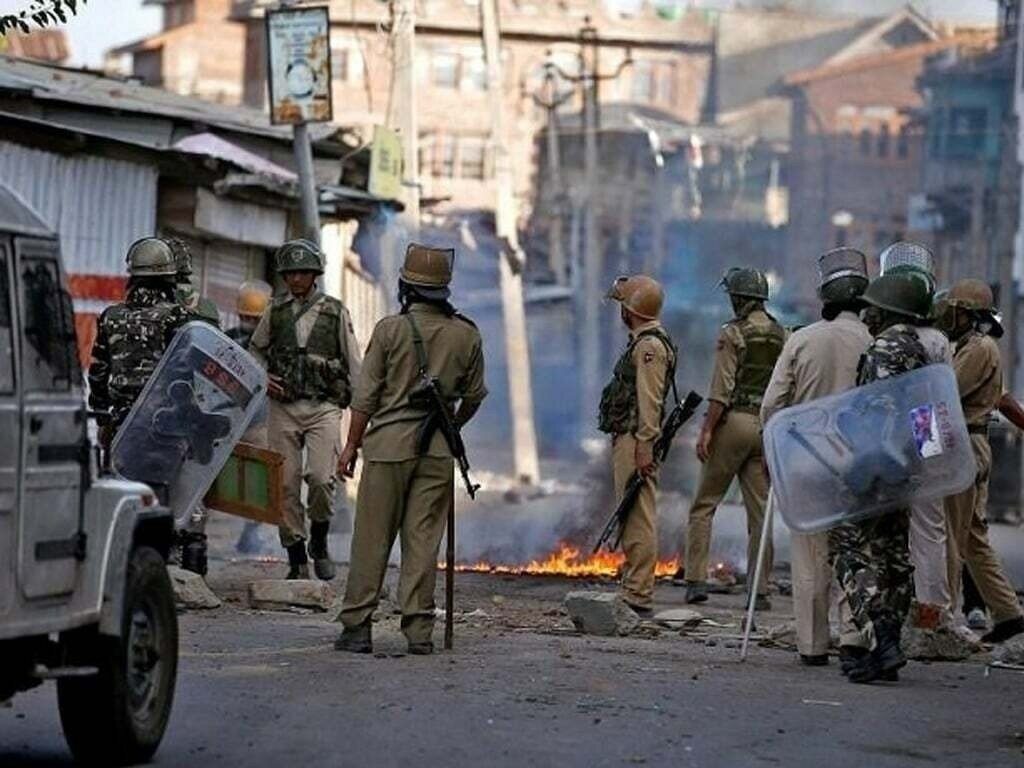
The repeated portrayal of Kashmiris as suspects or potential traitors has deepened alienation. Political disagreement is a normal feature of democracy; it should not automatically be equated with hostility to the state. When peaceful demands, constitutional objections and public protests are interpreted primarily through a security lens, democratic space inevitably contracts.
This creates a dangerous cycle in which the government cites alienation to justify tighter control, while tighter control produces even greater alienation. Breaking this cycle requires political engagement rather than further coercion
The demand for statehood also reflects a broader struggle over federalism in India. The Indian constitutional system was designed to distribute authority between the centre and the states, recognising the country’s vast social, cultural and regional diversity. The demotion of a state into a Union Territory through unilateral central action established a troubling precedent. It demonstrated that the political status of a region could be fundamentally altered without the consent of its elected representatives. This raises concerns not only for Jammu and Kashmir but also for other Indian states that value their constitutional autonomy and regional identity.
Restoring statehood would not resolve every political dispute surrounding Jammu and Kashmir. The deeper questions of self-determination, human rights, political representation and the unresolved international status of the Kashmir dispute would remain. Nevertheless, statehood would represent an important step towards restoring a measure of institutional dignity and political responsibility. It could provide local representatives with greater authority, encourage public participation and create space for a more credible political process. Most importantly, it would demonstrate that democratic commitments are not merely rhetorical.
New Delhi must recognise that indefinite delay carries a political cost. Each unfulfilled assurance weakens public confidence and strengthens the perception that the central government is deliberately prolonging direct control. A promise repeatedly postponed eventually loses credibility. If the government genuinely believes that the situation has normalised, it must explain why full political authority cannot be restored. Normalcy cannot be claimed while extraordinary governance arrangements remain in place.
Similarly, electoral participation cannot be celebrated while the elected administration is denied the powers normally associated with statehood
The protests during Parliament’s monsoon session therefore represent more than a regional political campaign. They are a test of India’s democratic credibility and constitutional federalism. The issue is whether the central government is prepared to treat the people of Jammu and Kashmir as citizens entitled to meaningful political rights, or whether it will continue governing the region primarily through administrative control and security structures. The restoration of statehood would not be a concession to any party or leader; it would be a recognition of a basic democratic principle.
The BJP may continue to defend its policy through the language of national integration, but unity imposed through political downgrading is inherently fragile. Sustainable stability requires consent, accountability and respect for regional aspirations. The longer statehood is withheld, the stronger the argument becomes that the present arrangement is intended not as a temporary measure but as a permanent instrument of control. Restoring statehood is therefore essential not only for the political future of Jammu and Kashmir but also for protecting the credibility of democratic governance across India.