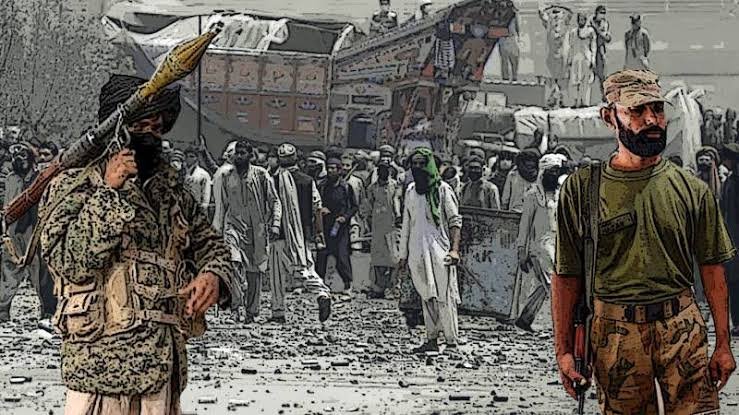

The ideological case made by terrorist groups operating against Pakistan rests on a basic contradiction. They claim to fight in the name of Islam while directing violence against a state whose constitutional identity explicitly recognizes Islam, whose legal framework requires conformity with the Quran and Sunnah, and whose leading religious scholars have repeatedly rejected private declarations of armed jihad. This contradiction matters because terrorism is not sustained by weapons alone. It also depends on narratives capable of persuading young and impressionable minds that murder, rebellion and disorder somehow constitute religious service. That argument collapses when examined against Pakistan’s Constitution and established Islamic principles.
Pakistan’s constitutional identity is unambiguous. Article 2 declares Islam to be the state religion. Article 2A incorporates the Objectives Resolution into the substantive Constitution, affirming that sovereignty belongs to Almighty Allah and that authority is to be exercised by the people within the limits prescribed by Him. Article 227 further requires existing laws to be brought into conformity with the injunctions of Islam as laid down in the Quran and Sunnah and prohibits legislation repugnant to those injunctions. Whatever disagreements Pakistanis may legitimately have about governance, policy or implementation, the constitutional route for addressing them is political, judicial and democratic.
A private armed group cannot simply appoint itself the final interpreter of religion and then claim authority over the lives of citizens
This is precisely where extremist interpretations of jihad become dangerous. Jihad in Islamic thought is not a licence for uncontrolled violence. It operates within a moral and legal framework involving legitimate authority, justice, restraint and the protection of innocent life. The Quran’s declaration in Surah Al-Ma’idah, verse 32, concerning the sanctity of human life stands in stark contrast to attacks that indiscriminately kill worshippers, police officers, soldiers, teachers, children and ordinary citizens. Terrorists attempt to overcome this contradiction through takfir, declaring others insufficiently Muslim and then using that accusation to remove the religious protections attached to human life. Once that door is opened, practically anyone can be declared an enemy.
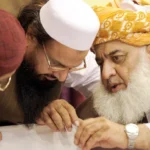
Pakistan’s religious scholarship has directly challenged this reasoning. The Paigham-e-Pakistan initiative brought together 1,829 scholars and religious authorities from different schools of thought in a collective decree condemning extremism and terrorism. Significantly, the declaration placed jihad within the authority of the state and rejected the use of force by private groups to impose their interpretation of Islamic law. This is crucial because it dismantles one of the central claims of militant organizations. A faction possessing guns, propaganda channels, and self-appointed religious figures does not acquire the authority to declare war on society.
Mufti Muhammad Taqi Usmani has expressed the principle even more explicitly, declaring armed activity against the Pakistani state to constitute rebellion and to be forbidden under Islamic law. Addressing the Paigham-e-Pakistan National Conference in 2023, he specifically described those fighting Pakistan’s state institutions as rebels. Religious scholars in Khyber Pakhtunkhwa have similarly condemned terrorism and the creation of chaos in an Islamic state. Dr Tahir-ul-Qadri’s extensive fatwa against terrorism and suicide bombing likewise rejects the attempt to transform the language of jihad into permission for attacks on civilians.
These positions reflect a much wider rejection of militant vigilantism within mainstream Pakistani religious scholarship
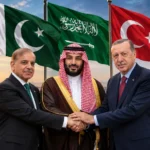
Another extremist distortion concerns relations with non-Muslim states. Militants have repeatedly presented diplomatic, economic or security cooperation with non-Muslims as proof of religious betrayal. Islamic history provides no basis for such an absolutist position. The Prophet Muhammad ﷺ negotiated agreements with non-Muslims, conducted diplomacy and concluded the Treaty of Hudaybiyyah with the Quraysh. Peaceful engagement, negotiation and mutually beneficial relations are therefore not synonymous with surrendering religious identity. Pakistan’s past cooperation with the United States cannot logically provide a permanent religious justification for terrorism. The American military withdrawal from Afghanistan was completed in 2021, yet militant violence against Pakistan continued. The survival of the violence after the supposed justification disappeared exposes how political grievances can be repackaged as religious commandments.
This is also why accusations of foreign manipulation should be approached through evidence rather than slogans. Where terrorist networks receive external financing, facilitation or direction, those links should be investigated and exposed. But the ideological case against terrorism does not depend upon proving foreign sponsorship. Even without it, murdering Pakistanis, bombing mosques, attacking madrasas and targeting religious scholars remain indefensible under both Islamic teachings and Pakistani law.
Islamic jurisprudence has long distinguished legitimate disagreement from baghawat, armed rebellion, and fasad fil ard, the spreading of destructive disorder. Political criticism, peaceful protest and debate belong to a functioning society. Terrorism does not.
When armed organizations intimidate communities, assassinate opponents and substitute their own commands for constitutional authority, they are not reforming an Islamic order. They are attempting to destroy public order through coercion
The struggle against terrorism must therefore be understood as more than a security campaign. Protecting life, religion, property, dignity and social stability corresponds closely with the objectives associated with Maqasid al-Shariah. Pakistan consequently has both a sovereign responsibility and a religiously grounded obligation to protect its people from organizations seeking to impose their will through fear.
The central question is simple. Who gave a clandestine militant commander the authority to declare Pakistanis unbelievers, pronounce jihad, sentence citizens to death and wage war against society? Neither Pakistan’s Constitution nor mainstream Islamic scholarship grants him that power. The answer is therefore equally clear. Religious slogans cannot turn rebellion into jihad, terrorism into worship or murder into martyrdom. Those who manipulate Islam to sanctify bloodshed do not defend the faith. They undermine its principles of justice, restraint and the sanctity of human life.