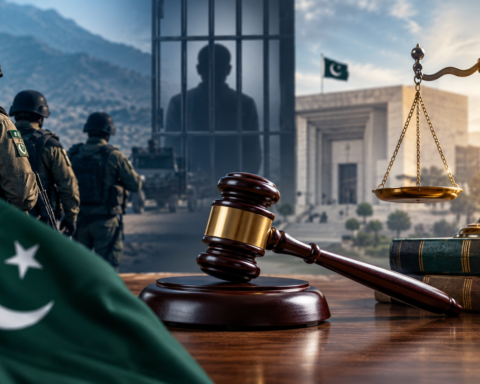

Pakistan in October 2026 finds itself engaged in two urgent, deeply connected conversations, one about how to defeat terrorism in Balochistan, the other about whether the country’s entire administrative architecture needs rebuilding from the ground up. At first glance, these seem like separate debates. They are not. They are two sides of the same crisis: the widening gap between the Pakistani state and its own people.
Balochistan Chief Minister Sarfraz Bugti’s interview with Balochistan Pulse was refreshingly candid. He did not pretend that bullets alone can solve what is fundamentally a crisis of legitimacy. He pointed to four pillars of a real counterterrorism strategy, countering misleading narratives, dismantling social media propaganda, restoring public trust, and creating genuine economic opportunities. Each of these speaks not to the battlefield but to the living room, the village square, and the unemployed young person staring at a screen wondering why the state has never shown up for him.
That is the landscape in which terrorists and khawarij operate. They do not recruit in places where the government is trusted, where jobs exist, and where a young person feels a stake in the future. They thrive precisely where the state is absent or only visible through a security checkpoint. Bugti’s concern about the recruitment of women for suicide attacks is a grim signal of how deep this crisis has gone, when despair reaches that level, it is no longer a security problem alone.
CM Bugti himself acknowledged that terrorists merge into civilian populations, making operations extremely delicate. This is precisely why a purely kinetic approach, however necessary in the immediate term, cannot be the whole answer. He has urged political parties not to politicise terrorism, stressing that what the country needs is national unity and institutional stability rather than political division. That is wise counsel. But national unity requires people to first believe the nation is working for them.
This is where the administrative restructuring debate, now reverberating loudly in Islamabad, becomes directly relevant to Balochistan’s security crisis. Interior Minister Mohsin Naqvi told the Pakistan Economic Summit that the governance system had collapsed, presenting additional administrative units as a solution to persistent governance, development, and security challenges in peripheral regions. That word, peripheral, is the key. It is precisely peripheral regions that are most vulnerable to recruitment by khawarij and terrorists, because the state has felt most distant, most indifferent, and most extractive there.
Bugti’s own government has taken a step in the right direction by establishing new districts and administrative structures to bring authorities physically closer to local grievances. The envisioned ten year development plans for each district reflect an understanding that employment and livelihood are not soft luxuries, they are the hardest form of counterterrorism investment a state can make.
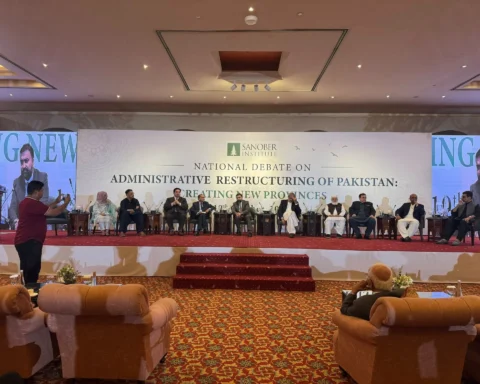
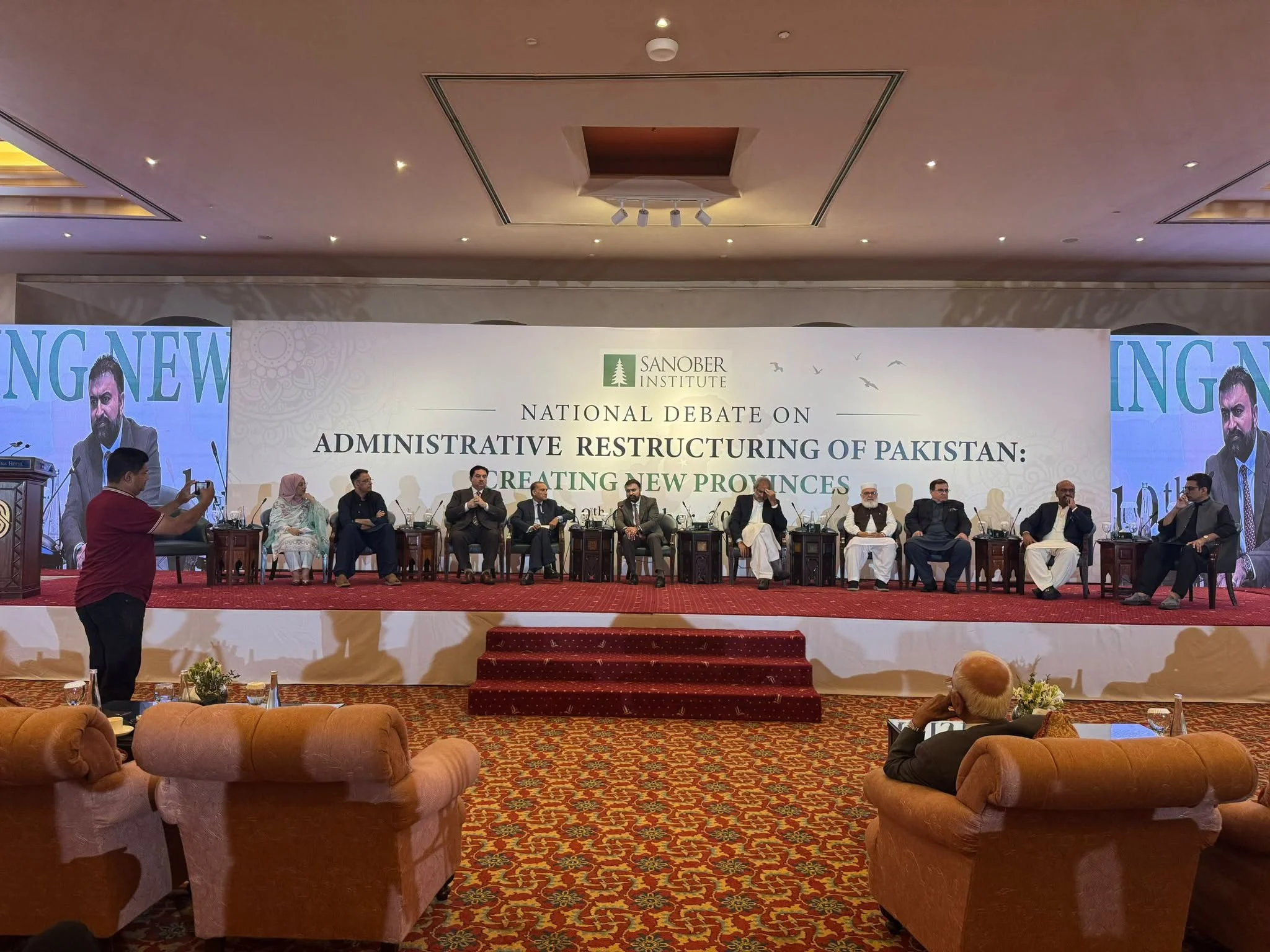
The national dialogue at SDPI in August 2026 brought together leaders from across the political spectrum, broadly agreeing that any administrative changes must be evidence based, fiscally sustainable, and rooted in constitutional procedure. The Sanober Institute’s debate this week in Islamabad, with voices like former federal ministers Khurram Dastgir Khan and Asad Umar weighing in, reinforces that this is not a fringe conversation anymore. Even the manifestos of Pakistan’s three major political parties, PMLN, PPP, and PTI, all support the idea of new provinces. The question is no longer whether reform is needed, but how to do it without tearing open existing fault lines.
Former federal minister Asad Umar put it well at the Sanober debate, no system can succeed without public participation. That sentence ought to be written on the walls of every policy ministry in this country. For too long, governance has been something done to people rather than with them. The result is visible in Balochistan, in parts of Khyber Pakhtunkhwa, in the anxious energy of young Pakistanis scrolling through narratives that paint the state as the enemy.
CM Bugti himself has said the doors of the provincial government are open to discussing and resolving the issues facing the people of Balochistan, insisting that no ideology can be imposed through the barrel of a gun. That is a mature and honest position.
Terrorism cannot be talked away, there are khawarij who must be confronted with the full force of the law and the security apparatus. But it also cannot be bombed into nonexistence if the conditions that breed it are left untouched.
Nadeem Afzal Chan’s remark at the Sanober Institute debate, that the system must serve the people, not rule over them, captures the essential shift Pakistan needs to make. Not just in Balochistan, but nationally. Administrative restructuring, local government empowerment, district level development planning, and the relentless countering of propaganda that turns grievance into violence are all parts of the same answer.
Pakistan’s challenge in 2026 is not just defeating those who take up arms. It is building a state that the next generation of Baloch, Pashtun, Punjabi, and Sindhi youth actively want to defend. When that happens, the khawarij will find no soil to grow in. That is the only lasting victory.