
Chris Doyle, Director of the Council for Arab-British Understanding, has drawn attention to one of the United Nations’ most persistent contradictions. The institution was created in the name of sovereign equality, collective security and international cooperation, yet its most powerful organ continues to reflect the distribution of power that emerged from the Second World War. More than eight decades later, the United Nations Security Council still grants exceptional authority to five permanent members while much of the contemporary world remains excluded from permanent representation.
Doyle’s criticism goes to the heart of the debate over Security Council reform through the Intergovernmental Negotiations, commonly known as the IGN. The issue is no longer simply whether the Council should become larger. It is whether an institution entrusted with decisions on war, peace, sanctions and international security can retain legitimacy when its structure does not adequately represent the political and demographic realities of the twenty first century.
The IGN process was formally launched following General Assembly Decision 62/557 and continues to address equitable representation, Council expansion and other reform questions
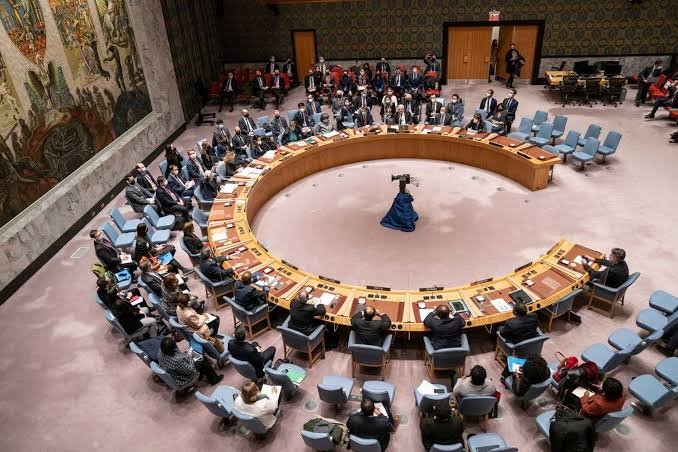
The imbalance is obvious. The Security Council consists of fifteen states. China, France, Russia, the United Kingdom and the United States are permanent members. The other ten countries are elected by the General Assembly for two year terms. This arrangement gives elected members an opportunity to participate, but participation should not be confused with equality of influence. Non permanent members rotate out of the Council, while the permanent five retain their seats indefinitely and possess veto authority over substantive decisions.
That distinction is crucial. A country may enter the Security Council with considerable diplomatic experience, regional legitimacy and the support of a large number of UN members. Yet after two years it leaves, while the permanent members remain. More importantly, even a broad coalition within the Council can see its position blocked by the negative vote of a single permanent member. Under the existing voting system, a veto by any one of the five permanent members can prevent the adoption of a substantive resolution.
The greatest weakness of this model is geographical and political representation. Africa has 54 UN member states but no permanent seat. Latin America and the Caribbean also have no permanent member. The Muslim world, spread across several continents and deeply affected by many issues appearing before the Security Council, likewise lacks permanent representation.
Large developing countries have emerged as major economic, demographic and diplomatic powers, but the Council’s permanent membership remains essentially frozen in the settlement reached after 1945
This creates more than a symbolic problem. Representation affects confidence in international institutions. When regions containing billions of people believe that decisions affecting their security are being taken by a small and historically privileged group, questions about legitimacy are inevitable. The Security Council cannot expect universal confidence merely because its authority is written into the UN Charter. Institutional legitimacy must also be sustained through fairness, accountability and a reasonable distribution of decision making power.
Doyle is also right to connect the question of reform with the conduct of powerful states themselves. The permanent members are not detached guardians standing above international politics. They are states with national interests, alliances, military commitments and geopolitical rivalries. At times, these interests collide directly with the Council’s responsibility for international peace and security. When a permanent member or one of its close allies becomes involved in a major dispute, the veto can transform from a mechanism intended to preserve great power cooperation into an instrument of political paralysis.
This is why the veto remains one of the hardest questions confronting the IGN. The original logic was understandable. The United Nations could hardly have survived if the leading military powers emerging from the Second World War had been repeatedly subjected to binding Security Council decisions against their core interests.
Yet an arrangement designed to secure great power participation in 1945 cannot automatically be treated as the ideal formula for global governance in 2026
The challenge, however, is that those possessing exceptional privileges are rarely enthusiastic about surrendering them. Security Council reform requires agreement at precisely the point where national power and institutional justice collide. Expanding permanent membership without addressing the veto may improve geographical representation but leave fundamental inequalities intact. Eliminating or radically restricting the veto, meanwhile, faces enormous political resistance from the permanent five. This explains why years of negotiations have produced extensive discussion but limited structural change.
Still, difficulty cannot become an excuse for permanent stagnation. The General Assembly’s current reform process continues to examine representation, categories of membership, the veto, Council size and working methods. During the UN’s eightieth session, the IGN has remained active, including plenary discussions in 2026 on the size of an enlarged Council and possible areas of convergence among member states.
The persistence of these negotiations demonstrates that dissatisfaction with the present arrangement is not temporary
A credible reform package should therefore begin with the principle that developing regions deserve a stronger institutional voice rather than occasional access through rotating seats. Africa’s exclusion from permanent membership is particularly difficult to defend. The wider Muslim world also requires more meaningful representation, although the diversity of Muslim majority countries means that any formula must avoid assuming that a single state can speak for all of them. Latin America, Asia and other underrepresented regions deserve similar consideration.
Security Council reform is about the future credibility of the United Nations itself. An international order cannot indefinitely claim universality while concentrating its most consequential privileges in a structure inherited from another era. Chris Doyle’s intervention therefore reflects a larger concern shared across much of the developing world. Reform will undoubtedly be difficult, especially while the veto protects entrenched interests. But the alternative is worse. A Security Council that fails to evolve risks becoming increasingly disconnected from the world it is expected to secure.