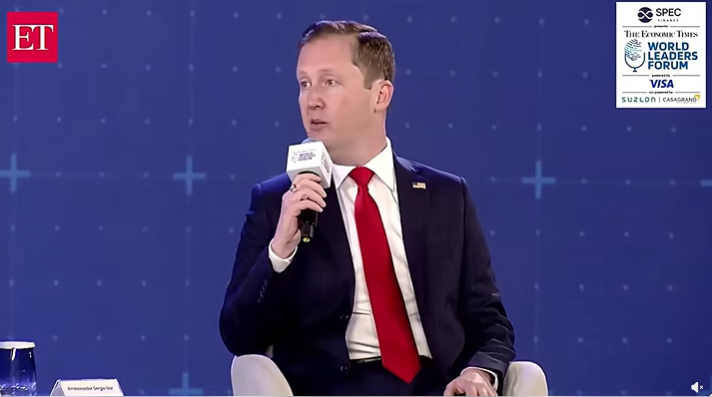
There is something deeply revealing about a moment when even an outsider notices what the insiders have long refused to admit. US Ambassador Sergio Gor, watching Indian television during his posting, remarked candidly that he used to think America had a fake news problem until he started watching Indian news. Some of the things being reported, he said, were nowhere close to the mark. It was an observation that came with no political motive, no agenda. Just the blunt candour of someone watching a screen and not believing what they saw.
That moment deserves far more reflection than it has received. Because the numbers behind it are staggering.
Research published in 2025 by the Indian School of Business and CyberPeace Foundation analysed thousands of fake news stories and found that political fake news accounted for the most frequent category, at 46% of all cases, with general issues at 33.6% and religion at 16.8% together representing 94% of all misinformation stories analysed. These are not fringe WhatsApp forwards. The study also found that social media platforms were responsible for 77.4% of misinformation cases, compared to just 23% originating from mainstream media though that 23% carries enormous weight, because when a mainstream channel broadcasts a falsehood, it lends that falsehood a credibility that no viral forward ever could.
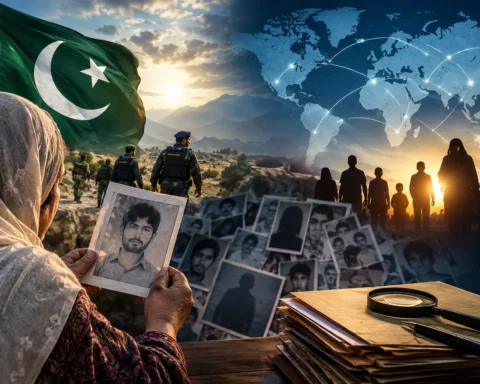
The consequences of this credibility gap became devastatingly visible during the India Pakistan tensions of May 2025. Indian mainstream media flooded the public with fake news, doctored visuals, and sensationalist coverage, fueling mass anxiety and misinformation. Fact checkers and experts condemned the media’s role, calling it a national embarrassment that undermined journalistic integrity. One young Indian student at Delhi’s Jamia Millia University panicked upon seeing a televised report claiming a Pakistani strike on her hometown, and frantically called her mother only to find out it was entirely fabricated.
The fabrications were not limited to minor factual errors. Several prominent Indian news outlets broadcast unverified or doctored footage. Videos from video games were aired as real combat footage, and fabricated stories about airstrikes and casualties emanated straight from reputed sources. Think about what that means for a moment. A video game clip identifiable to any teenager who had played the game was presented as evidence of a military strike on a sovereign nation. This is not accidental journalism. This is something else entirely.
The academic record is now catching up with what journalists on the ground long knew. A peer reviewed study published in 2026, analysing Indian television coverage during the 2025 escalation, found that Indian television journalists propagated ideologically motivated disinformation, reinforcing nationalism, militarism, and enemy othering through fake news. Another study, published in the American Political Science Review, noted plainly that India has a media environment where misinformation is frequently disseminated by mainstream sources, not just fringe or anonymous actors.
This is where the crisis of Indian media stops being a media problem and starts being a democratic emergency.
An estimated 806 million individuals used the internet in India at the start of 2025, with online penetration at 55.3%, making it one of the largest digital populations in the world. Meanwhile, India was ranked first globally for misinformation risk by the World Economic Forum in 2024, with over 900 million internet users and 530 million WhatsApp subscribers making its information environment both the largest and the most volatile democratic media ecosystem on earth.
Deepfakes compounded the problem dramatically. The 2025 India Pakistan conflict marked a significant milestone it was the first large scale South Asian confrontation where AI generated content played a central role in shaping public perception. Among the most audacious examples was a deepfake video in which Pakistan’s Prime Minister Shehbaz Sharif appeared to be admitting defeat when in reality the original video showed him commending the Pakistan Air Force’s response. The altered version used AI voice cloning and lip sync technology to deliver a narrative that was entirely fabricated.
Even reputable journalists, government officials, and politicians were misled by fabricated content shared as authentic battlefield footage. That is the real danger not that ordinary people were fooled, but that the very gatekeepers responsible for filtering fact from fiction became conduits for disinformation themselves.
The question then becomes why does this keep happening. Research points to structural incentives. In India’s competitive television market, channels race to be first rather than accurate. Nationalist sentiment drives viewership, and viewership drives revenue. The RSF report on press freedom notes that media pluralism is challenged across the world, especially in countries like India due to economic pressures and increasing corporate ownership with connections to political powers. When editorial decisions align with government preferences and advertising dependencies, the incentive to push back against official narratives or even to pause and verify collapses.
Ambassador Gor’s observation was polite, almost understated. What the data shows is something sharper a media ecosystem that has structurally drifted away from journalism’s core function. Studies show that 80% of Indian internet users encounter fake news, most frequently through informal networks like WhatsApp and word of mouth but that informal spread only works because it is seeded somewhere. And all too often, it is seeded in the very newsrooms that should be fighting it.
The fix will not come from more regulation alone. Both India and Pakistan need better state run mechanisms to counter viral disinformation, but the deeper solution requires something that cannot be legislated journalistic courage. The willingness to verify before broadcasting. The discipline to say we don’t know rather than fill airtime with speculation dressed as fact. The understanding that when a television anchor fans the flames of panic over a fabricated strike, real people pick up the phone and call their mothers in tears.
What is needed is not silence.
What is needed is truth. And right now, the gap between the two has become impossible to ignore even for a visiting American diplomat watching television for the first time.
Disclaimer: The views and opinions expressed in this article are exclusively those of the author and do not reflect the official stance, policies, or perspectives of the Platform.