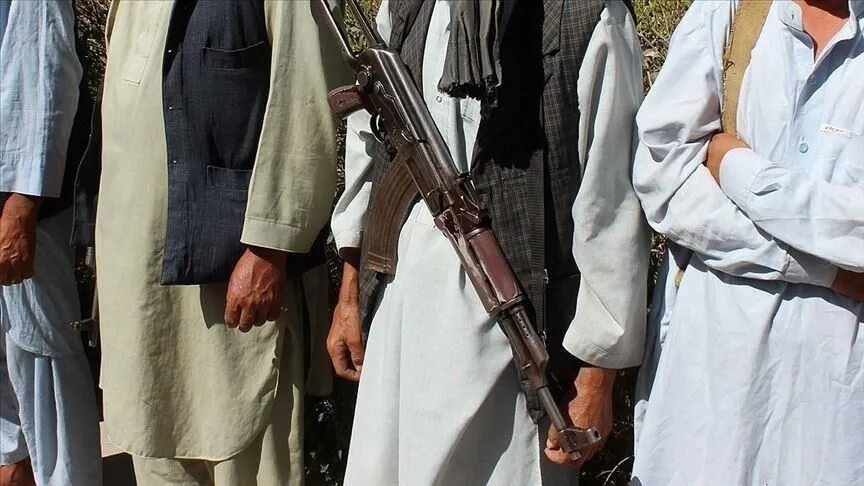

The Tehreek-e-Taliban Pakistan has once again attempted to project organizational growth by announcing that several armed groups from Mohmand, Bajaur, Quetta and Harnai have pledged allegiance to its leadership. According to a statement circulated in militant-linked channels, groups led by five local commanders were presented as new additions to the TTP structure. Such announcements are designed to create an impression of momentum, geographical expansion and command unity. Yet recruitment figures and declarations of allegiance tell only one part of the story. What happens inside an armed organization, particularly when its factions begin fighting one another, can reveal far more about its actual condition than carefully prepared propaganda statements.
The contradiction is becoming increasingly difficult to ignore. While the TTP emphasizes mergers and new allegiances, reports from South Waziristan point to violent competition among militant factions operating in overlapping spaces. On September 12, fighting was reported near Korezi Bridge in the Kreekot area close to Wana between militants associated with the TTP Rahmatullah Group and members of the Tehreek-e-Taliban Gul Bahadur Zindan Group. According to local and security sources cited in subsequent reporting, the confrontation was linked to a dispute over money allegedly collected from the region’s commercially important pine-nut trade.
The reported casualties were significant. TTG commander Fateh and a militant identified as Khurasani were reported killed, while three other members of the faction were said to have been critically wounded. These accounts remain dependent on local and security sourcing and therefore should be treated with appropriate caution. Nevertheless, the wider significance lies less in the individual names than in the circumstances surrounding the clash. Militants ostensibly operating against a common adversary were reportedly turning their weapons on one another over resources, authority and control.
This was also not the first indication of serious internal tensions during 2026. In May, fighting was reported between the TTP and Jamaat-ul-Ahrar in Central Kurram after tensions emerged between commanders and the TTP leadership. Sources cited by The Express Tribune said the confrontation followed efforts by the TTP central leadership to discipline Jamaat-ul-Ahrar commanders and demand compliance with organizational directives. The fighting reportedly left 19 Jamaat-ul-Ahrar members and three TTP militants dead. A jirga intended to reduce tensions reportedly deteriorated into further violence.
Taken together, these incidents complicate the image of disciplined unity that militant propaganda seeks to cultivate. Armed organizations are rarely monolithic. They often depend upon local commanders, tribal relationships, personal loyalties, financial networks and access to territory. The European Union Agency for Asylum noted recurring signs of disagreement within TTP ranks, including tensions involving Jamaat-ul-Ahrar loyalists, even as the organization continued restructuring its commands and expanding its operational framework. Bringing additional factions under a single name does not necessarily erase the interests, rivalries or command structures those factions developed before joining.
Money is particularly important. Militant organizations require continuous financing for weapons, transportation, communications, recruitment, logistics and payments to fighters. Where several armed factions operate in the same geographical area, competition over taxation, extortion, smuggling routes and local commercial activity can become a source of conflict. If the reports from Wana are accurate, a dispute connected to proceeds extracted from the pine-nut trade illustrates how economic interests can cut across ideological claims. An organization may speak publicly about unity while commanders on the ground compete fiercely over who controls revenue and territory.
Reports have also circulated regarding losses among commanders associated with the Gul Bahadur network, including claims concerning a commander identified as Naseer Wazir following factional fighting. Unlike the September 12 deaths of Fateh and Khurasani, however, that particular claim could not be independently corroborated through the more reliable reporting available at the time of writing. That distinction matters. Militant environments produce misinformation from armed groups, security agencies and competing propaganda networks alike. The strongest assessment therefore comes not from relying on every reported casualty, but from identifying the broader pattern supported by multiple incidents.
None of this means the TTP should be treated as operationally insignificant. Internal fragmentation and operational capability can exist simultaneously. A United Nations Security Council mandated monitoring report covering developments through June 2026 assessed that TTP attacks against Pakistan had escalated and continued to create serious regional security concerns. The organization has continued to demonstrate an ability to conduct lethal attacks. Recruitment announcements therefore should not simply be dismissed. New fighters and local networks can provide manpower, intelligence, logistical access and geographical reach.
But recruitment is not the same thing as cohesion. An organization can become numerically larger while simultaneously becoming harder to control. Every newly absorbed faction brings its own commanders, personal networks, financial interests and local grievances. Central leadership then faces the difficult task of enforcing discipline across groups whose loyalty may depend on circumstances rather than institutional commitment. The May clashes involving Jamaat-ul-Ahrar demonstrate how attempts to impose central authority can themselves trigger resistance. The September fighting near Wana points to another vulnerability, competition between militant networks operating in the same economic and territorial environment.
That is why recent merger announcements should be read alongside, not separately from, reports of factional conflict. The relevant question is not simply how many commanders claim allegiance to the TTP banner. It is whether that banner produces durable command discipline when money, territory and influence are at stake. Recent evidence suggests that militant unity remains contested beneath the public messaging. Recruitment can enlarge a network, but it cannot automatically resolve rivalries within it. When factions that claim broadly similar objectives begin killing one another over authority and resources, the gap between projected unity and internal reality becomes increasingly visible.