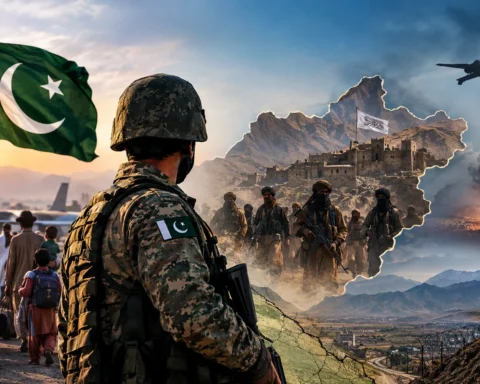
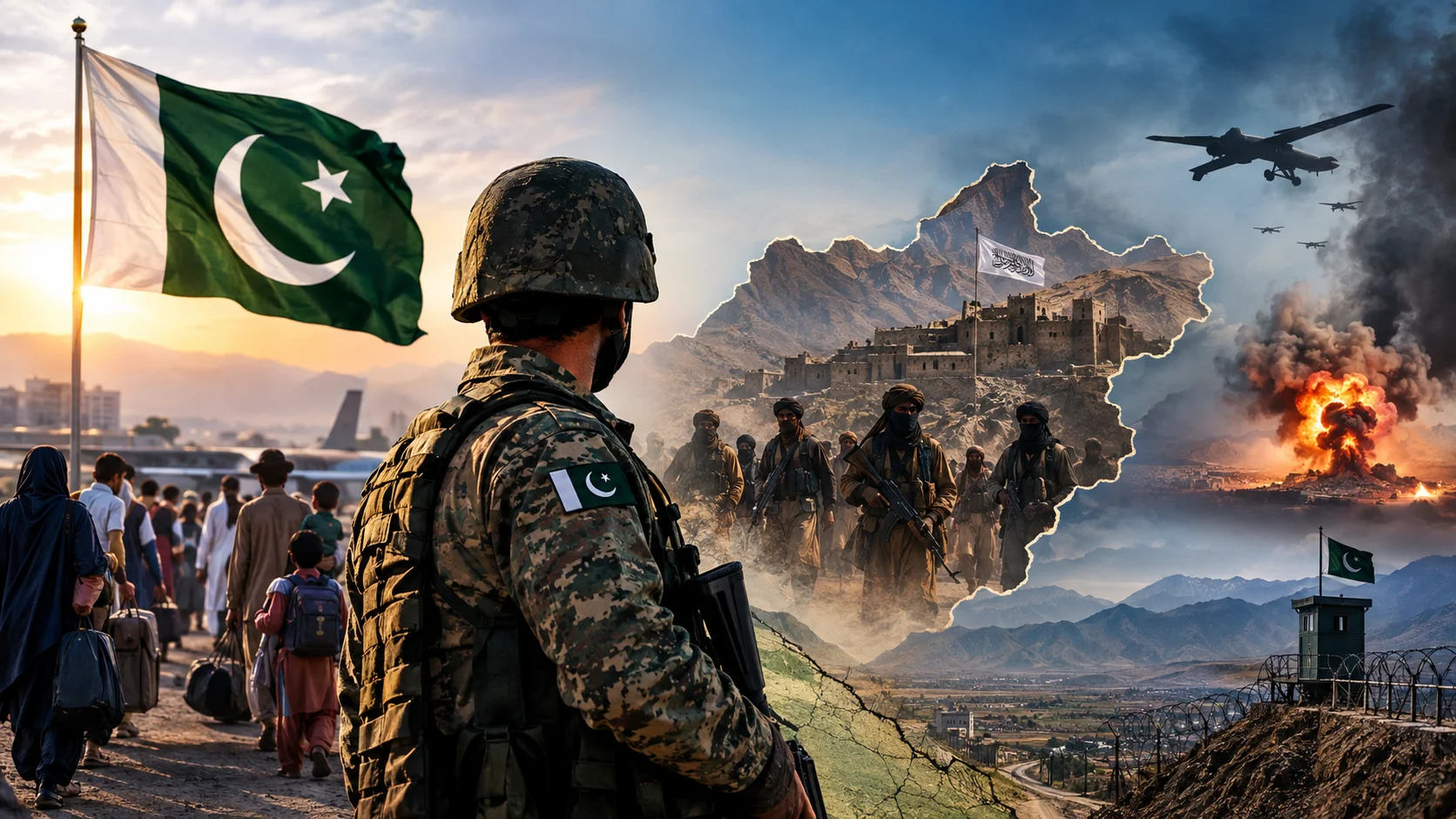

There is a version of this story that certain international commentators prefer to tell. It begins on September 21, 2026, when Pakistan struck terrorist targets inside Afghanistan, and ends with handwringing about “regional escalation” and “proportionality.” It is a version that conveniently forgets five years of bloodshed, begging, and betrayal.
Let us tell the complete version.
When the Taliban retook Kabul in August 2021, the world bolted. Embassies shuttered overnight. Western governments, who had spent two decades promising Afghanistan a future, vanished in days. Pakistan, which had hosted Afghan refugees for over four decades, kept its mission open, facilitated evacuations, and at post withdrawal UN conferences became the loudest voice for unfreezing Afghanistan’s $9 billion in frozen assets. Pakistan did not just hope for a stable neighbour. It actively worked for one.
What it got in return was a knife in the chest, driven in slowly, year after year.
The numbers are not abstract. In 2021, Pakistan recorded 89 terrorist attacks traceable to Afghan soil. By 2022, that figure had jumped to 262. Then 306 in 2023. Then 521 in 2024. Then, and this demands a moment’s pause, 699 attacks in 2025, which martyred at least 1,378 Pakistanis and left 2,672 others wounded. By September 2026, another 1,327 Pakistanis have been martyred and 2,484 injured. These are not statistics. These are fathers, daughters, constables, soldiers, and children.
Through all of this, Pakistan talked. It sent religious delegations, including an 8 member ulema delegation led by Mufti Taqi Usmani, who travelled to Kabul in July 2022 specifically to appeal to the Taliban’s religious conscience. A 17 member tribal jirga followed days later with the same message. Pakistan’s Defence Minister and DG ISI went to Kabul in February 2023. Its Interior Minister led another delegation in July 2024. By the end of 2025, Islamabad had conducted four Foreign Minister visits, two Defence Minister and DG ISI missions, five Special Representative visits, five Secretary level meetings, one NSA visit, eight Joint Coordination Committee meetings, 225 Border Flag Meetings, 836 formal protest notes, and 13 diplomatic demarches. Pakistan also pursued trade, launching the Early Harvest Programme that cut tariffs on key agricultural goods benefiting both sides.
The Taliban’s response was to expand the terrorist infrastructure.
Pakistan identified over five dozen terrorist camps, staging areas, and logistical facilities operating openly inside Afghanistan, linked to TTP and the BLA. Despite every communication, not one of these was dismantled.
The scale of Afghan participation in these attacks is no longer deniable. Of 260 Afghan nationals conclusively identified as participants in cross border terrorist formations, their addresses, families, and affiliations inside Afghanistan have been verified, their funerals, tellingly, attended by Taliban regime officials. Around 70 percent of members in some infiltration formations are Afghan nationals. And in January 2025, a particularly damning case emerged: Badruddin Yousaf, son of a Taliban deputy governor in Badghis, was killed during a security operation in Dera Ismail Khan and buried back in Afghanistan. The connection between the Taliban regime and terrorist formations targeting Pakistan is no longer theoretical.
The worst betrayal came during Pakistan’s four day confrontation with India in May 2025. As Pakistan was defending its eastern border, the Taliban facilitated a 40 member TTP formation to attack from the west. A nation fighting for its survival was stabbed in the back by the very neighbour it had championed at every international forum.
Even then, Pakistan did not reach for the gun first. It accepted a Qatar mediated ceasefire in October 2025 and attended follow up talks in Doha and Istanbul. Saudi mediation was attempted in February 2026. Even after fighting had resumed, China attempted mediation with talks in Ürümqi in April 2026, and Pakistan sat at the table, with demands that were, by any reasonable measure, minimal: formally designate TTP as a terrorist organisation, dismantle its infrastructure, provide verifiable proof of action.
Even that was too much.
On September 18, 2026, Fitna al Khawarij carried out a vehicle borne suicide attack between the mosque at the old Police Lines and the CTD office in Kohat during Friday prayers, killing 16 people and wounding 57. Three of the Khawarij killed in the subsequent security operation were later confirmed to be Afghan nationals. A day earlier, a roadside bomb in Hangu had killed six Pakistani soldiers. At the UN General Assembly, Foreign Minister Ishaq Dar told the world that more than two dozen anti Pakistan terrorist groups are currently present in Afghanistan.
Pakistan’s patience had run out, rationally, legally, and morally.
On September 21, Pakistan conducted intelligence based, targeted strikes on three terrorist sites in Afghanistan, killing 28 terrorists. The Taliban’s response was not to act against the terrorists but to launch drones toward Kohat and Torkham and shell Pakistani border posts. Pakistan neutralised the drones and on September 24 struck ten drone launch sites. Pakistan’s air defence successfully intercepted all drones launched against it.
This is a nation exercising its inherent right to self defence, not aggression, but the last resort of a state that tried every conceivable alternative. The legal basis is clear. Article 51 of the UN Charter preserves the right of self defence when an armed attack occurs and when the responsible state is unwilling or unable to act. The Taliban regime is manifestly both.
What Pakistan demands is not territory, not tribute. It is one thing: that Afghan soil must not serve as a launchpad for terrorism against Pakistani citizens.
Five years of diplomacy, delegation, and death have made that demand non negotiable.
History will not judge Pakistan for finally acting. It will ask why the world waited so long to stand with it.