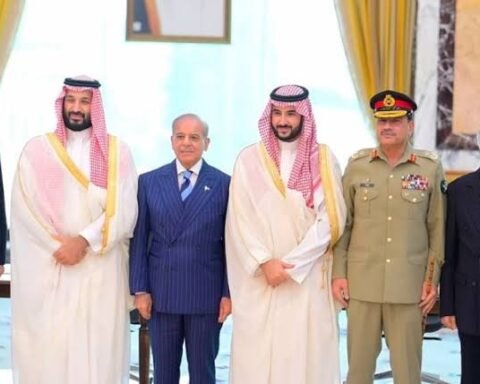
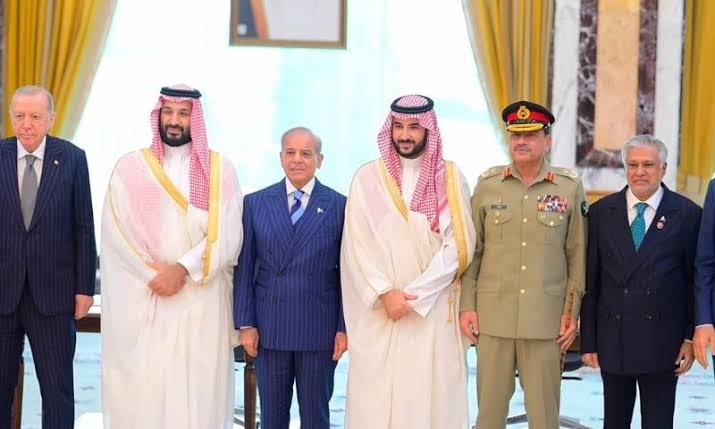

The Makkah Joint Defence Agreement has acquired greater strategic importance as instability around Yemen and the Red Sea places new pressure on regional security arrangements. Signed by Pakistan, Saudi Arabia and Türkiye on August 7, 2026, the agreement states that an armed attack against any one of the three countries will be regarded as an attack against all. Officially, its purpose is to strengthen collective deterrence and deepen defence cooperation rather than create a mechanism for automatic participation in every regional conflict.
This distinction has become particularly relevant as Houthi attacks against Saudi territory raise questions about what Pakistan may actually be expected to do. A recent analysis by the US-based Responsible Statecraft argues that Islamabad does not face a simple choice between entering the Yemen conflict and remaining completely uninvolved. Instead, the agreement leaves considerable room for a calibrated response combining deterrence, defence cooperation, intelligence, logistics and diplomacy.
The significance of this interpretation lies in the wording and character of the agreement. Although the pact establishes collective security obligations, publicly available details do not prescribe an automatic military formula for every crisis. Responsible Statecraft notes that the agreement should not necessarily be understood as creating an expeditionary alliance designed for prolonged military campaigns outside member states’ territories. Pakistan could therefore fulfil defence commitments in several ways without conducting combat operations inside Yemen.
Such flexibility is strategically important for Islamabad. Pakistan has longstanding defence relations with Saudi Arabia, including military training, advisory cooperation and personnel deployments. According to the Responsible Statecraft analysis, the existing Pakistani military presence in Saudi Arabia, reportedly involving thousands of personnel and aircraft, provides infrastructure through which Islamabad could expand logistical assistance, intelligence sharing, air-defence coordination, surveillance or other defensive functions if circumstances required.
The ambiguity surrounding the precise form of Pakistan’s potential response may itself serve a deterrent purpose. Strategic deterrence often depends not only on declared capabilities but also on uncertainty about how and when those capabilities could be employed. Islamabad therefore has an incentive to avoid defining every possible threshold or military option publicly. The Makkah pact establishes the principle of collective defence while leaving operational responses dependent upon the nature and scale of aggression.
This becomes particularly important when distinguishing limited drone or missile attacks from a major assault on Saudi territory. A large-scale ground offensive or a direct threat to strategically and religiously sensitive locations would fundamentally alter the political and military context. Pakistani leaders have repeatedly attached exceptional importance to the protection of Makkah and Madinah. Defence Minister Khawaja Asif has said Pakistan will honour its obligations under the agreement, while describing defence of the holy cities as a commitment extending beyond the formal treaty itself.
Prime Minister Shehbaz Sharif reinforced that position at the United Nations General Assembly on September 25, declaring threats to the sanctity and security of Makkah and Madinah a “red line.” His remarks followed heightened concern after Saudi air defences intercepted a Houthi drone south of Makkah. The statement demonstrated how threats against the holy cities would carry political, religious and strategic consequences considerably greater than ordinary cross-border incidents.
Yet military capability represents only one dimension of Pakistan’s potential role. Responsible Statecraft places considerable emphasis on diplomacy, particularly Islamabad’s ability to communicate with Iran while maintaining close strategic relations with Saudi Arabia. That diplomatic space gives Pakistan an instrument for supporting de-escalation without immediately moving toward direct military confrontation.
Such diplomacy matters because Yemen cannot be viewed in isolation from wider regional rivalries. The Houthis’ relationship with Iran, Saudi security concerns, maritime instability in the Red Sea and the interests of external powers create an interconnected security environment. Pakistan’s relations across these competing regional centres give Islamabad potential diplomatic channels that many other actors do not possess simultaneously.
The Bab el-Mandeb Strait adds another dimension. The waterway links the Red Sea and Suez Canal with the Indian Ocean and remains strategically important for international shipping and energy transportation. Serious disruption would therefore extend the consequences of the Yemen conflict far beyond Saudi Arabia. In such circumstances, any Pakistani maritime or security contribution would more plausibly emerge within a broader multinational framework rather than through an isolated unilateral deployment, as the Responsible Statecraft analysis also suggests.
The Makkah agreement should consequently be understood less as a predetermined war plan and more as a framework providing its members with multiple levels of response. Pakistan can strengthen Saudi defensive capabilities, provide intelligence and logistical assistance, reinforce deterrence, participate in diplomatic efforts and coordinate with Türkiye while retaining stronger military options for substantially more serious contingencies.
The central strategic question is therefore not simply whether Pakistan will “enter Yemen.” The more useful question is how Islamabad interprets collective defence when faced with different levels of threat. The Makkah pact gives Pakistan strategic space between inaction and direct intervention. How that space is used will depend on the scale of aggression, the security of Saudi territory, the sanctity of Makkah and Madinah, regional escalation dynamics and the possibilities for diplomacy. In a volatile Middle East, that flexibility may prove to be one of the agreement’s most consequential features.