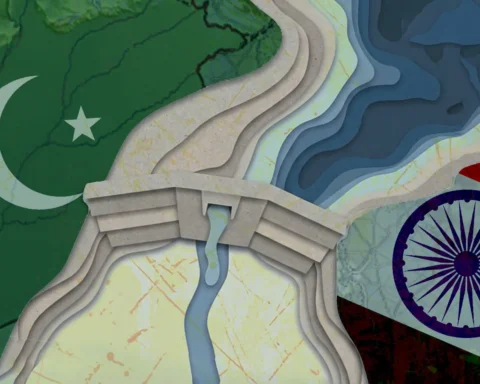
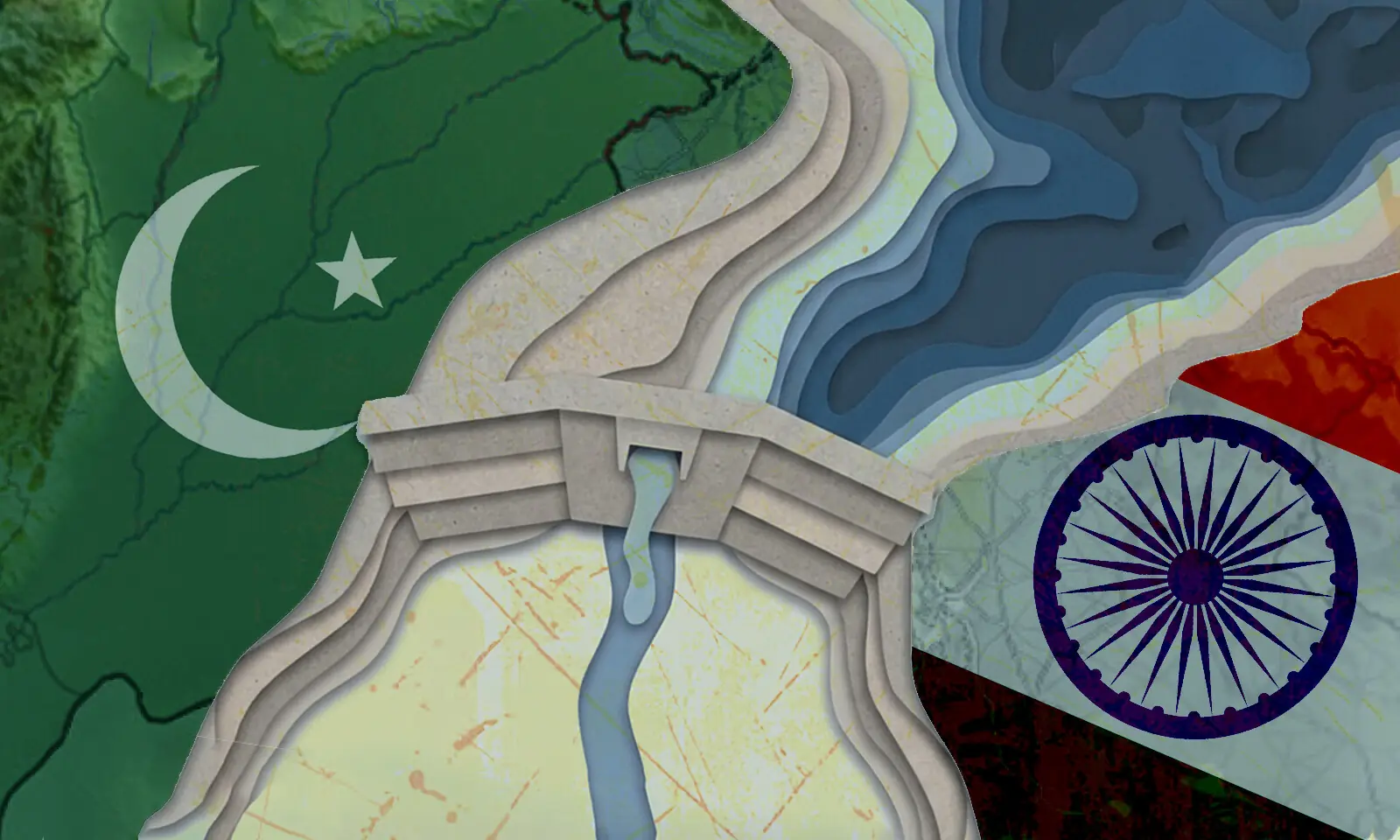

Every treaty gets tested when relations sour, not when they are warm. The Indus Waters Treaty of 1960 survived several wars and decades of hostility. It is now facing its hardest test since it was signed.
In April 2025, India announced it was placing the treaty in abeyance. The notification reached Pakistan a day after the announcement, as part of a package of retaliatory measures following the Pahalgam attack. Pakistan rejects the allegations against it. It also points to a simple legal problem: the treaty has no provision for holding it in abeyance. As one Pakistani lawyer told Al Jazeera, the treaty contains no such mechanism, and customary law on upper and lower riparians does not let the upstream state stop the water promised to the downstream one.
The law is settling
The strongest recent development is that the legal picture has become clearer. In June 2025, the Court of Arbitration held that the treaty does not provide for unilateral abeyance and reaffirmed its jurisdiction. On 31 August 2026, a five member Court at The Hague went further. It held that the treaty remains fully in force and that India must observe its obligations, and it rejected the abeyance decision. The same award also imposed interim measures on the Ratle project on the Chenab, restricting certain concreting work on the dam wall and power intake above specified levels while compliance questions are examined.
India did not take part in the proceedings and has rejected the ruling, and it says the abeyance continues. That is its position to state. But a rejected ruling is still a ruling.
A treaty does not lapse because one party declines to appear before the forum the treaty itself created. That is exactly why dispute resolution clauses exist.
Information is protection
The legal argument matters, but the human one matters more. A river basin is a living system, and people downstream plan their lives around what the river will do.
Pakistan’s 2025 monsoon showed how much depends on advance warning. In late August, the Sutlej surged to a dangerous 129,866 cusecs at Ganda Singh Wala, and Punjab evacuated thousands of people along its banks. By early September, the number displaced since the previous month had reached 1.8 million. The floods inundated 3,900 villages in Muzaffargarh district alone. Heavy rain drove much of this, and climate change is making such rain worse for both countries. But water levels also rise when upstream dams and barrages release excess flows once reservoirs fill. Knowing when and how much is what allows a district administration to move families before the water arrives.
India did send flood alerts during that period, and that deserves acknowledgement. Its government has said it will share high flood data on humanitarian grounds through diplomatic channels when a situation arises. The gesture saved time. But it is not a substitute for the system the treaty built. The Foreign Office noted that the alerts came through diplomatic channels rather than the Indus Waters Commission, as the treaty requires. The treaty obliges each party to tell the other, as far in advance as practicable, about extraordinary reservoir discharges and flood flows.
The difference is more than procedural. Pakistan’s former commissioner has argued that the Permanent Indus Commission provided standardized, engineer to engineer data with an audit trail, while alerts through diplomatic channels lack that technical credibility and let both sides question their timing or completeness. A flood warning that can be disputed is a weaker warning. Pakistan’s commissioner has also reportedly written four letters since April 2025 about Chenab fluctuations, and none has been answered.
Farms need forecasts too
Floods make the headlines, but the quieter cost falls on agriculture. Sowing dates, canal allocations and reservoir operations in Punjab and Sindh all depend on reliable flow forecasts. When farmers can’t trust the numbers, they plan cautiously, and cautious planning means lower yields. In a country where millions of livelihoods depend on the Indus system, uncertainty itself is a cost.
The precedent problem
The most serious consequence may reach beyond South Asia. If an upstream state can suspend water obligations whenever politics turn sour, no shared river is secure. The Mekong, the Nile, the Tigris Euphrates and the Brahmaputra all have upstream powers and downstream neighbours. International watercourse law rests on three ideas: equitable and reasonable use, cooperation, and avoiding significant harm to neighbours. Those ideas exist to keep geography from turning into leverage.
Rhetoric has hardened the concern. In 2025, India’s home minister said the treaty would never be restored, and that the water flowing to Pakistan would be diverted for internal use. New Delhi reiterated at the UN in March 2026 that the abeyance will continue until its security demands are met. Physically, India cannot redirect the western rivers overnight, because the necessary storage doesn’t exist. But statements like these still unsettle planners downstream, and even analysts sympathetic to India’s position concede that it is breaking new ground.
A way forward
Pakistan’s position has been consistent and constructive: keep the treaty running, and resolve disagreements through the mechanisms it provides. That includes Kishenganga and Ratle, where technical disputes over design have been running for years. Modernisation talks are possible in principle, since treaties do evolve, but the treaty itself says changes come through mutual agreement, not unilateral declaration. Pakistan’s foreign minister has stated exactly that.
Security concerns are real, and Pakistan, having lost thousands of lives to terrorism and the khawarij who carry it out, takes them seriously. But they belong in security and diplomatic channels. They should not be settled by rationing water, the one resource nobody can do without.
Restoring the Permanent Indus Commission, resuming routine data exchange and returning to the tribunal process would cost India little and would protect millions of people on both sides of the border. The Punjab floods showed that rivers ignore borders and that monsoon rain falls on Indian and Pakistani farmers alike. The next flood season will arrive whether or not the treaty is working.
The question is not who controls the river geographically.
It is who takes responsibility for sharing it lawfully. The Indus has run through this region for millennia. The rules that let two nations share it should not be abandoned lightly.