
There is a kind of diplomacy that does not happen in marble floored halls or across polished negotiating tables. It happens in university cafeterias, in shared student apartments, in corridors where a young Pakistani student asks a Turkish classmate how to pronounce a word correctly. It is quiet, unhurried and, arguably, more lasting than any communiqué.
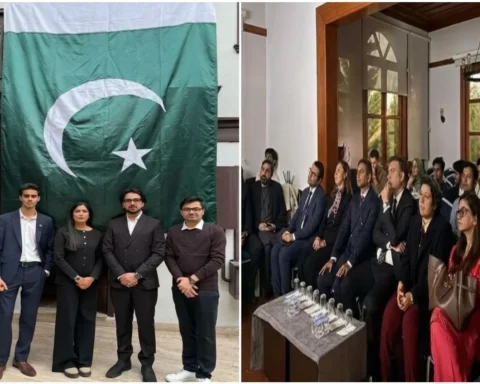
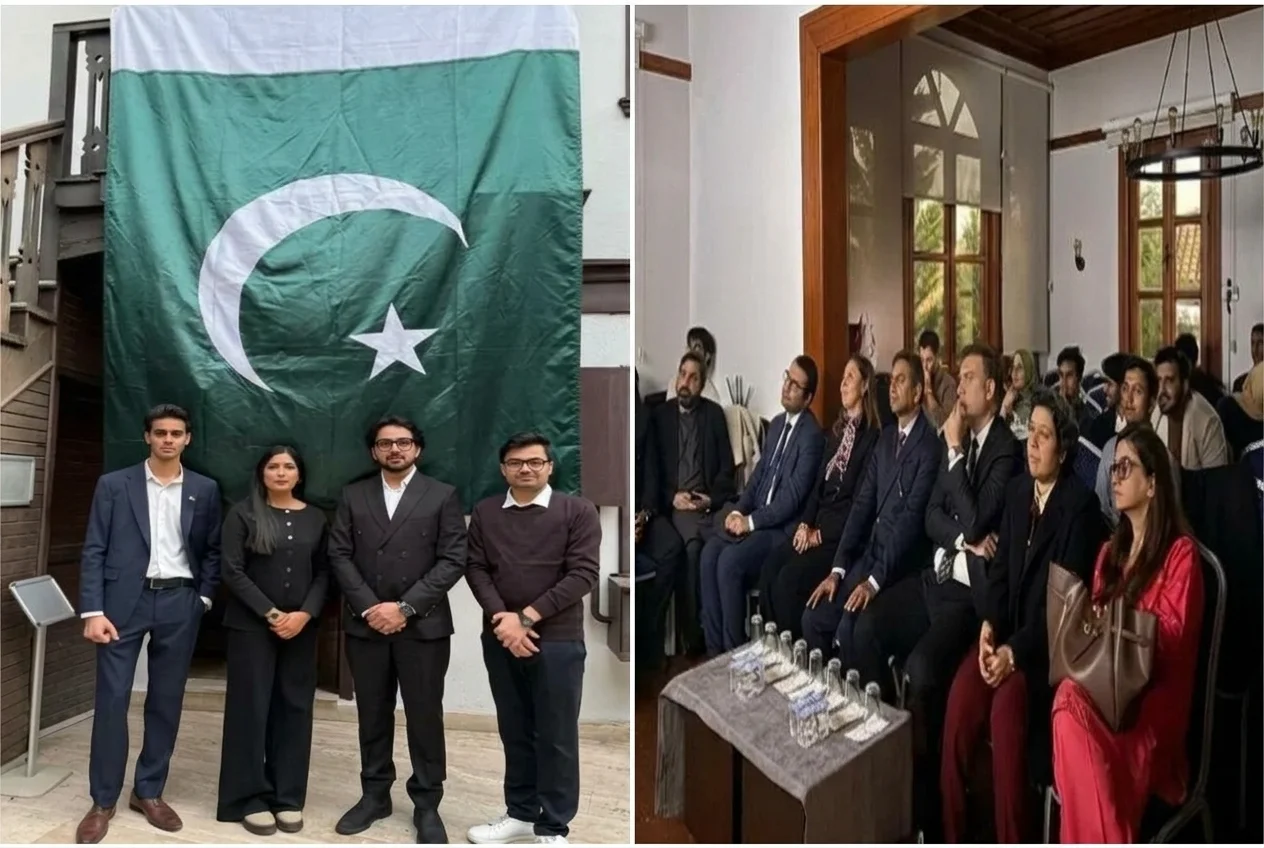
The Pakistani Students Association Türkiye’s Orientation Day, held on 30 October 2026 in Ankara, was one such moment. Newly arrived Pakistani students gathered to receive practical guidance on admissions, documentation and housing, joined by Shaiq Ahmed Bhutto, Chargé d’Affaires of the Embassy of Pakistan. It was, on the surface, a routine welfare event. Look a little closer, though, and it represents something far more consequential: the institutionalisation of a people to people partnership that official diplomacy alone could never achieve.
Pakistan and Türkiye established diplomatic relations on 30 September 1947, barely weeks after Pakistan came into existence. That the newly born republic’s earliest foreign friends included Türkiye says something about the nature of this bond. It was not forged through trade calculations or Cold War alignments alone. It grew from a shared civilisational memory, a common faith, centuries of Sufi and Ottoman cultural crosscurrents, and a political solidarity that neither side has ever found reason to abandon. The phrase “Two Countries, One Nation” is often repeated to the point of becoming a platitude, but events like PSAT’s orientation day give it a renewed, lived meaning.
What makes this moment particularly significant is the trajectory it represents. Around 5,000 Pakistani students are currently studying in Türkiye, a number that Turkish Ambassador Irfan Neziroğlu has explicitly described as falling well short of the relationship’s real potential. The ambassador has committed to increasing these numbers rapidly, and the data suggests the momentum is already building. The Türkiye Scholarships programme, coordinated by YTB, set a historic record in 2026, receiving nearly 200,000 applications from international students across the world. Pakistan, consistently among the highest sending nations, is riding that wave.
In 2025, an orientation programme was held at the Turkish Embassy for 166 Pakistani students awarded Türkiye Scholarships, which the ambassador described as a record intake from Pakistan. In addition to YTB scholarships, Pakistani students also benefit from opportunities provided by TUBITAK, the Presidency of Religious Affairs (Diyanet) and IHH. The PSAT orientation day on 30 October reflects this growing flow: 112 Pakistani students received Türkiye Scholarships in 2026 alone, with approximately 200 Pakistanis benefiting annually across various programmes.
This is not aid or charity. It is strategic investment in a future generation of linkages. Turkish Ambassador Neziroğlu has articulated it plainly: “Türkiye supports Pakistani students in every field because cooperation in education is an investment in our shared future.” That framing deserves to be taken seriously. When a Pakistani student graduates from a Turkish university, they carry back not just a degree but a network, a language, a familiarity with Turkish professional culture, and friendships that outlast any bilateral agreement. These are the informal bridges that make formal cooperation actually function.
The formal architecture, meanwhile, is expanding at a pace that matches the ambition. At the Türkiye Education Technologies Summit and Fair in Istanbul in June 2026, Pakistan’s Minister of State for Federal Education Wajiha Qamar and Türkiye’s Minister of National Education Yusuf Tekin met and agreed to deepen cooperation in education, skills development and educational innovation. Both sides discussed institutionalising the collaboration through a comprehensive education cooperation agreement and joint working groups, and explored developing AI assisted platforms for teaching Turkish in Pakistan and Urdu in Türkiye. That last detail, AI powered language exchange, suggests this partnership is not merely sentimental; it is evolving with the times.
In March 2026, a delegation of Turkish universities, led by Ambassador Neziroğlu, visited Pakistan’s Higher Education Commission to discuss bilateral matters aimed at expanding cooperation in higher education. The Turkish University Fair 2026 was successfully held in Islamabad, bringing together leading higher education institutions from Türkiye and fostering meaningful engagement with Pakistan’s academic community. These are not symbolic gestures. They are pipeline building exercises, creating the institutional pathways through which students, researchers and academics will flow for years to come.
What gives all of this its particular character, its warmth beyond bureaucratic form, is precisely what PSAT represents. Student associations like this one exist in a space between the official and the personal. They receive the new arrivals, explain the unwritten rules, translate not just language but culture. The Embassy’s presence at PSAT’s orientation day signals something important: that Pakistan’s diplomatic mission in Ankara sees student welfare and community cohesion not as an afterthought but as an extension of foreign policy itself.
Ambassador Neziroğlu has described Pakistan Türkiye relations as a strong brotherly bond founded on shared history, culture, religious harmony and mutual trust, noting that the two countries continue to deepen cooperation in education, culture and beyond. That depth is real. But depth without breadth can grow shallow over time. The true work of sustaining a relationship across generations is done not at summits but in orientation halls, in student dormitories, in the experience of a young man or woman from Lahore or Peshawar finding, in Ankara or Istanbul, that they are not quite as far from home as they expected.
That is what Türkiye’s investment in Pakistani students ultimately produces, not statistics, but recognition. And in international relations, as in ordinary life, recognition is the beginning of everything.