
The Latest Bombing of Pahalgam: A Flashpoint in Kashmir’s Volatile Landscape
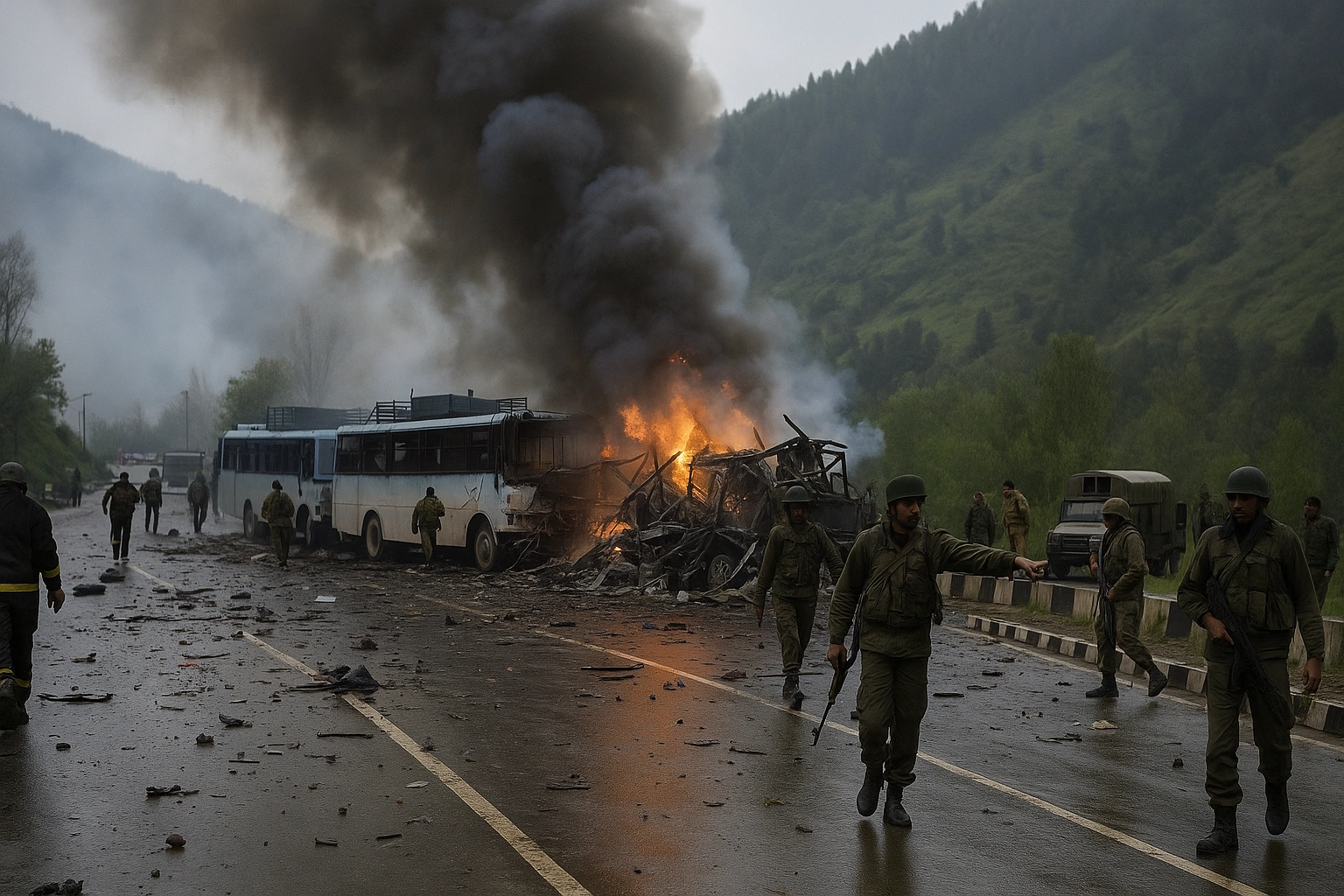
The latest bombing of Pahalgam, a picturesque town in Indian-administered Kashmir, has brought to the fore the situation of the unsettled region that witnessed the worst of the geopolitical fire. Even though Indian media sources and government sources have not been slow to point the finger at Pakistani-based terror groups such as Lashkar-e-Taiba (LeT), which is supposed to have such support vis-à-vis Inter-Services Intelligence (ISI), there have been alternative stories to this version of events. Such conflicting reports highlight the necessity of own investigation of the volatile and politically sensitive cases.
The Ruling Indian Version: The Attack was Organized by ISI and LeT
Reports in The Times of India confirmed that the Pahalgam attack has been a carefully planned exercise, carried out by Pakistani terrorists supposedly at the command of the political-military leadership of Islamabad. Indian intelligence sources allege that LeT infiltrators crossed the Line of Control (LoC) under the guidance of the ISI handlers.
The specifics, as per these details, are that there was a great level of coordination and training, implying state-level involvement. Cross-border actions have been supported by intercepted communication as well as the retrieved weapons, which are alleged to belong to the Pakistani forces. This story aligns with the old Indian stance that Pakistan houses and provides support to the terror groups that attack Indian soil, especially in the state of Jammu and Kashmir.
The Contrary Opinion: A False Flag Operation
Contrary, there is also an argument that there can be a false flag operation an incident that is planned to look like it was done by someone else. Other commentators and observers consider that the attack was staged by the Indian intelligence, especially the Research and Analysis Wing (RAW), in larger strategic interests.
In this light, the incident at Pahalgam may be a strategic step to cover:
- Military hit on Pakistan
- Severe repression of the Kashmiris
- Creating a favorable environment in the domestic and foreign opinion on hardline policies
These are the allegations based on historical patterns, in which the false flag operation has been applied as a mode of political advantage. The timing of the attack and its efforts to manipulate the minds of the people, as well as the immediate blame game that is not investigated openly, are cited by the skeptics.
Propaganda and Media Narratives
The role of propaganda and media narratives is like providing a black box that hides the truth, offering templates instead of investigation.
India and Pakistan share a rich legacy of using media to push an agenda in and around Kashmir. Government control or state influence on the media may result in an echo chamber, especially in high-stakes settings, supporting governmental views instead of conducting investigations.
The channels and publications in India carry nationalistic overtones, supporting the ideology that Pakistan is always the aggressor. The media in Pakistan usually stages India as an oppressor in Kashmir, and any form of militant action is under the pretext of state-sponsored atrocities.
As usual, truth turns out to be the initial victim. The governments involved in information warfare make it even harder to figure out what is real and what is fake in the eyes of the population.
Digital Matters: A Democratic Imperative Independent Investigation
Since there are two different versions of the Pahalgam incident, it is essential that some sort of independent and international investigation be conducted. An impartial third-party human rights organization, or such neutral bodies as the United Nations, must be given the latitude to:
- View the place of attack
- Analyse forensic evidence
- Question the eyewitnesses, survivors
- Check the military and intelligence allegations of both parties
Such verification is a precondition to blaming, without which the blame game is not only premature but also perilous. The blame game may escalate the conflict unnecessarily and may result in directly dragging the two nuclear neighbors to the edge of conflict.
History: Acquittal and Condemnation by Pattern
The case of Pahalgam is not alone. In India and Pakistan, fingers have always pointed at each other for events in Kashmir. From the 2001 Indian Parliament attack to the Pulwama bombing, finger-pointing and counter-accusations have been the norm, usually bringing diplomatic tensions and even military clashes.
In both instances, there was a deliberate delay in allowing independent verification, and sometimes even denying it, further increasing the distrust between the two countries. Lack of open investigative apparatus means conspiracy theories thrive, and the gulf of suspicion widens.
The Human Cost of Political Gamesmanship
Where the political and strategic targets are hogging the limelight, the ever-suffering citizens of Kashmir are the biggest losers yet again. The identity of the attackers whether foreign terrorists or a staged political event will not change the consequences: a high number of military forces, fewer civil liberties, and greater fear among the common people of Kashmir.
Every such event as Pahalgam results in:
- Step-up of security operations
- Random arrests
- Curfews
- Internet shutdowns
Every single day of living in the region becomes a struggle. Kashmiris, who languish between national interests, are in need of peace and justice, not military triumphs.
Politics Cannot Win Over Truth
The Pahalgam incident has again revealed how precarious peace is in South Asia, and the dangerous course of the conflict over Kashmir. With lies and stories colliding, and propaganda machines running full throttle, it is important that the international community seeks truth, not just retaliation.
Whether it was a terror embassy-sponsored act or an evil scheme executed at home, the details must be brought out. The cycle of blame, revenge, and repression can only be shattered by verification. Without it, the region remains immersed in an illusory haze of war, where truth becomes insignificant, and peace remains elusive.