
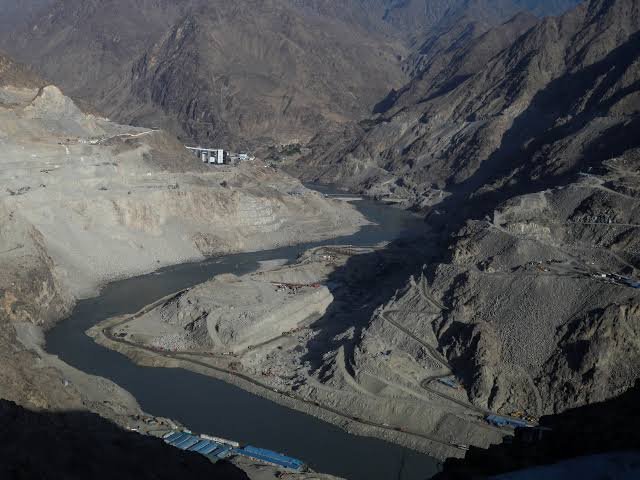

A river may cross borders, but it cannot be reduced to the property of the state through which it first flows. Geography may give an upstream country physical advantage, yet international law converts that advantage into a duty of restraint, cooperation and responsibility. This is the central issue raised by India’s April 2025 decision to place the Indus Waters Treaty in “abeyance.” India says the Treaty will remain suspended until Pakistan ends what New Delhi describes as support for cross-border terrorism, while Pakistan rejects the move as legally invalid. The dispute therefore concerns more than bilateral tension: it tests whether treaty obligations can be set aside whenever political relations deteriorate.
The Indus Waters Treaty was designed precisely to prevent such instability. Concluded in 1960 after years of negotiations facilitated by the World Bank, it established defined water rights, the Permanent Indus Commission and procedures for resolving questions, differences and disputes. Its strength lies not merely in allocating rivers but in replacing unilateral discretion with an agreed legal process. Article XII states that the Treaty may be modified only through a duly ratified treaty between both governments and shall remain in force until terminated in the same manner. There is no textual category of unilateral “abeyance.” The broader rule of pacta sunt servanda reinforces this structure: treaties in force are binding and must be performed in good faith.
India’s upstream position does not create unrestricted sovereignty over the western rivers. Modern international watercourse law is organized around equitable and reasonable utilization, cooperation, information-sharing and the obligation to prevent or mitigate significant transboundary harm. These principles do not erase territorial sovereignty; they qualify its exercise where one state’s conduct can materially affect another. An upstream state may develop water resources, but it cannot reasonably claim that downstream consequences are irrelevant.
The river is physically shared, ecologically interconnected and economically indispensable across borders. Sovereignty over territory cannot become sovereignty over another society’s survival
This is why hydrological information is not a diplomatic courtesy. Article VI requires the parties to exchange data on river flows, reservoir extractions and releases, canal withdrawals, escapages and deliveries. Operationally necessary information may also be requested at daily or other agreed intervals. Pakistan has reported that India halted the sharing of advance information and hydrological data after placing the Treaty in abeyance. When established information channels are disrupted, Pakistan loses valuable lead time for estimating flows, managing reservoirs, planning irrigation and anticipating sudden variations. In a basin increasingly exposed to extreme rainfall, glacier melt, flash floods and climatic volatility, withholding timely information multiplies risk.
The consequences extend directly to food security. Pakistan’s agricultural system depends heavily on the Indus Basin Irrigation System, which supports millions of hectares of farmland and remains central to the country’s water and food security. Farmers and irrigation departments must decide sowing schedules, crop selection, water allocation and reservoir operations before a season fully unfolds. Uncertainty can reduce yields, distort planting decisions and intensify competition among users. Disaster-management authorities face a parallel problem: without timely information on flows and releases, they have less time to issue warnings, evacuate communities, protect livestock and reinforce infrastructure. What appears on paper as suspended technical cooperation can therefore translate into destroyed crops, damaged homes and preventable loss of life.
India’s use of the Treaty as political leverage also creates a dangerous precedent. Every international agreement operates amid political disagreement. If one party could suspend performance by linking a treaty to an unrelated security grievance, the stability of treaty law would weaken. Water agreements would be especially vulnerable because upstream states already possess structural power over timing, storage, and information. Allowing geographic advantage to become coercive statecraft would undermine confidence in transboundary cooperation far beyond South Asia.
In a climate-stressed world, the consequences would be felt in every basin where political power and hydrological dependence are unevenly distributed
The credibility problem is equally serious. India presents itself as a supporter of a rules-based international order and seeks a larger role in global governance. Yet influence carries an obligation to demonstrate consistency between diplomatic rhetoric and state practice. In June 2025, the Court of Arbitration constituted under the Treaty concluded that India’s position on “abeyance” did not limit the Court’s competence, and the proceedings continued despite India’s non-participation. India rejects the legitimacy of that Court, but its objection does not erase the central institutional question: whether one party can extinguish an agreed dispute-resolution process simply by refusing to participate.
Pakistan’s position should remain firm but legally disciplined: the Treaty must continue to operate, technical exchanges must resume, and disagreements must be addressed through the Permanent Indus Commission, neutral-expert procedures or arbitration, as applicable. The strongest response to coercive unilateralism is sustained reliance on treaty text, international law, technical evidence and diplomacy.
The central question is not who controls a river at a particular point, but who accepts the responsibility accompanying shared dependence. A transboundary river is not a weapon, bargaining chip or exclusive sovereign possession. It is a common ecological system governed by law, prudence and the basic principle that no state should secure political advantage by exposing millions downstream to avoidable insecurity.