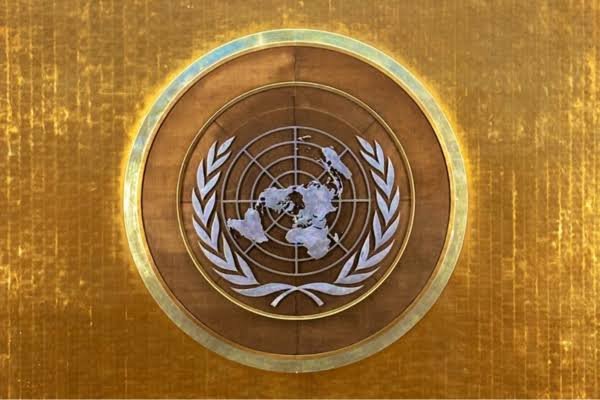

At the 62nd session of the United Nations Human Rights Council, India attempted to present two central pillars of its international image: an independent judiciary protected from political interference and an inclusive development model capable of reducing poverty on a massive scale. The Council’s programme for 25 June 2026 included separate interactive dialogues on the independence of judges and lawyers and on extreme poverty and human rights, giving India an opportunity to defend both its constitutional institutions and its welfare record. Yet these assertions also invited an unavoidable question: do formal guarantees and national statistics reflect the experience of people living under restrictive political and security conditions?
India’s representative described the country’s judiciary as independent, impartial and protected by its constitutional architecture. The delegation argued that judicial independence had been recognised by the Supreme Court as part of the Constitution’s basic structure. It further claimed that the collegium system placed higher judicial appointments beyond political interference, while published collegium resolutions, professional screening and merit-based selection strengthened transparency and public confidence.
In India’s telling, its appointment system represents an effective institutional barrier against executive influence
Such constitutional assurances are important, but judicial independence cannot be established through institutional self-description alone. It must be judged by the judiciary’s willingness and ability to review executive action, protect unpopular voices, secure fair trials and provide remedies to communities facing state power. The decisive question is not simply who appoints judges, but whether citizens can approach the courts without fear and receive timely, impartial and enforceable justice. A judiciary may possess constitutional autonomy on paper while still operating within a political environment that discourages meaningful scrutiny of sensitive government policies.
International legal observers have raised precisely these concerns. In February 2025, the International Commission of Jurists concluded that judicial independence in India was under serious pressure because of structural weaknesses in governance, irregularities in appointments and alleged political influence. It also connected the deterioration of judicial safeguards with broader concerns over the rule of law and the protection of minorities and marginalised groups. These findings do not prove that every Indian judge lacks independence, but they directly challenge the sweeping claim that the country’s judicial structure is insulated from political influence.
India’s second major argument concerned poverty alleviation and inclusive growth. Its delegation stated that nearly 250 million people had moved out of multidimensional poverty during the preceding decade. It highlighted free food grains for more than 800 million people, income support for over 93 million farmers and the expansion of social-protection programmes. India presented direct benefit transfers as a mechanism for reducing corruption and ensuring that public assistance reached intended recipients without administrative leakage.
These figures indicate the scale of India’s welfare infrastructure and should not be dismissed merely because they were presented by the government
However, the size of a welfare programme does not by itself prove inclusive development. Direct transfers can improve delivery, but they cannot compensate for restrictions on education, employment, political participation, freedom of expression or access to justice. Development should be understood as the expansion of human capabilities and fundamental freedoms, not simply the distribution of food, cash or other benefits. A government cannot convincingly describe development as inclusive when particular communities believe that their political status, civic space and institutional autonomy have been progressively weakened.
This contradiction was brought into focus by concerns raised about Indian Illegally Occupied Jammu and Kashmir. United Villages reportedly informed the Council that measures introduced since 5 August 2019 had damaged socioeconomic stability and disrupted educational institutions in the territory. According to the intervention, thousands of students, especially those living in rural areas, had faced restrictions affecting their access to education. These allegations directly challenged the idea that post-2019 changes had produced uninterrupted development, welfare and normalcy for the Kashmiri population.
The broader human-rights environment also remains relevant. UN experts have previously expressed concern regarding counterterrorism operations, large-scale arrests and the continued detention of human-rights defenders in Jammu and Kashmir. A 2025 communication by UN mandate holders referred to reports of approximately 2,800 arrests following security operations, including the detention of journalists and human-rights activists.
India may dispute these allegations, but their repeated appearance within UN mechanisms demonstrates that the situation cannot be reduced to an internal administrative success story
Civil-society advocacy outside the Council chamber reinforced the same message. Kashmiri diaspora organisations used demonstrations, tents and poster displays near Geneva’s Broken Chair monument to draw attention to alleged violations in the territory. Such activities do not constitute judicial findings, but they prevent the Kashmir issue from disappearing behind official language about integration and prosperity. They also demonstrate that the international debate is being shaped not only by states but by victims’ groups, activists and diaspora communities seeking wider scrutiny.
India’s difficulty at the UNHRC was therefore not the absence of constitutional provisions or welfare programmes. Its problem was credibility. Claims of judicial independence must be supported by transparent appointments, institutional accountability, protection for lawyers and journalists, and effective remedies against executive excess. Claims of inclusive development must be tested in regions where political contestation and security restrictions are most intense. Until India permits credible scrutiny of conditions in IIOJK and demonstrates that justice and development are enjoyed equally, its international narrative will remain open to challenge. Statistics may describe the reach of government programmes, but they cannot silence unresolved questions of rights, dignity and political freedom.