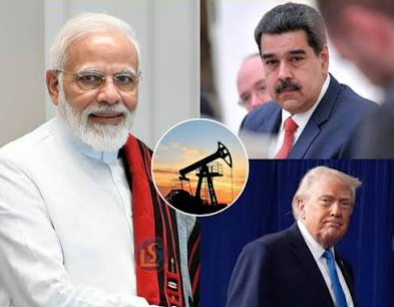

India has spent years marketing “strategic autonomy” as the defining principle of its foreign policy. In official speeches, New Delhi presents itself as a power that refuses alliances, resists external pressure and engages Washington, Moscow, Tehran and the Global South on its own terms. Yet the movement of oil tankers tells a less heroic story. India’s energy choices repeatedly change when American sanctions, tariff threats or financial restrictions raise the cost of defiance. The result is not sovereign independence but a performance of autonomy sustained only while it remains commercially convenient.
Russian oil became the clearest symbol of India’s supposed independence after the Ukraine war. Russia’s share of Indian crude imports rose to 35.9 percent in 2023-24 and remained around 35.8 percent in 2024-25. Discounted barrels helped Indian refiners control costs, while New Delhi portrayed its purchases as an uncompromising defence of national interest. Bilateral trade reached $68.7 billion in 2024-25, with Indian imports from Russia accounting for $63.8 billion and consisting primarily of crude oil and petroleum products.
The scale of this trade allowed Indian commentators to boast that Washington could not dictate India’s energy policy
But strategic autonomy is tested when choices become costly, not when they are profitable. As sanctions pressure intensified in late 2025, Russian crude imports fell sharply in December, Russia’s share of India’s import basket dropped to 27.4 percent, and major refiners became cautious about exposure to sanctioned suppliers. Washington’s pressure worked through banks, insurers, shipping networks, access to Western markets and the threat of punitive trade measures. India continued speaking the language of independence while its refiners quietly recalculated the price of resistance.
The Venezuelan opening illustrates this contradiction. By May 2026, India was importing about 427,000 barrels per day of Venezuelan crude, making it Venezuela’s second-largest customer that month and placing the country on course to become India’s fourth-largest oil supplier. Reliance Industries emerged among the three biggest buyers. This was not merely spontaneous diversification. Washington had encouraged India to consider Venezuelan crude as Russian purchases slowed, while Reliance sought American authorization to resume transactions involving Venezuelan oil.
India’s supposedly autonomous energy strategy was therefore being reorganized within a sanctions architecture designed and supervised by the United States
Venezuela has not permanently replaced Russia. Recent evidence shows that Indian refiners increased purchases from both Russia and Latin America during the April-June quarter, while imports from the Middle East fell. Russian flows rose again amid disruptions around the Strait of Hormuz, and by late July Indian demand for Urals crude had strengthened even as discounts narrowed. This does not rescue strategic autonomy. It exposes its practical meaning: India shifts between suppliers according to the penalties, conflicts and commercial openings created by more powerful actors. Its room for manoeuvre exists, but it is narrower than its rhetoric suggests.
Iran provides the earlier precedent. India stopped receiving Iranian crude in May 2019 after American pressure ended sanctions exemptions for buyers. In 2026, Indian refiners purchased Iranian oil again only amid regional supply disruptions and a temporary American waiver. Chabahar tells a similar story. India signed a ten-year agreement to operate the Iranian port in 2024, but the project has remained dependent on Washington’s willingness to provide or extend sanctions relief.
A project advertised as proof of India’s independent access to Afghanistan and Central Asia has repeatedly required American legal protection to survive
Defenders of New Delhi will call this pragmatism. Every major importer diversifies supplies, protects its refiners and responds to market risk. That argument is reasonable, but it concedes the central point. India is not wrong to protect energy security; it is wrong to inflate ordinary vulnerability management into a doctrine of geopolitical independence. A country that must adjust purchases whenever Washington changes sanctions, licensing rules or tariff threats cannot credibly present itself as immune to great-power pressure.
The latest proposed American sanctions legislation makes that vulnerability clearer. The bill advanced by the U.S. Senate would empower the president to impose tariffs of up to 100 percent on leading purchasers of Russian energy, potentially including India, although it still faces legislative hurdles. Even before enactment, such threats influence commercial decisions because refiners and exporters cannot ignore the possibility of losing access to the American market. Strategic autonomy becomes theatrical when one side can alter the other’s calculations simply by threatening financial or trade punishment.
India’s oil diplomacy therefore reveals not an autonomous pole, but a state balancing loudly and yielding quietly. It buys Russian crude when discounts outweigh political risk, Venezuelan crude when Washington permits it, and Iranian crude when exemptions reopen the door. That may be competent transactional diplomacy, but it is not the fearless independence New Delhi advertises. Strategic autonomy, stripped of slogans, looks less like defiance and more like strategic compliance dressed in nationalist language.