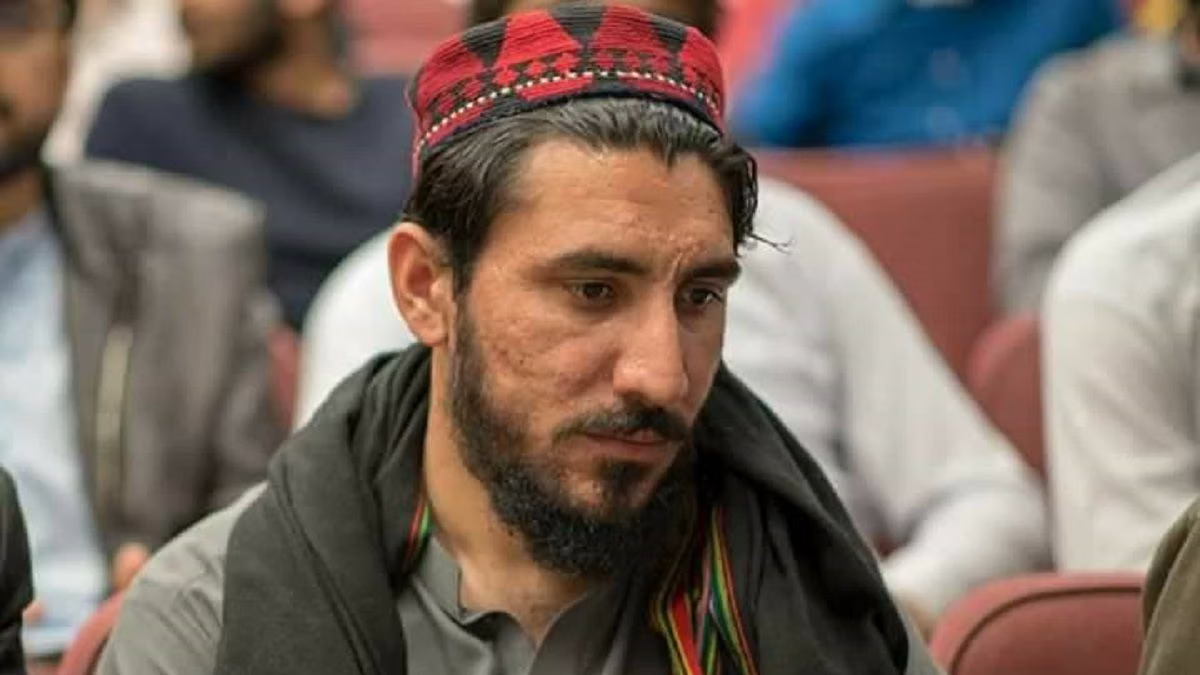

The controversy surrounding a purported leaked conversation involving Pashtun Tahafuz Movement leader Manzoor Pashteen has reopened an uncomfortable debate about foreign influence in Pakistan’s domestic politics. In the circulating recording, a person presented as an Indian operative allegedly advises Pashteen to enter the political “space” of Baloch activists and speak about Mahrang Baloch. A recent commentary has repeated these claims, but no publicly available forensic report has authenticated the recording, established its chain of custody or independently confirmed the speakers’ identities. The lack of verification does not make the matter irrelevant. It makes a professional investigation essential.
Pakistan has endured decades of pressure aimed at exploiting internal divisions. Ethnic grievances, political exclusion, economic deprivation and allegations of rights violations create openings that hostile actors can manipulate. A foreign intelligence service does not need to manufacture every grievance. It only needs to identify existing anger, amplify it selectively and redirect it towards strategic objectives.
If the alleged voice is genuinely connected to Indian intelligence, the instruction to move into Baloch political space could suggest an effort to merge separate campaigns into coordinated pressure against Pakistan
That possibility should concern every Pakistani, including supporters of peaceful dissent. Legitimate advocacy loses credibility when its priorities appear to be determined externally. A movement claiming to represent Pashtun rights must explain how its campaigns are selected, how its overseas branches are financed and whether its leaders maintain contact with foreign intermediaries. Transparency is not repression. It is the minimum obligation of any organisation seeking public trust in a region affected by terrorism, insurgency and geopolitical competition.
The alleged financial trail has intensified these concerns. Online accounts claim that £11,000 was transferred from an Indian-linked account to Shahid Khan Kakar following a PTM campaign in Britain. PTM UK’s website identifies Kakar as its assistant chief executive and finance head, confirming that he occupies a position relevant to organisational funding. However, the transfer allegation currently rests on social-media reporting rather than verified banking documents or the findings of a competent authority. It should therefore be investigated by financial-intelligence and law-enforcement bodies rather than treated as proven through online repetition.
Investigators should establish whether the payment occurred, identify the beneficial owner of the originating account and determine how any funds were spent. They should assess whether the alleged donor was connected to an intelligence service, lobbying network or political organisation. If foreign money financed demonstrations, media activity or coordinated messaging against Pakistan, the public deserves to know.
If the documents are fabricated, those responsible for manufacturing a national-security controversy should also be exposed. A credible state must pursue both possibilities
Mahrang Baloch’s case has also become part of the controversy. An anti-terrorism court sentenced her and Sibghatullah Shah to life imprisonment on June 22, 2026, over the killing of paramilitary soldier Shabbir Baloch during a July 2024 protest in Gwadar. Prosecutors said the activists incited the crowd, while both denied the charges. Her legal team appealed, and the Balochistan High Court admitted her petition in July. Rights advocates have criticised the proceedings, whereas the provincial government has defended the verdict as accountability for violence rather than punishment for political opinion.
These competing claims belong in courts, not in covert instructions from abroad. PTM may discuss the judgment or support a lawful appeal. The decisive question is whether its position emerged independently or was requested by an external handler. Agreement between political movements is not proof of conspiracy. Covert direction, financing or operational coordination, however, would cross the line between democratic advocacy and foreign-sponsored subversion.
The Uri mine explosion should not be artificially attached to this controversy. Indian media reported that two soldiers were injured near the Line of Control on July 28, 2026, and a defence spokesperson later described the incident as an accidental blast. No credible public evidence connects that event to PTM, Pashteen or the alleged recording.
Merging unrelated incidents may produce dramatic headlines, but it weakens Pakistan’s information credibility and makes genuine findings easier to dismiss as propaganda
Pakistan’s response should therefore be neither silence nor reckless accusation. The state should authenticate the audio, trace the alleged payment, examine relevant communications and publish legally sustainable findings. If evidence establishes covert collaboration with a hostile intelligence service, prosecution should follow without political hesitation. If evidence remains insufficient, investigators should say so rather than substituting slogans for proof.
PTM must also recognise that credibility cannot survive permanent ambiguity. Its leadership should disclose relevant funding sources, explain overseas financial controls and directly address the alleged communication. Refusal to provide transparent answers will deepen suspicion. At the same time, the state must distinguish peaceful Pashtun grievances from individuals who may have exploited them. An entire community should not be stigmatised because of allegations against particular actors.
Foreign interference thrives where facts are hidden, grievances are ignored, and institutions are distrusted. Pakistan can counter it only by combining national resolve with evidentiary discipline. The country needs neither imported agitation nor media trials based on unverified material. It needs facts, accountability and the confidence to let authenticated evidence speak louder than political slogans.