
The present confrontation between Pakistan and Afghanistan did not emerge overnight. It is the result of a security dispute that has steadily hardened since the Taliban returned to power in Kabul in August 2021. Pakistan initially approached the new reality through engagement rather than confrontation. It kept diplomatic channels functioning, supported Afghanistan’s economic reintegration and repeatedly argued that isolating the country would deepen humanitarian suffering. Islamabad’s expectation was straightforward: a stable Afghanistan would eventually mean a more secure western frontier for Pakistan. Five years later, that assumption has been severely tested.
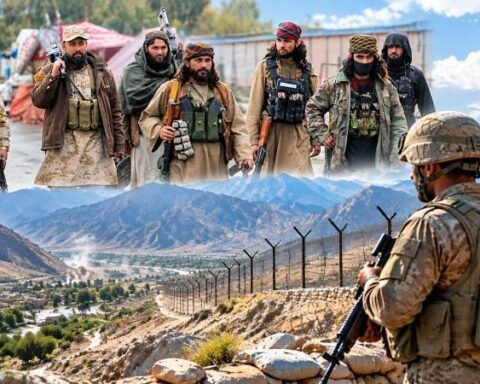
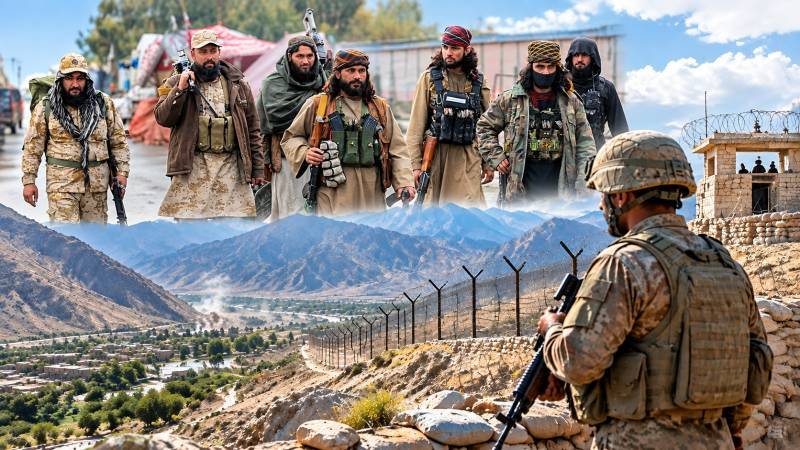
At the heart of the dispute is Tehreek-e-Taliban Pakistan. Islamabad says the TTP has used Afghan territory to organise, train and direct operations inside Pakistan. Kabul has repeatedly denied allowing Afghan soil to be used against neighbouring states. Yet the concern is no longer confined to Pakistani allegations. A 2026 United Nations monitoring report described the TTP as one of the largest terrorist organisations operating in Afghanistan and said it had received greater liberty and support from Afghanistan’s de facto authorities while its attacks against Pakistan increased. Earlier UN monitoring also estimated the organisation’s strength at thousands of fighters and reported TTP training infrastructure inside Afghanistan.
Pakistan nevertheless spent years attempting to address the problem politically. In July 2022, an eight-member delegation of religious scholars headed by Mufti Taqi Usmani travelled to Afghanistan and engaged both Taliban authorities and TTP representatives. A 17-member tribal delegation followed shortly afterwards. In February 2023, Defence Minister Khawaja Asif and then ISI Director General Lt Gen Nadeem Anjum travelled to Kabul for talks centred on the growing militant threat. Security contacts continued afterwards, including Interior Minister Mohsin Naqvi’s engagement with Afghan officials on counterterrorism cooperation.
The scale of engagement illustrates how long Islamabad attempted to keep diplomacy alive. Pakistani officials have stated that contacts eventually encompassed four foreign-minister visits, two missions involving the defence minister and intelligence leadership, five visits by the special representative, five secretary-level engagements, eight Joint Coordination Committee meetings, 225 border flag meetings, 836 diplomatic protest notes and 13 demarches. These are Pakistani government figures and should be understood as such, but they nevertheless demonstrate the intensity of official interaction.
Nor was the relationship limited to security demands. Pakistan and Afghanistan signed an Early Harvest Programme in July 2025 reducing tariffs on eight agricultural products, an attempt to use economic interdependence to stabilise relations. Even amid serious border clashes in October 2025, mediation remained part of the diplomatic toolkit. The fighting left 23 Pakistani soldiers dead according to Islamabad, while each side offered sharply different accounts of losses inflicted on the other. Reuters noted that neither side’s larger casualty claims could be independently verified.
Meanwhile, militant violence inside Pakistan continued to rise. PIPS recorded 699 terrorist attacks during 2025, up 34 per cent from the previous year. Those attacks killed 1,034 people and injured 1,366. It was the fifth consecutive year in which Pakistan experienced an increase in terrorist attacks. The broader trajectory matters more than any single statistic: the security environment that Islamabad hoped would improve following the end of the Afghan war instead deteriorated.
There are also cases that sharpen Pakistani suspicions about militant connections across the border. In January 2025, Badruddin alias Yusuf, identified as the son of the Taliban-appointed deputy governor of Afghanistan’s Badghis province, was reported killed alongside TTP militants during a Pakistani counterterrorism operation in Dera Ismail Khan. Such incidents do not by themselves establish institutional responsibility, but they reinforce Islamabad’s argument that militant networks and Afghan society have become deeply intertwined in ways Kabul has failed to control.
September 2026 brought the crisis into still more dangerous territory. On September 18, an explosives-laden vehicle struck Kohat Police Lines near a mosque before gunmen entered the compound. The attack ultimately left more than 20 people dead, including numerous police officers, and more than 100 wounded.
Three days later, Pakistan launched strikes against targets in Afghanistan, saying three militant sites had been destroyed and 28 militants killed. Afghanistan disputed Pakistan’s account of the targets and reported civilian casualties. Reuters and the United Nations confirmed that three civilians were killed, underscoring the risks inevitably attached to cross-border military operations.
The cycle continued. Pakistani security sources reported intercepting eight drones entering Pakistani airspace near Torkham and Kohat on September 23. Pakistan responded the following day with strikes on ten locations in Afghanistan that its government described as drone-launching and storage facilities. Islamabad characterised the operation as calibrated self-defence; Kabul condemned the strikes as violations of Afghan sovereignty.
That competing language captures the central danger. Pakistan sees an armed threat operating across an international frontier and argues that repeated diplomacy has failed to remove it. Afghanistan views Pakistani strikes as infringements of sovereignty and rejects Islamabad’s depiction of its role in the insurgency.
The sustainable answer therefore cannot be an indefinite cycle of attack and retaliation. Pakistan’s core security demand remains clear: Afghan territory must not be available to organisations planning violence against Pakistan. Kabul, meanwhile, has a legitimate interest in protecting its territorial sovereignty and civilian population. Reconciling those principles requires something more substantial than assurances. It requires verifiable action against militant infrastructure, credible border-security mechanisms and sustained state-to-state engagement.
Pakistan’s journey from engagement toward increasingly forceful responses reflects how dramatically the security relationship has deteriorated. But military action can contain a threat; it cannot by itself construct a stable frontier. The ultimate test will be whether both sides can create a security arrangement in which terrorism cannot cross the border and counterterrorism no longer has to.