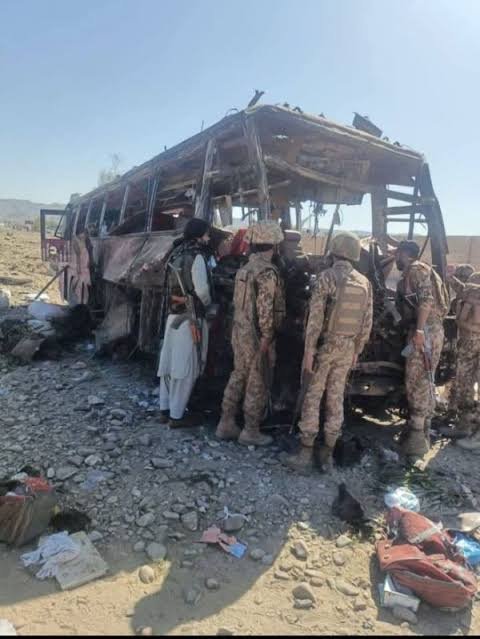

Balochistan’s security challenge can no longer be understood simply as a collection of isolated attacks taking place within Pakistan’s borders. Recent developments point towards a more complicated regional security environment in which militant organisations benefit from difficult terrain, cross-border mobility, overlapping facilitation networks and the political tensions of South and West Asia. The reported killing of senior Baloch Liberation Army commander Dr Abdul Rashid, also known as “Nokab”, during clashes in Saravan, Iran, has again raised questions about militant movement along the Pakistan-Iran frontier. Separately, Pakistani security-source reporting identified Naqeeb alias Ameer, killed in an intelligence-based operation in Mastung in September, as an Afghan national associated with the BLA network. Although some details of both cases remain dependent on security-source reporting, together they underline the transnational dimension that increasingly shapes militancy in Balochistan.
The Saravan case is particularly important because geography matters. Pakistan’s border with Iran stretches across remote and sparsely populated territory where communities, trade routes and informal movement have existed for generations. Such conditions are difficult to police comprehensively and can be exploited by armed organisations for concealment, communication and logistics. The reported presence of a senior BLA figure on the Iranian side should therefore encourage deeper Pakistan-Iran intelligence cooperation rather than simplistic accusations against either state. Tehran itself has faced militant violence in Sistan and Balochistan, while Pakistan has repeatedly struggled with armed groups moving through its southwestern borderlands. The security interests of both countries ultimately converge around preventing non-state armed organisations from using frontier spaces as operational depth.
Afghanistan presents another dimension of the problem. If the Pakistani identification of Naqeeb as an Afghan national holding a senior position in a BLA-linked structure is accurate, it demonstrates how nationality and organisational identity can cross traditional boundaries. More broadly, Afghanistan’s militant environment has already become a major concern in international reporting. The 38th report of the UN Analytical Support and Sanctions Monitoring Team stated that numerous terrorist groups continued to operate in Afghanistan and recorded member-state assessments of growing operational or facilitation links involving the TTP, Al-Qaeda, ISIL-K and the BLA. The report also cited one member state as saying that ISIL-K and the BLA shared facilitation networks for logistics.
This does not mean that the BLA, TTP and ISIL-K have merged into a single organisation. Their ideological foundations, political objectives and leadership structures remain different. Yet separate names do not necessarily produce completely separate militant ecosystems. The UN’s 37th monitoring report recorded that some member states believed the BLA had collaborated with the TTP and ISIL-K through shared training camps, resources, meetings and coordination. Importantly, the same report also recorded differing assessments from other member states regarding the extent of BLA links with Al-Qaeda or ISIL. That nuance matters. The strongest conclusion supported by the evidence is not that every attack represents a centrally directed alliance, but that tactical cooperation, shared facilitators and overlapping networks are plausible and documented concerns.
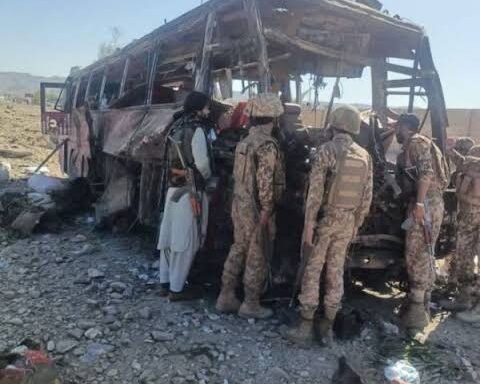
Events around Ziarat Cross illustrate how blurred attribution has become. A TTP-claimed assault on a customs facility occurred around the end of August and beginning of September, while on September 3 another major attack took place near Ziarat Cross for which the BLA claimed responsibility. Pakistani security-oriented accounts subsequently alleged TTP involvement in the September 3 ambush despite the BLA claim. Independent reporting confirms the BLA claim but has not conclusively established the assertion that TTP actually executed the attack. Even so, conflicting attribution itself has operational significance because militant organisations use claims of responsibility to project strength, protect networks, recruit supporters and shape public perception.
The July 23 assassination of District and Sessions Judge Abdul Hakeem Kakar near Wali Khan Crossing in Mastung demonstrates the same difficulty. Kakar and his security guard were killed while another judge was wounded. Contemporary reporting said IS-K later claimed responsibility, though the claim was not independently verified. Pakistani analysts subsequently argued that BLA-linked actors might also have been involved, but publicly available evidence does not conclusively establish such collaboration. The responsible approach is therefore to treat the incident as an illustration of Balochistan’s crowded militant environment rather than use uncertain attribution as proof of a specific alliance.
Foreign sponsorship adds another contentious layer. Pakistan has repeatedly accused India of supporting the BLA and other militant groups operating in Balochistan. New Delhi denies supporting Baloch separatist militancy, and publicly available evidence does not independently prove every allegation made by either side. Reuters reported in February that Pakistani authorities continued to accuse India of supporting the BLA while India rejected the charge. Claims of a wider India-Israel-linked network operating through Iran or Afghanistan should therefore also be treated as allegations unless supported by independently verifiable intelligence or judicial evidence. Counterterrorism arguments become stronger, not weaker, when the distinction between documented facts and intelligence assessments is preserved.
Border management consequently remains central to Pakistan’s security debate. The One Document Regime, biometric identification and regulated cross-border movement can reduce the anonymity that militant facilitators, smugglers and criminal networks exploit. Regulation of undocumented migration may similarly improve the state’s ability to establish identity and movement histories. Yet such measures are most effective when combined with due process, humanitarian safeguards and intelligence-led screening rather than treating entire migrant or refugee populations as security threats. Terrorist networks benefit from weak documentation, but effective counterterrorism depends on identifying individuals and networks on the basis of evidence.
Balochistan, therefore, represents more than a provincial law-and-order problem. It sits at the intersection of Pakistan, Afghanistan, Iran, the Arabian Sea and major regional connectivity projects. Militant sanctuaries, logistical corridors, competing terrorist organisations and sophisticated propaganda can easily turn local violence into a regional security challenge. The answer lies in better intelligence sharing with neighbouring states, financial investigations, tighter but lawful border management, disruption of facilitation networks and intelligence-based operations against identified militants. Most importantly, regional governments must recognise that allowing armed groups to exploit one country’s territory eventually threatens others as well. In this security environment, terrorism cannot be contained permanently by borders that militant networks themselves refuse to respect.