There is a pattern that has become almost predictable. A terrorist group issues a press release. Numbers are attached personnel killed, vehicles destroyed, checkpoints overrun. The statement is amplified across social media within hours. And then the dust on the actual ground tells a completely different story.
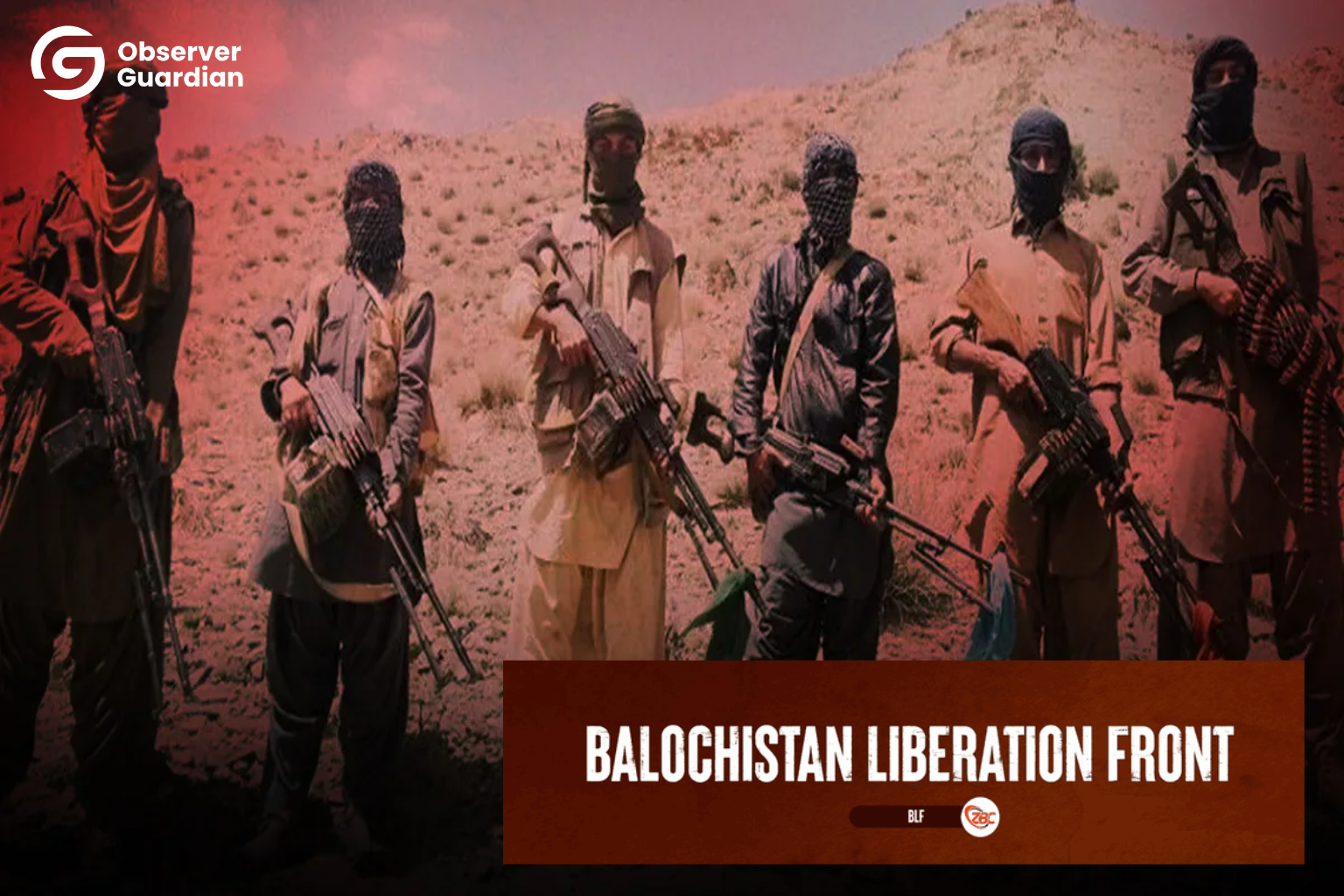
The Balochistan Liberation Front’s latest round of claims seven coordinated attacks between August 4 and 22, 2026, resulting in 11 military personnel and two alleged agents killed follows this script with almost mechanical precision. But precision in propaganda does not equal precision on the battlefield. And in Balochistan this August, the battlefield has been telling a very different story.
On August 5 and 6, security forces detected the movement of six terrorists in Washuk district and launched an operation under Rad ul Fitna 3. All six were killed. A separate operation in Mastung on August 6 eliminated another six terrorists during an intense firefight. Twelve terrorists gone in 48 hours before the BLF even finished drafting its own press releases.
On August 10, security forces conducted a high speed, intelligence based operation in Panjgur district, killing five terrorists affiliated with Fitna al Hindustan after receiving specific intelligence about their presence in the area. The operation was swift and targeted the hallmark of a counterterrorism campaign that has clearly matured in its reach and precision.
Then came Surab, which offered perhaps the most telling commentary of all on the gap between BLF’s narrative and reality. When a vehicle borne improvised explosive device detonated prematurely during preparation, eight terrorists were killed by their own bomb. A subsequent clearance operation neutralised another ten.
The total from a single episode 18 terrorists eliminated not by security forces catching them in the open, but by the inherent fragility and desperation of their own operations.
By August 21, ten intelligence based operations had been conducted across Mastung, Mach, Khuzdar and Panjgur, resulting in 37 terrorists belonging to the Indian backed network being neutralised, with a large number of weapons, explosives, and remote detonation devices seized and destroyed. Five days later, additional operations in South Waziristan, Bannu and Khuzdar eliminated 11 more terrorists, with a huge cache of explosives, IED detonating remotes, weapons, ammunition and motorcycles recovered.
Read those figures again. While BLF was claiming 11 security personnel killed across an entire month of operations, security forces were eliminating dozens of terrorists across Washuk, Mastung, Panjgur, Mach, Khuzdar, Harnai, Nushki and beyond often within days of each other, often with weapons and bomb making equipment seized at the same time. The operational tempo of the state was not that of an institution reeling from blows. It was that of a machine gaining momentum.
This is not to say violence in Balochistan is trivial, or that the security situation is without challenge. In July 2026, a series of attacks allegedly coordinated by the BLA and TTP targeted the Balochistan Police and Pakistan Army, resulting in significant losses. Earlier in August, at least 30 people including 27 police personnel were martyred when terrorists ambushed police deployed in the Kach Mangi Phase III area of Ziarat, triggering hours long gun battles, with attackers also abducting several civilians. These are genuine tragedies that deserve honest acknowledgement.
But honest acknowledgement is precisely what BLF’s propaganda framework refuses to offer about itself or about the broader situation. The organisation is not broadcasting news. It is manufacturing morale for foreign sponsors and demoralisation for domestic audiences.
The two goals require the same raw material inflated numbers and selective framing.
A former BLF figure himself stated that the Baloch freedom struggle had been hijacked by India, and that if India stopped money supplies, the insurgency would end the next day. That is not the testimony of an observer or an enemy it is a confession from within the movement’s own orbit. When the architecture of a so called liberation front depends on external financial pipelines to survive, the word liberation deserves serious interrogation.
What makes BLF’s August claims particularly cynical is not merely that they are likely exaggerated, but what they choose to attack. Attacking police checkpoints, mineral transport vehicles, road construction equipment and security convoys on infrastructure routes does not liberate Balochistan. It delays the roads being built there. It disrupts the employment those projects generate. It makes the province harder to reach, harder to develop and harder to live in for ordinary Baloch families, not for generals sitting in Rawalpindi.
ISPR’s ongoing counterterrorism campaign, operating under the vision of Azm e Istehkam and approved by the Federal Apex Committee on the National Action Plan, continues at full pace to eliminate foreign sponsored terrorism from the country. The framework is not reactive it is a sustained, intelligence driven effort to dismantle networks district by district, cache by cache.
BLF can manufacture numbers on social media. What it cannot manufacture is battlefield credibility when the facts on the ground contradict it week after week.
Terrorists being eliminated in Washuk, Mastung, Panjgur, Mach, Khuzdar and beyond with weapons, explosives and detonators recovered at every turn is not the picture of an organisation achieving momentum. It is the picture of a network under mounting, unrelenting pressure.
The press release always outlives the operation that disproves it. Social media moves fast, and corrections travel slowly. But August 2026 in Balochistan has produced a documented, verifiable record operation by operation, district by district that stands in direct contrast to what BLF would have the world believe. That record belongs to the security forces, and to the communities in Balochistan they are fighting to protect.
Disclaimer: The views and opinions expressed in this article are exclusively those of the author and do not reflect the official stance, policies, or perspectives of the Platform.