When a globally recognized human rights organization publishes a report, the world listens. That trust is earned over decades and carries profound moral weight. It is precisely because of that weight that Amnesty International’s latest allegations against Pakistan demand a serious, unflinching response not from a place of defensiveness, but from a place of principle. Because when selective outrage masquerades as human rights advocacy, the credibility of the entire enterprise of international humanitarian law is placed at risk.
Amnesty International’s recent report on Pakistani military operations has generated significant headlines. Yet the organization has maintained a conspicuous, deafening silence on a parallel crisis unfolding across Khyber Pakhtunkhwa (KPK) and Balochistan one driven entirely by the systematic, cross border terrorist campaigns of the Tehreek e Taliban Pakistan (TTP) and their allied networks. This silence is not a minor oversight. It is a fundamental failure of impartiality.
The Data Amnesty Refuses to See
The numbers from Pakistan’s front line provinces tell a story that no credible human rights body should ignore. According to data compiled by the South Asia Terrorism Portal (SATP), by mid May 2026, Pakistan had already recorded 1,408 terrorism related fatalities in the current year alone including 447 security force personnel and 289 civilians. In KPK alone, 2025 recorded the highest fatalities in a single year since 2009, with 2,359 total deaths across 545 incidents.
These are not abstractions. These are teachers, farmers, soldiers, and police officers Pakistani citizens murdered in their homes, markets, and checkposts by organized terrorist networks operating with logistical support from across the Afghan border.
In Balochistan, the Pakistan Institute for Peace Studies documented at least 254 terrorist attacks in 2025 alone a 26 percent increase over the previous year resulting in over 400 deaths. The coordinated attacks of January 31, 2026, which spanned nine districts including Quetta, Gwadar, Mastung, and Kharan, killed 48 Pakistani nationals, among them 31 civilians including women and children. The UN Security Council itself condemned these attacks in the strongest terms, calling them “heinous and cowardly acts of terrorism.” Yet Amnesty’s public commentary continued to centre almost exclusively on Pakistani military operations, with barely a fraction of equivalent scrutiny directed at the terrorist groups orchestrating mass civilian murder.
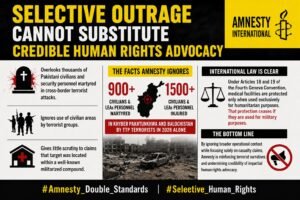
The figures cited in the infographic that has now circulated widely over 900 civilians and Law Enforcement Agency (LEA) personnel martyred, with 1,500 more injured in KPK and Balochistan by TTP terrorists in 2026 alone are not propaganda. They are a reflection of a catastrophic security reality that international human rights organizations have systematically chosen to underreport.
The TTP and Its Afghan Sanctuary
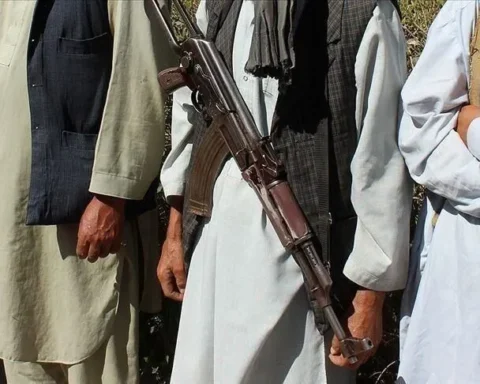
The operational context is critical to any honest analysis. Since the Taliban’s return to power in Kabul in August 2021, cross border terrorist violence against Pakistan has escalated sharply and consistently. TTP, designated as a terrorist organization under UN Security Council sanctions, has repeatedly claimed responsibility for mass casualty attacks on Pakistani soil. A February 6, 2026 suicide bombing at a mosque in Islamabad and a TTP assault in Bajaur on February 17 were among the most recent in a long chain of atrocities.
Pakistani security services have presented what they describe as “irrefutable evidence” that these attacks are directly connected to planning and coordination conducted from Afghan territory. The UN itself has assessed that Al Qaeda continues to benefit from Taliban patronage, acting as a facilitator for the TTP through training and operational advisory support. The Security Council report on Afghanistan from March 2026 described TTP as “one of the largest terrorist groups operating from Afghanistan,” noting that its increasingly complex attacks against Pakistani security forces have directly contributed to cross border military confrontations.
The Taliban, for their part, deny harbouring TTP. But the pattern of attacks, their sophistication, their geographic origination points, and the consistent intelligence assessments from multiple international bodies tell a different story. Pakistan has not acted in a vacuum. It has acted in response to sustained, documented, cross border aggression.
The Problem with Amnesty’s Methodology
Amnesty’s latest report relies heavily on data and access provided through the UN Assistance Mission in Afghanistan (UNAMA). This is a significant methodological concern that cannot be dismissed. UNAMA operates in one of the most restricted information environments in the world one controlled almost entirely by the Taliban administration, an internationally unrecognized regime with every incentive to shape the narrative of foreign military operations on its territory.
UNAMA’s own reporting between January and March 2026 documented over 750 civilian casualties in Afghanistan from various causes. But the mission’s ability to independently verify claims in Taliban controlled territory is severely constrained. Sources, access, and movement are all filtered through a regime that is simultaneously a party to the conflict being reported upon. Treating UNAMA data as though it carries the same evidentiary weight as independent verification is a serious analytical error and one that Amnesty has chosen to overlook in its rush to publish.
International Law: The Full Picture
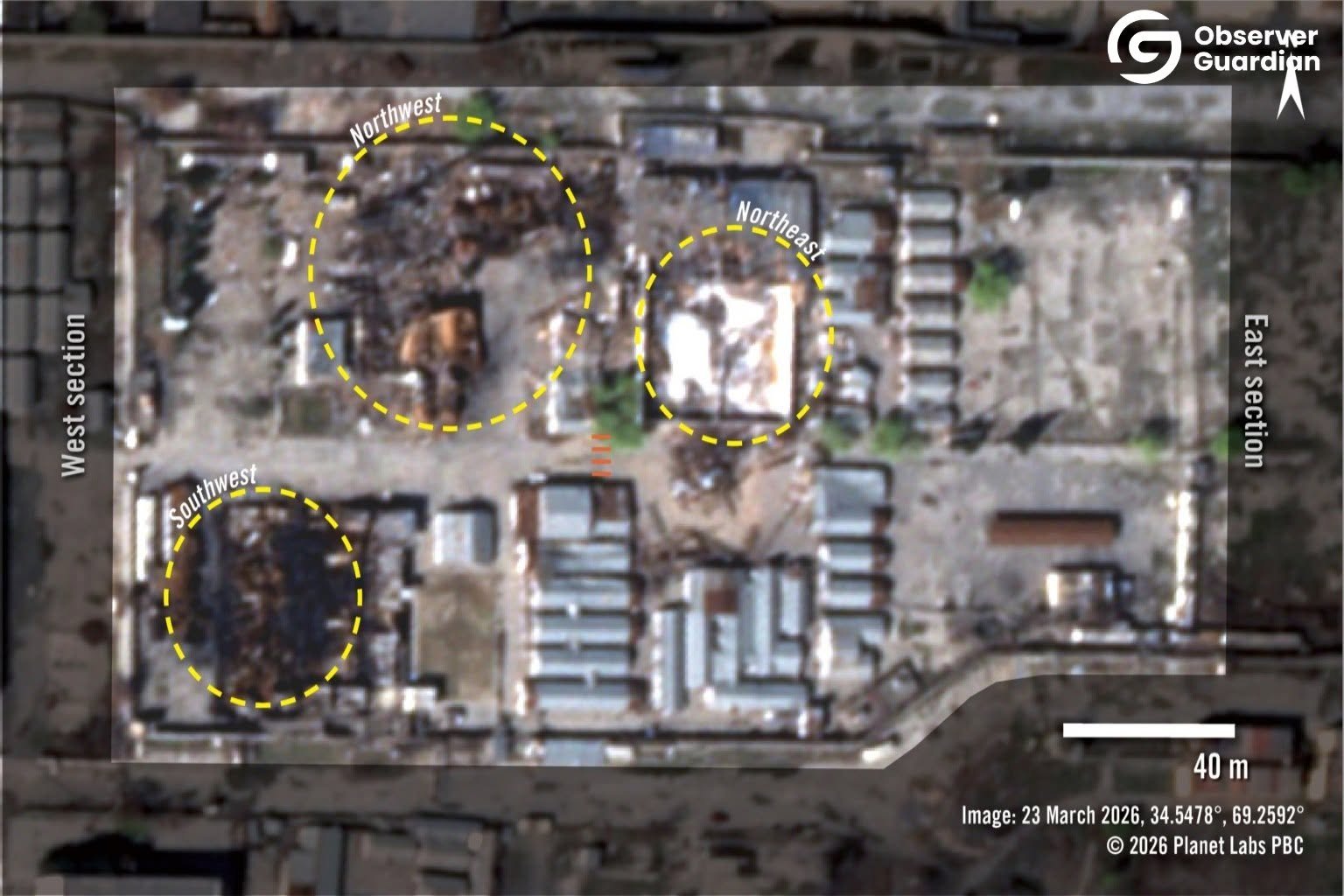
Amnesty has invoked Articles 18 and 19 of the Fourth Geneva Convention regarding the protection of medical facilities. This is a legitimate legal framework but it must be applied completely, not selectively. Those same articles make equally clear that the protection afforded to medical and civilian facilities ceases the moment those facilities are used for military purposes. If terrorist networks embed their command structures, weapons, or fighters within civilian compounds a tactic the TTP and similar organizations have employed extensively then the legal calculus changes fundamentally.
Credible human rights advocacy requires engaging with the full legal picture both the duty to protect civilians and the established principle that those who deliberately weaponize civilian spaces bear direct responsibility for consequences that follow. Amnesty’s framing, which focuses almost entirely on one side of this equation, does not constitute rigorous legal analysis. It constitutes advocacy.
The Stakes for Human Rights Credibility
Pakistan’s right to defend its citizens against terrorist violence is not merely a political position it is a recognized principle of international law. States have both the right and the obligation to protect their populations from armed attacks. When persistent cross border terrorism claims hundreds of civilian and security force lives every year, intelligence based counter terrorism operations targeting verified terrorist infrastructure are a legitimate exercise of that right.
None of this means that civilian protection in military operations should be ignored. It should not. Every civilian life Pakistani, Afghan, or otherwise has equal value. But the pathway to protecting all civilian lives runs through honest, comprehensive, and contextually informed analysis. It does not run through reports that document casualty claims on one side of a conflict while systematically ignoring the terrorist campaign that precipitated it.
When organizations of Amnesty International’s stature allow their reporting to amplify one party’s narrative while remaining silent on the documented atrocities of terrorist networks killing Pakistani men, women, and children, they do not advance human rights. They undermine the very foundation upon which credible human rights advocacy must rest.
Selective outrage is not neutrality. It is a choice and it is a choice with consequences.
The thousands of Pakistani civilians and security personnel martyred in cross border terrorist attacks deserve more than silence from the world’s leading human rights organizations. They deserve the same moral urgency, the same documentation, and the same international voice.
Anything less is a double standard and double standards have no place in the defense of human dignity.
Disclaimer: The views and opinions expressed in this article are exclusively those of the author and do not reflect the official stance, policies, or perspectives of the Platform.