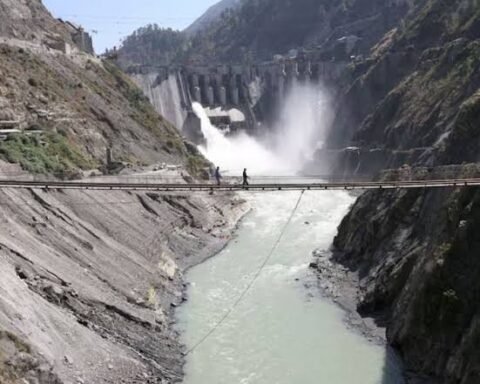
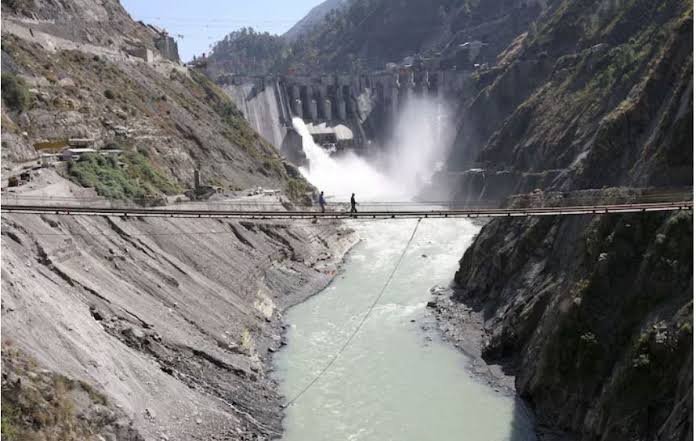

In South Asia, a river carries more than water. It carries the harvest that families depend on, the electricity that powers industry and the quiet expectation that tomorrow’s supply will not be decided by political anger. This is what makes India’s decision to place the Indus Waters Treaty in abeyance so troubling. A dispute over a shared river system is becoming a test of whether binding agreements can withstand the pressure of hostile relations between nuclear-armed neighbours.
The treaty, signed in Karachi in September 1960 with the World Bank’s involvement, was never based on friendship. It was built precisely because India and Pakistan could not afford to leave water to goodwill. The arrangement largely allocated the Ravi, Beas and Sutlej to India and the Indus, Jhelum and Chenab to Pakistan, while permitting specified Indian uses on the western rivers. More importantly, it created a Permanent Indus Commission, data-sharing obligations and procedures for resolving technical disagreements. Those mechanisms helped the treaty survive wars that defeated other efforts at cooperation.
That achievement deserves more respect than it currently receives. The treaty did not eliminate suspicion or prevent disagreements over hydropower projects. What it did was give both governments a common rulebook and a place to take complaints before they hardened into political crises. Engineers could discuss reservoir design and river flows without having to settle the Kashmir dispute first. In an adversarial relationship, this separation of practical cooperation from strategic rivalry has been an extraordinary diplomatic asset.
India announced the abeyance decision in April 2025 following the deadly Pahalgam attack in Indian-administered Kashmir. New Delhi accused Pakistan of supporting cross-border terrorism, an allegation Islamabad rejected. The security concerns surrounding militancy deserve serious attention, and attacks on civilians cannot be excused. Yet the case for counterterrorism does not answer a separate legal question. Can one country set aside a water treaty whenever it concludes that its neighbour has behaved intolerably? The danger lies in treating an agreement designed to survive crises as another instrument of retaliation.
There is now an unusually clear legal finding on that question. In August 2026, a Court of Arbitration operating under the treaty concluded that India’s declaration had neither terminated nor suspended the agreement and that India remained bound by its obligations. The court also ordered limited interim measures concerning construction at the Ratle hydroelectric project. India rejected the award, arguing that the tribunal had been improperly constituted and lacked jurisdiction. That disagreement is real. But refusing to recognise a dispute-resolution process does not, by itself, resolve the underlying dispute or restore trust.
For Pakistan, this is not an abstract argument among international lawyers. The Indus Basin underpins irrigation, food production and rural employment across a country already struggling with climate variability and water-management weaknesses. A farmer planning a wheat crop cannot make decisions around unpredictable political signals from upstream. Even when river flows have not been demonstrably interrupted, uncertainty over data exchange, project notifications and established consultation procedures can impose costs. Fear travels quickly through an economy that depends on timely water.
It would also be a mistake to confuse upstream geography with unlimited power over a river. Dams have technical constraints, seasonal flows vary, and the treaty itself permits India certain uses of western waters. Claims that India can simply turn off Pakistan’s rivers overnight risk replacing analysis with alarm. The more credible concern is subtler and more persistent. Reduced transparency, contested project operations and doubts about future cooperation can make ordinary hydrological changes seem deliberate, inviting escalation where technical clarification might once have sufficed.
The problem extends beyond the two countries. Across the world, states share rivers while competing over borders, trade and security. If an established water agreement can be placed on political hold without an agreed legal process, every downstream state has reason to worry. International law matters most when compliance becomes inconvenient. Treaties are not rewards for cordial relations. They are commitments intended to limit the damage when cordial relations disappear.
Pakistan, for its part, should defend its treaty rights through evidence, legal institutions and careful diplomacy while addressing its own water losses, inefficient irrigation and groundwater depletion. Protecting water security requires more than winning an argument with India. It requires investing in storage, conservation, flood forecasting and better management at home. These reforms would strengthen Pakistan’s resilience without conceding that an upstream neighbour may disregard existing obligations.
The immediate priority should be the restoration of full treaty cooperation, including regular commission engagement, transparent hydrological information and good-faith participation in the agreed dispute mechanisms. Technical dialogue cannot solve every conflict between India and Pakistan, but abandoning it can make every conflict more dangerous. After more than six decades, the Indus Waters Treaty still offers something rare in South Asia: proof that rivals can honour practical commitments despite profound differences. Allowing water to become a weapon of diplomatic pressure would put that achievement, and millions of livelihoods, at needless risk.