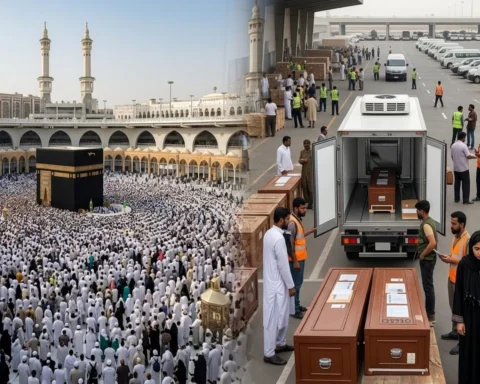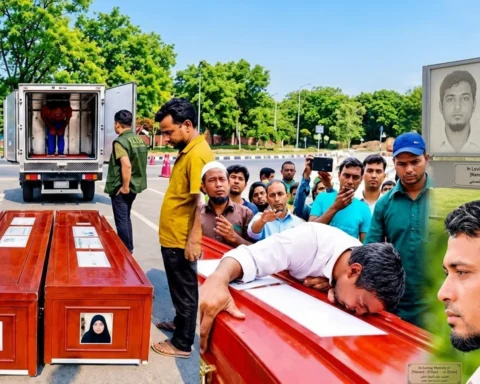
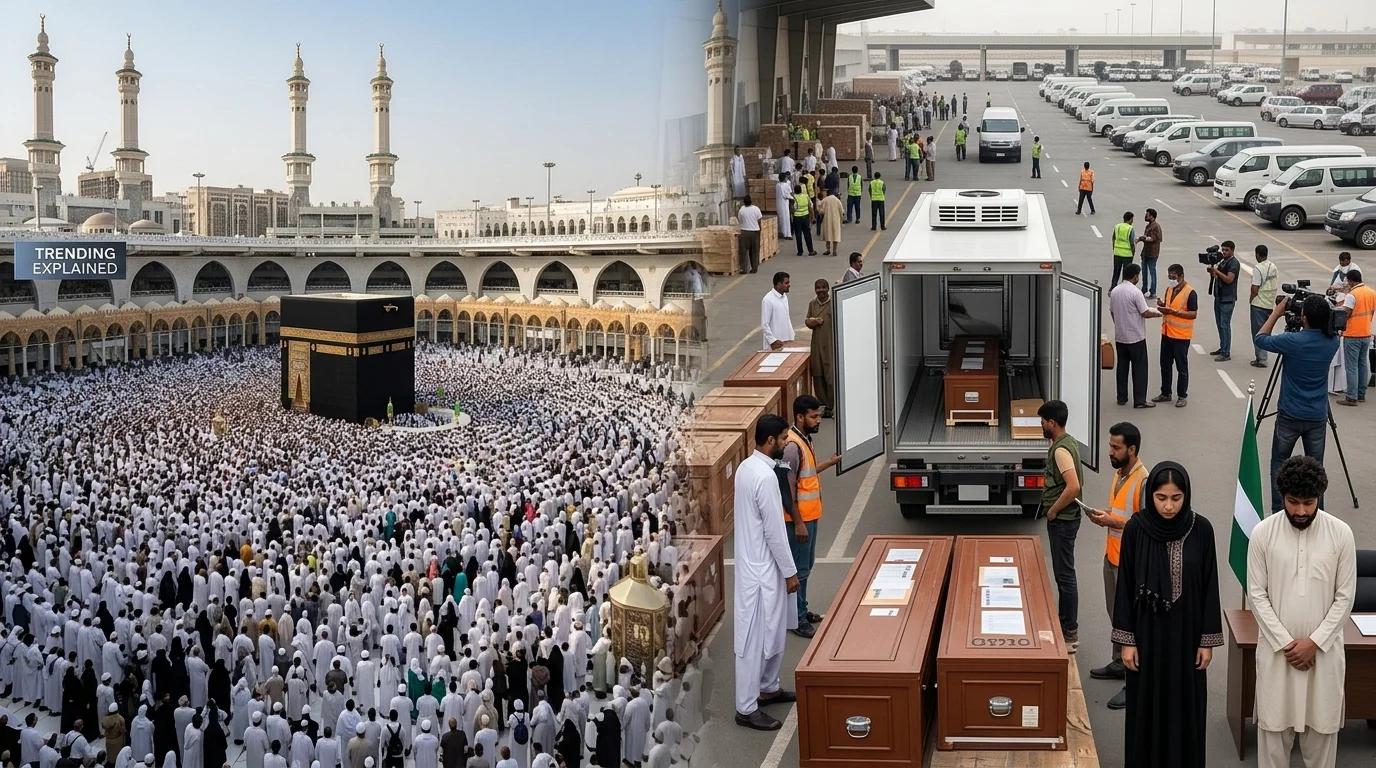

October 14, 2026 had not even ended when a lie had already spread across hundreds of millions of screens. The Kingdom of Saudi Arabia executed two Bangladeshi nationals, Nazrul Islam Abdul Bashir and Siti Akhtar, for committing indecent acts inside a mosque in Makkah al Mukarramah. Saudi Arabia’s Ministry of Interior confirmed in an official statement that they were arrested by security authorities and the matter was referred to a competent court, which handed down the sentence. But the moment this news reached the arena of social media, it became something else entirely.
Look at the architecture of the lie and how skillfully it was constructed. Viral posts recast them as honeymooning newlyweds who were executed for a “forehead kiss.” One post alone gathered 7.5 million views and another 6.3 million. The Holy Mosques’ official media account formally confirmed that the viral video circulating online was misleading and bore no connection to the case whatsoever. Photographs of an Egyptian influencer and her companion near the Kaaba were shared as images of the two executed individuals, and a completely unrelated video from May 2026 was fraudulently circulated as footage of the condemned’s grieving daughter.
Fact checking organisations Fact Crescendo and CyberPeace categorically confirmed that the viral images and videos had no connection to this case. But the central pillar of the false narrative was demolished by Nazrul’s own family, when his father Abdul Bashir confirmed that the two were not married to each other and that the family had no knowledge of Siti Akhtar. The entire “honeymooning newlyweds” story collapsed in an instant, yet it had already reached millions of accounts.
It is also important to note that Nazrul Islam was arrested in August 2023, and both individuals spent over three years in Jeddah’s prisons before their sentences were carried out. This was not a hastily delivered verdict. It was a phased, procedurally grounded judicial process, precisely the kind of process the international community always demands.
The critical question is: why was this campaign waged at all? The answer is straightforward. The goal was never to analyse the incident but to portray the Islamic judicial system as barbaric. The “newlyweds” narrative was doing two things simultaneously, erasing the gravity of the act and then casting the court as cruel and disproportionate. This is the classic misinformation formula: take a real event, strip out the actual details, stuff it with an emotionally manipulative fabricated story, and flood the network before any correction can circulate.
Bangladeshi fact checking organisation Rumor Scanner documented at least 155 instances of disinformation about Bangladesh across various media and social platforms in 2025, a figure nearly 5 percent higher than the previous year. In the first six months of 2025 alone, 1,795 instances of misinformation were documented, an increase of approximately 30 percent compared to the same period the previous year. The Makkah execution served as a new link in this already existing misinformation network, this time the target was not just Bangladesh but the Kingdom of Saudi Arabia, Islamic law, and ultimately the credibility of Sharia itself.
The Bangladeshi government stated that it was not notified prior to the executions being carried out, and Bangladesh summoned the Saudi ambassador to seek full details. This is a legitimate diplomatic concern that should be resolved through appropriate bilateral channels, and Bangladesh’s response has so far remained measured and institutional. But diplomatic concern and the lies amplified across social media are two entirely different things. The first calls for negotiation; the second calls for fact checking.
The sanctity of mosques is not a legal technicality, it is a Sharia and spiritual reality on which scholars across all schools of Islamic jurisprudence have always agreed. The mechanism of ta’zir as discretionary punishment exists precisely so that the gravity of offences can be weighed within their context before a sentence is passed. The sanctity of the location, the deliberateness of the act, and the spiritual harm caused, these three factors together give the judicial decision a coherent and legitimate foundation. The Saudi Ministry of Interior’s public announcement naming the individuals, stating the legal basis, and confirming the judicial chain of process itself demonstrates that this is not a system with something to hide. It is a system confident in the legitimacy of its rulings.
The real lesson is not confined to a single case. We have entered an era in which sensitive judicial decisions from Muslim majority countries are instantly weaponised as fodder for pre fabricated false narratives, stuffed with fabricated images, misidentified individuals, and emotionally charged but entirely unverified personal stories. Countering this cannot rely on after the fact fact checking alone. It requires readers, institutions, and the media to collectively adopt the principle that no opinion should be formed and no sentiment inflamed until information has been verified.
Emotion always travels faster than truth, that is the greatest weapon of those who peddle misinformation. Our greatest shield is the discipline to stay silent until the truth has had a chance to arrive. The truth in every such case is always there. It simply inconveniences those who have already decided which story they want to tell.