
The nature of power in international politics is changing. Military capability remains essential, particularly for states facing persistent security threats, but it is no longer sufficient to determine national influence or strategic strength. Increasingly, states are using economic pressure, financial leverage, technological restrictions, cyber capabilities, trade policy, supply-chain control and information campaigns to shape the behaviour of competitors without resorting to direct military confrontation. This expanding use of non-kinetic instruments has made coercive diplomacy a defining feature of the contemporary strategic environment.
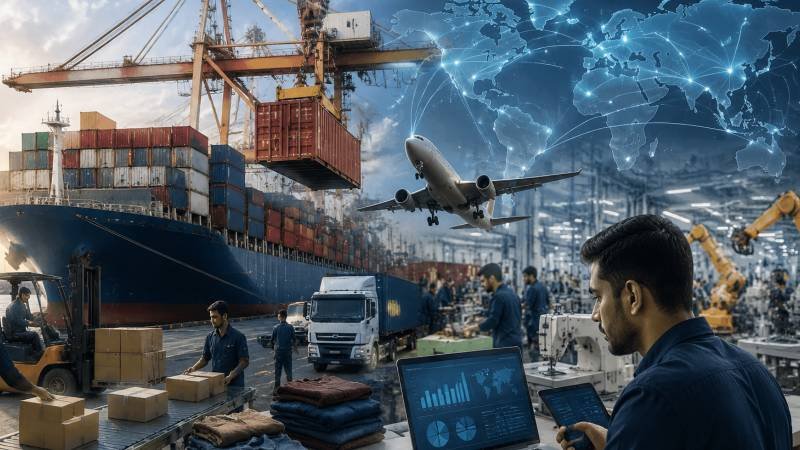
Modern geopolitical competition is therefore being fought across multiple domains simultaneously. Access to advanced technology, resilient supply chains, digital infrastructure, energy security, critical minerals, climate finance and investment networks now directly affect national power. A country may possess a capable military yet remain strategically vulnerable if it depends excessively on foreign technology, imported energy, external financing or fragile supply chains.
For Pakistan, understanding this transformation is essential because national security can no longer be approached almost exclusively through the traditional military lens
Economic sanctions provide one of the clearest examples of this changing environment. Major powers increasingly use restrictions on banking, investment, technology transfers and international trade to influence state behaviour. Export controls on semiconductors, artificial intelligence technologies and advanced manufacturing equipment can determine which countries gain access to the industries of the future. Financial institutions, investment screening mechanisms and control over payment systems have similarly become instruments of strategic competition. Cyber operations and information campaigns can impose high political and economic costs without conventional military escalation.
Pakistan must consequently broaden its understanding of national resilience. The ability to withstand economic shocks, diversify markets, secure energy supplies, develop competitive industries and maintain access to critical technologies has become an integral part of national security. Economic resilience is no longer merely a development objective.
It is a strategic asset that determines how effectively a state can protect its sovereignty and preserve freedom of action during periods of international pressure
This transformation is unfolding within an increasingly multipolar international system. The United States continues to hold extraordinary advantages in military power, innovation, global finance and advanced technology. China has become a major economic, industrial and technological force, expanding its influence through trade, infrastructure, manufacturing and connectivity. European states are placing greater emphasis on strategic resilience, economic security and technological competitiveness. At the same time, Saudi Arabia, the United Arab Emirates and Türkiye are diversifying their economic and diplomatic partnerships while investing heavily in new industries and reducing dependence on traditional strategic arrangements.
For Pakistan, these developments should not be interpreted as requiring a permanent choice between competing geopolitical blocs. Such an approach would unnecessarily restrict Pakistan’s diplomatic space. Islamabad instead requires a diversified foreign policy built around national interests. Relations with China, the United States, Europe, the Gulf states, Central Asia and the wider Muslim world should complement rather than automatically contradict one another. Pakistan’s objective should be to expand areas of cooperation while avoiding excessive strategic dependence on any single partner.
Strategic autonomy should remain at the centre of this approach. In practical terms, strategic autonomy means maintaining the sovereign capacity to make decisions according to Pakistan’s own economic, security and diplomatic priorities. It does not require isolation, neutrality or equal distance from every international actor. Rather, it requires diversified partnerships that reduce vulnerability and increase diplomatic flexibility.
In a fragmented international system, states with multiple economic and political relationships are generally better equipped to manage external pressure
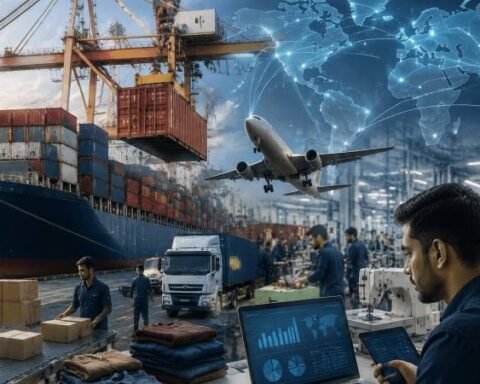
Pakistan possesses several advantages that can support such a strategy. Its location at the intersection of South Asia, Central Asia, China and the Middle East gives it substantial potential as a centre of regional trade and connectivity. Transport corridors, ports, rail networks, energy infrastructure and cross-border commerce can convert geography into strategic capital. However, geography creates opportunity only when supported by reliable infrastructure, political stability, efficient customs systems and policies attractive to international investors.
Industrial modernization must therefore become part of Pakistan’s strategic planning. Several Gulf states have already recognized that national power in the coming decades will depend increasingly on technology, logistics, renewable energy, artificial intelligence, tourism, advanced manufacturing and financial services. Their economic diversification strategies demonstrate an important principle. States that strengthen their economic and technological foundations also strengthen their diplomatic influence and national security.
Technology will be particularly decisive for Pakistan. Artificial intelligence, cybersecurity, quantum technologies, biotechnology, digital infrastructure and advanced manufacturing are rapidly becoming central components of global competitiveness. Pakistan cannot remain primarily a consumer of foreign technology. Greater investment in universities, scientific research, technical education, digital skills, start-ups and innovation ecosystems will be necessary if the country wants to develop greater technological independence and participate meaningfully in emerging industries.
Traditional defence capabilities will, of course, remain indispensable. Pakistan faces a difficult regional security environment and cannot disregard conventional military preparedness or credible deterrence. Yet defence represents only one pillar of comprehensive national power.
Economic stability, food security, energy security, institutional credibility, technological capacity, public health and climate resilience now directly influence a state’s ability to protect its population and pursue long-term national objectives
Climate change illustrates this expanded concept of security particularly clearly. Floods, water scarcity, extreme heat and declining agricultural productivity can undermine economic growth, intensify social pressures and create significant governance challenges. Pakistan therefore needs to treat climate adaptation as a strategic priority rather than simply an environmental concern. Resilient infrastructure, improved water governance, climate-smart agriculture, disaster preparedness and access to international climate finance should become integral components of national security planning.
Public debate must evolve alongside policy. International relations today cannot be reduced to permanent categories of allies and adversaries. States frequently cooperate in one sector while competing sharply in another. Effective diplomacy consequently requires pragmatism, flexibility and a sophisticated understanding of overlapping interests. Pakistan’s policymakers, businesses, universities and research institutions must therefore develop greater capacity to analyse economic security, emerging technologies, supply chains and geopolitical risk.
The world is moving toward an era in which national influence will increasingly depend on innovation, economic resilience, connectivity, institutional capacity and diversified partnerships alongside military strength. Pakistan cannot respond to twenty-first-century strategic competition with assumptions inherited from the twentieth century. Its long-term security will depend on combining credible defence with economic strength, technological advancement, climate resilience and diplomatic flexibility. The objective should be clear. Pakistan must position itself as a confident, strategically autonomous and forward-looking state capable not merely of responding to global changes, but of converting them into opportunities for national strength and sustainable development.