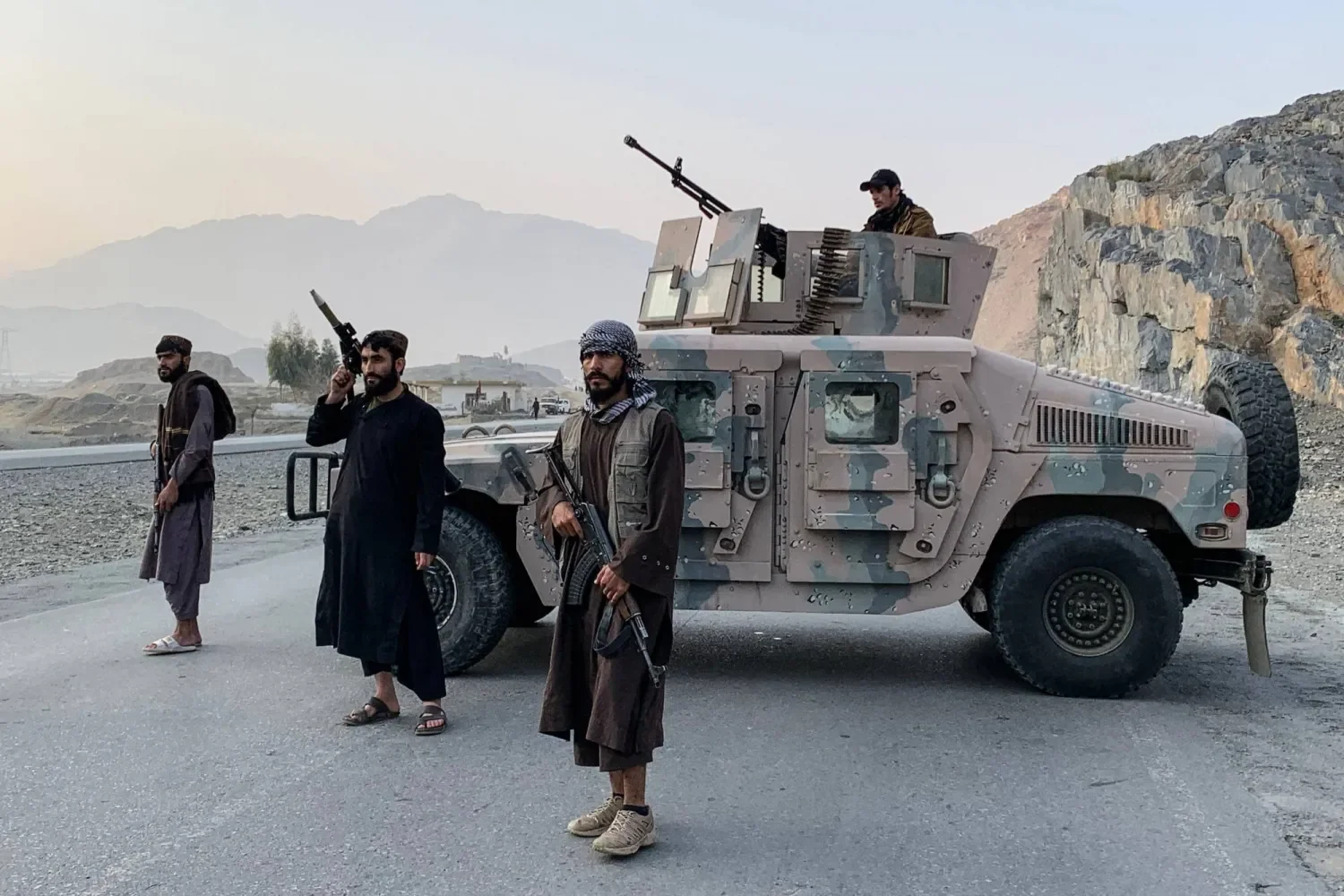

When the Taliban’s Ministry of Foreign Affairs issued a statement expressing “serious concern” over the United States deporting Afghan refugees through Pakistan, the world witnessed something almost breathtaking in its audacity, a regime that has turned Afghanistan into one of the worst human rights disasters on the planet suddenly discovering a deep and passionate concern for the welfare of Afghan citizens. If the situation weren’t so tragic for the actual human beings caught in the middle, it would almost be funny.
Let us be precise about what is actually happening here. The US intends to deport Afghan immigrants on flights from Louisiana to Pakistan, from where they would be transferred to Afghanistan. Those slated for deportation reportedly include relatives of people who aided the US military and at least one gay man, both categories facing possible execution or severe persecution under Taliban rule. This is genuinely a complex humanitarian situation that deserves serious attention. But the Taliban regime positioning itself as the defender of these people’s dignity is a grotesque performance that must be called out for what it is.
The Taliban’s statement claimed it holds responsibility for the rights and welfare of Afghan citizens abroad. Fine. Let us measure that claim against their five year record inside Afghanistan itself. Human Rights Watch, reviewing the Taliban’s five years in power, described Afghanistan as facing one of the world’s gravest human rights crises, particularly for women and girls. Afghanistan remains the only country in the world where girls are barred from education beyond the sixth grade. The UN Secretary General’s latest report details a context of severe restrictions on women and girls, exclusionary governance, a human rights crisis, and the continued presence of terrorist groups.
The UN’s own investigators documented enforced disappearances, restrictions on freedom of expression, attacks on journalists and human rights defenders, persecution of ethnic and religious minorities, discrimination against LGBT persons, and the systematic reduction of civic space. The UN High Commissioner for Human Rights, Volker Türk, said a Taliban decree “provides for the use of corporal punishment for numerous offences, including in the home, legitimising violence against women and children,” and warned that women and girls face persecution under a system he likened to gender apartheid.
This is the regime that now speaks of human rights, dignity, and its responsibility toward Afghan citizens. The word hypocrisy barely covers it.
There is a fundamental legal and diplomatic reality that the Taliban’s statement conveniently ignores. No country in the world is obligated to grant permanent residency to citizens of another state. A visa is not a right, it is a privilege extended by a sovereign nation based on its own laws, interests, and capacity. No government, no matter how wealthy or spacious, owes indefinite shelter to the citizens of a government it does not recognize. This is not cruelty. This is how international law works.
And the reason the US is routing these deportations through Pakistan rather than directly to Kabul is precisely because of the Taliban’s own choices. The United States has no embassy in Afghanistan, no diplomatic relations, and grants no recognition to the Taliban government. Every serious nation in the world, save one, has refused to formally recognize this regime. Human Rights Watch reviewed the International Criminal Court’s July 2025 arrest warrants issued for two senior Taliban leaders. The ICC does not issue arrest warrants for governments it considers legitimate. The Taliban are pariahs of their own making. They have burned every diplomatic bridge, ignored every international norm, and then expressed shock that the world refuses to deal with them directly.
The deepest irony is this: the Taliban are lamenting a refugee crisis that they themselves manufactured. Pakistan and Iran have seen 5.4 million people return through government led expulsion programmes since 2021. Over 146,000 Afghans have been deported from Pakistan in 2026 alone. According to the UNHCR, over 3 million Afghan refugees, including registered refugees and more than 800,000 undocumented people, are currently living in Pakistan. These people did not flee Afghanistan because of some natural disaster. They fled because of the Taliban. They fled because girls were shut out of classrooms, because former government employees feared execution, because women could not work, because minorities faced systematic persecution, and because journalists and activists were hunted down.
Every single refugee in that deportation flight, every Afghan family huddled in Pakistani cities waiting for a future that keeps not arriving, is a direct consequence of Taliban governance. Human rights groups describe a systematic rollback of women’s rights in Afghanistan since the Taliban returned to power in August 2021. The UN Special Rapporteur on Human Rights in Afghanistan has labelled the situation “gender apartheid.” That apartheid is the engine driving displacement. The Taliban created the catastrophe and now performs grief over its victims.
For the record, every functional government in the world accepts the return of its own deported citizens. It is a basic norm of international relations. If the Taliban genuinely cared about these refugees, they would make Afghanistan a place people want to return to. They would open schools. They would stop public floggings. They would release political prisoners. They would allow women to work and to be seen in public without a male guardian. They would become the kind of government that people choose to live under rather than risk their lives to escape.
Until then, the Taliban’s tears over Afghan deportees are not humanitarian concern. They are theater, performed by Khawarij and terrorists who cannot bear the world witnessing the consequences of their own rule, written plainly on the faces of the millions who fled it.