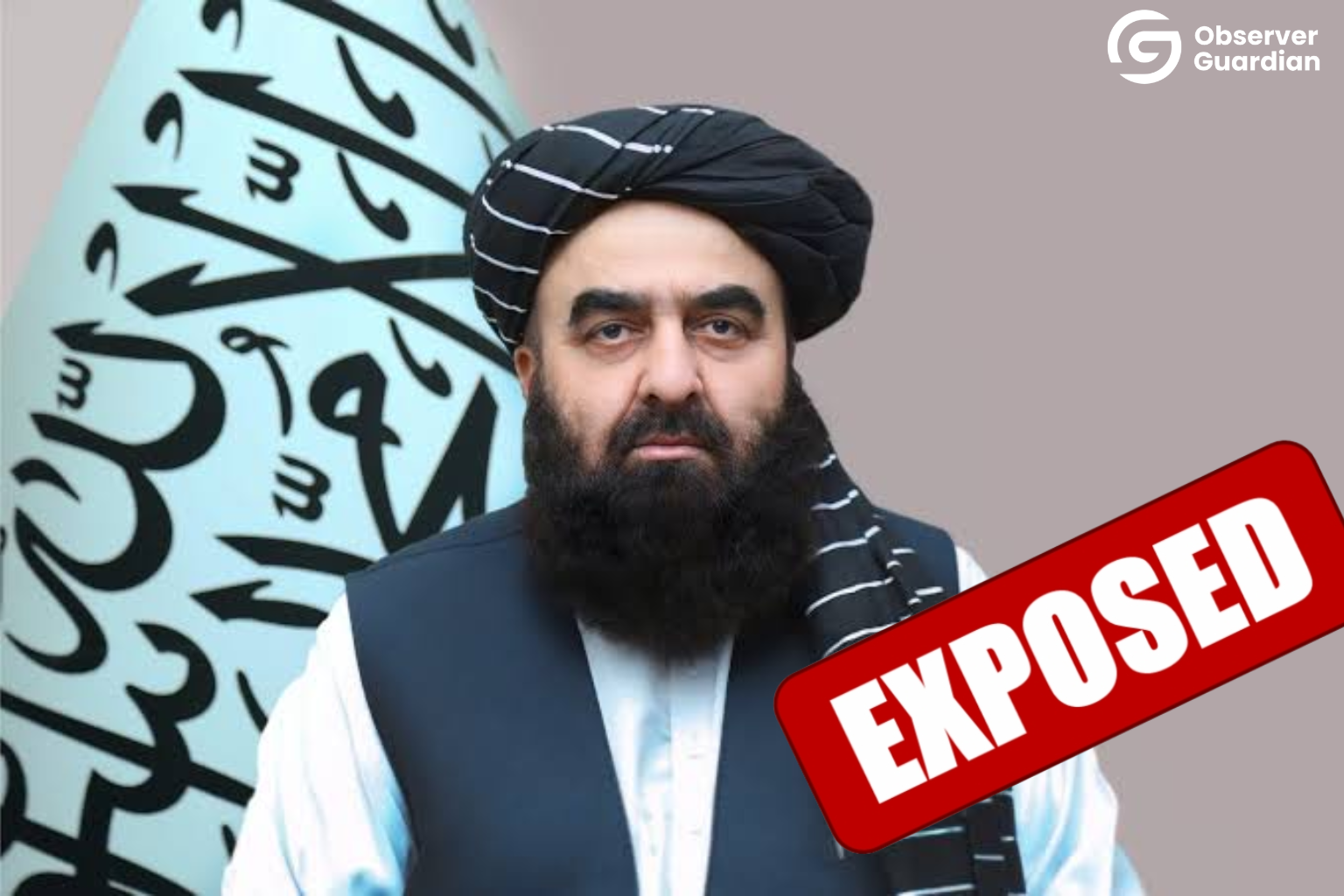
Five years into Taliban rule, Amir Khan Muttaqi sat before BBC cameras projecting the image of a statesman wronged, a foreign minister of a sovereign nation beleaguered by a neighbour’s unilateral border closures and economic hostility. It was a polished performance. It was also a deliberate and calculated distortion of reality.
The central premise of Muttaqi’s interview that Afghanistan is a victim of Pakistan’s border restrictions and that Kabul has done its part collapses the moment it is examined against verified, independent evidence. The real question the BBC should have pressed Muttaqi on is not whether Afghanistan has alternative trade routes. It is why Kabul continues to shield terrorists who are killing Pakistani citizens in record numbers.
Numbers Don’t Lie Kabul Does
The Global Terrorism Index 2026, published by the Institute for Economics and Peace, delivers a damning verdict. Pakistan has ranked first in the Global Terrorism Index for the first time, recording terrorism related deaths rising to 1,139 in 2025 the highest since 2013. The TTP emerged as the deadliest group, responsible for 56% of fatalities. This is not a statistical abstraction. These are Pakistani soldiers, schoolchildren, police officers, and civilians. TTP incidents rose by 24% to 595 attacks in 2025, concentrated primarily in Khyber Pakhtunkhwa near the Afghan border, resulting in 637 deaths the highest figure since 2011.
According to the IEP, the resurgence of the Afghan Taliban in Kabul has profoundly impacted Pakistan’s security and stability, providing the Khawarij with the means and motivation to significantly expand their geographic reach and operational efficiency. This is not Pakistan’s characterisation it is the finding of the world’s foremost independent terrorism research body.
In 2025 alone, the TTP carried out 600 attacks on Pakistani territory, mainly in Khyber Pakhtunkhwa, killing both security personnel and civilians. To put this in stark terms: Afghanistan’s eastern provinces functioned as a base of operations from which terrorists launched nearly two attacks per day against a neighbouring country the same country Muttaqi now accuses of economic aggression.
The Contradiction Muttaqi Cannot Escape
Muttaqi’s denial of TTP presence on Afghan soil is not merely unconvincing it is internally contradictory. The Taliban administration itself has acknowledged moving Waziristani migrants away from border areas and deploying additional checkpoints to address Pakistan’s concerns. The question then demands an answer: if these individuals posed no security threat, why was relocation necessary at all?
Pakistan has repeatedly shared evidence with Kabul and demanded concrete, verifiable action against the Khawarij terrorists and their affiliated networks. Pakistan’s Foreign Office has pointed to UN monitoring reports and independent international assessments that confirm the presence of terrorist groups operating from Afghan territory. Muttaqi cannot simultaneously deny TTP’s operational presence and acknowledge that TTP linked families required relocation from the Durand Line region. These two positions are irreconcilable.
The issue was never simply about where training facilities are located. It is about whether Afghan territory is being used to plan, finance, facilitate, and launch attacks against Pakistan and the body count provides a conclusive answer.
Diplomacy Exhausted Patience Spent
Pakistan’s critics often overlook the extraordinary restraint Islamabad demonstrated for years before taking firmer measures. Pakistan pursued high level engagement, trilateral mechanisms with China, multiple rounds of dialogue in Istanbul and Doha, and bilateral talks extending into 2025. Pakistan’s special representative for Afghanistan, Ambassador Sadiq Khan, visited Kabul as recently as March 2025, reaffirming Pakistan’s commitment to continued engagement and mutually beneficial ties. By mid 2025, Islamabad had genuinely left no diplomatic avenue unexplored.
The second round of Pakistan Afghanistan negotiations in Istanbul stalled and then broke down, with a permanent solution to the crisis appearing far out of reach and no further scheduled negotiations on the horizon. The impasse did not arise because Pakistan stopped talking . It arose because Kabul refused to deliver on the one non negotiable demand that Afghan soil must not be used for terrorism against Pakistan.
Border restrictions followed this diplomatic failure. They are a security measure, not an economic weapon, and Pakistan has made this distinction unambiguously clear. Humanitarian facilitation has continued even during periods of border closure. Islamabad has also maintained that crossings can reopen when there are firm and verifiable security assurances.
Trade The Partner Kabul Takes for Granted
Muttaqi’s framing of Pakistan as an economic aggressor ignores an inconvenient truth: Pakistan has been Afghanistan’s most practical and accessible trade and transit partner for decades, through war, sanctions, and successive governments. Pakistan has hosted millions of Afghan refugees for over four decades one of the largest and longest running refugee hosting operations in modern history while simultaneously facilitating Afghan transit trade to international markets.
Yet Muttaqi speaks of alternative routes as though Pakistan’s cooperation was always negotiable. No country on earth can be reasonably expected to keep commercial corridors open while the same territorial landscape is being used to attack its citizens. The suggestion that Pakistan should absorb both the security burden and the economic sacrifice, while Kabul offers nothing in return, is not diplomacy it is exploitation dressed in the language of victimhood.
The India Deflection
Muttaqi’s reference to Afghanistan’s relationship with India serves as yet another diversion. Pakistan has never objected to Kabul maintaining relations with New Delhi or any other country. What Pakistan has specifically and consistently raised are concerns about certain dimensions of that relationship and accompanying activities that demonstrably aggravate Pakistan’s security environment.
This is a legitimate concern for any sovereign state it is not an objection to Afghanistan’s independent foreign policy.
The Core Demand Simple Sovereign Non Negotiable
Strip away all of Muttaqi’s rhetorical manoeuvring the victimhood narrative, the alternative routes, the diplomatic engagement statistics, the deflection toward India and one fundamental reality remains: Pakistan is asking for something that every nation has the right to demand of its neighbour. Afghan soil must not be used to plan, finance, or execute terrorism against Pakistan.
The TTP was ranked the fastest growing terrorist group in the world, with a 90% increase in deaths linked to its attacks, and Pakistan was ranked the second most affected country by terrorism, recording its largest one year rise in terrorism related deaths in a decade. That was in 2024. By 2026, Pakistan had risen to the very top of the Global Terrorism Index a designation no country seeks.
Muttaqi’s BBC interview was an attempt to rewrite the terms of the debate to shift scrutiny from Kabul’s tolerance of Khawarij sanctuaries to Islamabad’s border policies.
But data, diplomacy, and the bloodied streets of Khyber Pakhtunkhwa all tell the same story. The responsibility for the current impasse rests with the regime that has repeatedly chosen to protect terrorists over its relationship with its most vital neighbour.
Pakistan is not asking the Taliban to choose between regional powers. It is asking for the most basic principle of interstate conduct: that your territory must not become a launching pad for murder. Until Kabul delivers on that singular demand concretely and verifiably no BBC interview however polished changes the arithmetic of accountability.
Disclaimer: The views and opinions expressed in this article are exclusively those of the author and do not reflect the official stance, policies, or perspectives of the Platform.