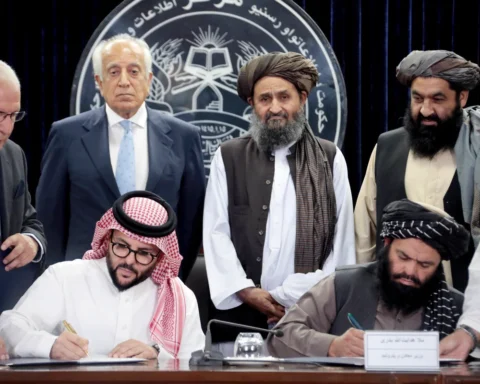


Cricket is supposed to provide a rare space where rivalry is settled by bat and ball, not by diplomatic hostility or political theatre. Yet the conclusion of the 2026 Women’s Asia Cup in Dubai offered a disturbing reminder of how easily politics can intrude into sport. India produced a performance to defeat Sri Lanka by 72 runs and secure another Asian title, but what should have been remembered as a celebration of women’s cricket was instead overshadowed by the Indian team’s refusal to receive the trophy from Asian Cricket Council President Mohsin Naqvi, who is also Pakistan’s interior minister and chairman of the Pakistan Cricket Board.
There is nothing wrong with political disagreement between states. India and Pakistan have a long, difficult and often bitter relationship, and nobody expects those differences to disappear merely because a cricket tournament is taking place. But international sport works precisely because participants temporarily accept a common institutional framework. Teams enter tournaments knowing who administers them, who appoints officials and which authority conducts the presentation ceremony.
Once a country chooses to participate, selectively rejecting that institutional arrangement after victory creates a precedent that extends far beyond India and Pakistan
The issue, therefore, is not whether New Delhi agrees with Islamabad or whether Indian officials approve of Mohsin Naqvi. The issue is whether political disagreement should determine who a cricket team considers acceptable to present an officially sanctioned trophy. Naqvi was not standing on the podium merely as a Pakistani political figure. He was there in his capacity as president of the Asian Cricket Council. Refusing to recognise that institutional distinction transforms a sporting ceremony into a political statement.
Reports suggest that the BCCI had communicated its position to the ACC before the final. That makes the episode even more revealing because the controversy was not simply an emotional reaction in the heat of the moment. It reflected an anticipated position concerning the presentation ceremony. The result was predictable. Instead of discussion revolving around Smriti Mandhana, Shafali Verma, Shree Charani and the cricket played during the final, attention shifted almost immediately towards politics.
That is particularly unfortunate for women’s cricket. The players had earned the right to have their performances dominate headlines. India’s achievement on the field was substantial. Yet a presentation dispute became one of the defining images of the evening. Politics did not strengthen the sporting achievement.
More troubling is that this was not an isolated occurrence. During the 2025 men’s Asia Cup, India similarly refused to receive the winners’ trophy from Naqvi after defeating Pakistan in the final. That ceremony was delayed and ultimately concluded without the Indian team receiving the trophy from the ACC president. When essentially the same controversy reappears a year later, international cricket administrators cannot dismiss it as an unfortunate misunderstanding.
It has become an institutional problem requiring clear rules
International cricket cannot function sustainably if teams begin deciding which authorized officials they will or will not recognize based on nationality, political office or bilateral disputes. Imagine the precedent. One country could reject a presenter because of a territorial dispute. Another might refuse an official because of sanctions, diplomatic tensions or statements made by that official’s government. A third could boycott a ceremony because it dislikes the politics of the host country. At that point, sporting governance would become hostage to international politics.
The Asian Cricket Council and the International Cricket Council therefore have a responsibility that goes beyond this particular dispute. The same standards must apply to every team, regardless of its commercial influence, broadcasting value or political importance. The strength of a sporting institution is tested precisely when powerful members dislike its procedures. Rules that apply only to smaller cricket nations are not rules at all.
India is unquestionably one of the most influential forces in world cricket. Its enormous audience, commercial market and cricketing strength give the BCCI extraordinary importance. But influence should bring greater responsibility, not exemption from sporting convention.
Indeed, because millions of young players and supporters watch Indian cricket, its conduct carries significance far beyond a single tournament
There is also a distinction between patriotism and politicization. Representing one’s country proudly is intrinsic to international sport. Refusing to allow ordinary sporting protocol because an authorized official belongs to a rival state is something different. Cricket grounds should not become extensions of diplomatic confrontation. Players are competitors, not instruments through which governments or political constituencies settle symbolic scores.
None of this diminishes India’s sporting victory. India won the final convincingly and deserved the championship on cricketing merit. But sporting success does not place any team above criticism. A champion should be remembered not only for winning but for the manner in which victory is carried. Sportsmanship becomes most meaningful precisely when emotions and rivalries are intense.
The wider cricket community should therefore treat the Dubai episode as a warning. Administrators need clear protocols for presentation ceremonies and participating boards should commit themselves beforehand to respecting tournament authorities.
Political disputes between governments must remain where they belong, in diplomacy and statecraft
Cricket has survived wars, diplomatic crises and decades of rivalry because people continue to believe that the boundary rope should separate the game from the political battles surrounding it. Once that boundary disappears, something important is lost.
India may have lifted another Asian title in competitive terms, but cricket itself came away diminished from the controversy. The lasting lesson should be simple. Trophies belong to sporting achievement, governing institutions deserve institutional respect, and political vendettas should never be allowed to occupy the presentation podium.