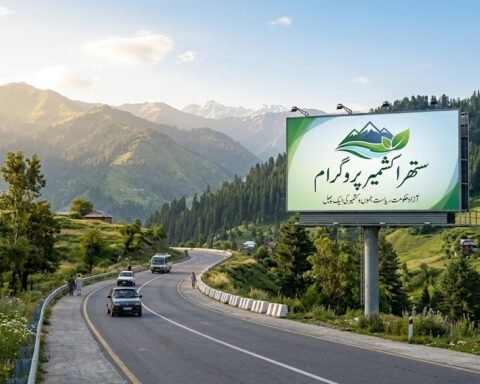
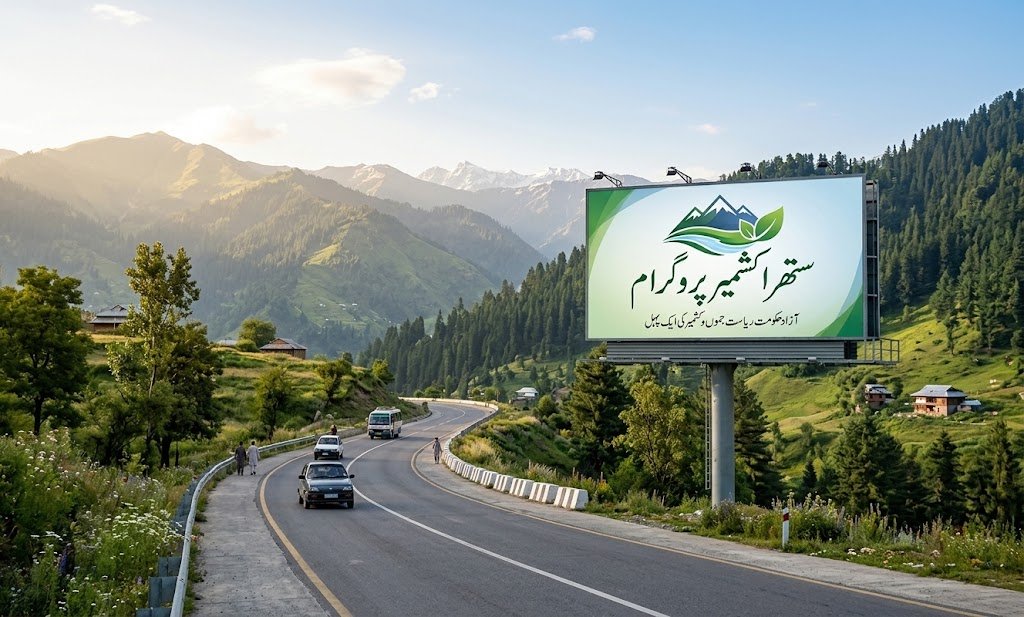

For a mountainous region where municipal services are inherently difficult and expensive to deliver, cleanliness is more than a matter of appearance. It is directly connected with public health, tourism, environmental protection and the everyday dignity of citizens. This is why the launch of the Suthra Kashmir programme deserves attention beyond its political branding. The initiative forms part of the new Azad Jammu and Kashmir government’s 100-day reform agenda and seeks to establish a more organised system of solid-waste collection across the territory. Under the proposed model, private companies will undertake waste-management operations while public institutions retain regulatory and supervisory responsibilities.
The programme comes shortly after Barrister Syed Iftikhar Ali Gilani assumed office as prime minister of AJK on August 28, 2026. According to the Local Government and Rural Development Department, the plan includes district-level outsourcing of solid-waste management, new operational vehicles, green areas, model villages and urban beautification. Importantly, the proposed system is intended to cover not only major urban centres such as Muzaffarabad but villages as well, with elected local representatives expected to participate in household-waste collection arrangements. A first-phase PC-I worth approximately Rs1.62 billion has also reportedly been submitted to the Planning and Development Department.
The significance of Suthra Kashmir should therefore be judged by what happens after its launch. Pakistan has seen many ambitious municipal programmes announced with enthusiasm only to suffer from weak monitoring, poor contract management or inconsistent implementation. AJK cannot afford that pattern. Private-sector participation may improve efficiency, but only where contracts contain measurable performance indicators, transparent procurement arrangements and effective mechanisms for public complaints. Clean streets for a few weeks are not enough. The real test will be whether waste is collected regularly, disposed of safely and prevented from entering rivers, drains and tourist areas.
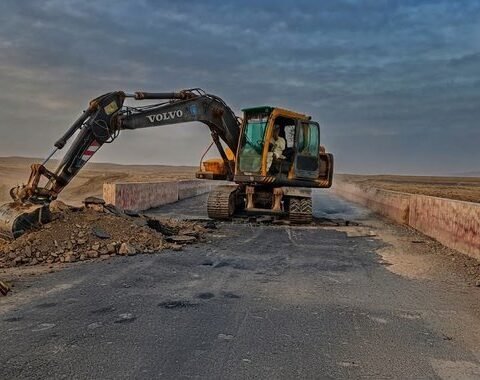
There is also a broader development context that should not be ignored. AJK’s difficult geography has not prevented considerable expansion of physical infrastructure. The territory’s Communication and Works Department reports a road network of roughly 8,865 kilometres and a road density of about 0.66 kilometres per square kilometre. An older national benchmark published in the Pakistan Economic Survey placed Pakistan’s overall road density at about 0.32 kilometres per square kilometre, illustrating the substantial scale of road connectivity developed in AJK despite its mountainous terrain.
Education indicators offer another useful perspective. The AJK Statistical Year Book 2025 records an overall literacy rate of 77.8 percent for people aged ten and above in the 2020-21 Labour Force Survey, including an urban literacy rate of 84.9 percent. These figures do not mean that educational challenges have disappeared, particularly regarding gender disparities, school quality and access in remote communities. They do, however, show why discussions about development should distinguish genuine shortcomings from claims that overlook measurable progress.
Household relief provides another important part of the picture. Following the 2024 agreement reached during public protests, domestic electricity tariffs were fixed at Rs3 per unit for consumption of up to 100 units, Rs5 for the 101-to-300-unit range and Rs6 above 300 units. The same relief package reduced subsidised flour to Rs2,000 for a 40-kilogram bag, equivalent to Rs1,000 for 20 kilograms at the announced rate. The federal government approved Rs23 billion at the time to facilitate the package. These measures are particularly significant in an era when electricity and food inflation remain major concerns for households across Pakistan.
None of this means that public grievances should be dismissed. Development indicators cannot substitute for accountability, responsive government or citizens’ right to demand better services. Nor should statistics be used to suggest that every village enjoys identical access to roads, healthcare, education, telecommunications or employment. Mountain communities often experience inequalities that territory-wide averages cannot fully capture. A credible governance narrative must therefore acknowledge both achievements and remaining gaps.
This distinction is especially important because public debate in AJK has become politically charged. The AJK government formally designated the Joint Awami Action Committee as a proscribed organisation under the territory’s Anti-Terrorism Act in June 2026, citing security and public-order concerns. JAAC, however, had also emerged from campaigns around economic and political demands, including electricity, flour prices and representation. Those competing claims should be evaluated through evidence, law and open public scrutiny rather than reduced to competing slogans.
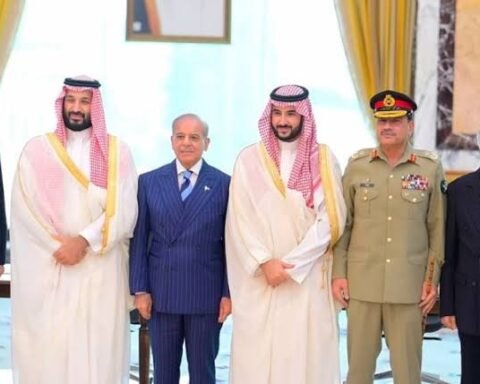
Pakistan’s federal government has meanwhile publicly pledged continued cooperation with the AJK administration on development and welfare projects. Such commitments ultimately acquire meaning only when ordinary citizens can see tangible outcomes in their neighbourhoods, schools, roads, utility bills and municipal services.
That is where Suthra Kashmir could become important. A clean city may appear modest compared with highways, dams or major economic projects, but effective waste management is among the most visible tests of government capacity. If the programme produces cleaner settlements, accountable contractors, functioning collection systems, greener public spaces and healthier communities, citizens will have a concrete benchmark against which to judge it.
AJK’s progress should neither be romanticised nor dismissed. The more constructive approach is to examine what has been delivered, identify what remains deficient and demand measurable improvement. Suthra Kashmir will succeed not because of its slogan, but if cleaner streets and better municipal services become an everyday reality for the people of Kashmir.