
Ask anyone in Kharan what a bridge means and you won’t get a lecture on geopolitics. You’ll hear about a truck driver who can reach Quetta by evening, a mother who can get her child to a hospital, a farmer who can sell his harvest before it spoils. In a district of sparse rain and long distances, the road is the economy, and a bridge on that road is the difference between a working day and a lost one.
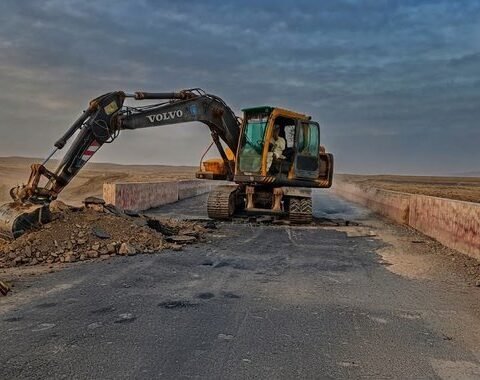
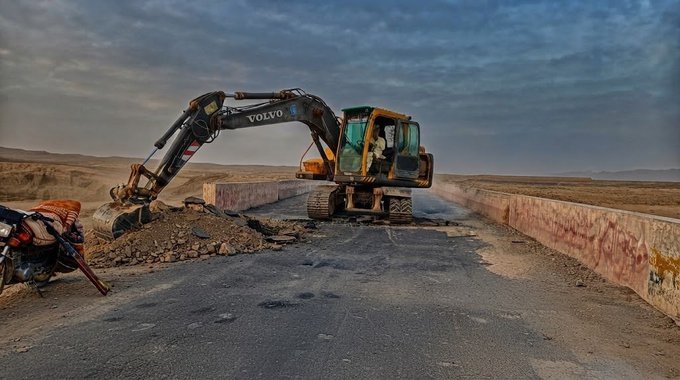
That is why the latest incident at Sotgan deserves attention beyond the usual headline cycle. According to reports from the area, Fitna al Hindustan terrorists used heavy machinery to demolish a bridge on the Kharan Quetta highway. An empty Frontier Corps checkpost was also brought down. Nobody needed an excavator to send a message about security. The point was to cut a public road.
A pattern, not an accident
This was not a one off. Over recent months, bridges have been hit across the province, including in Mastung, Nushki, Chagai and Kalat. Earlier this year, security forces recovered and defused an explosive device planted under a bridge on this same Kharan Quetta route. In early September, a bridge blast in Kalat went off as a passenger coach was crossing, and several travellers were hurt. In the same period, terrorists attacked a road construction camp in Duki, killed a guard and abducted 18 workers. Five labourers, men who had travelled far from home to earn a living, were killed in a separate attack in August.
Look at that list and ask who pays. It is not a distant ministry or a faceless institution. It is the driver, the labourer, the shopkeeper, the passenger. A demolished bridge sends no signal to a capital city. It sends a bill to the people who live beside it.
The arithmetic of disruption
Balochistan is Pakistan’s largest province by area and among its most sparsely populated. Distances are huge, and alternatives are few. When a bridge goes down on a highway like Kharan Quetta, traffic does not simply reroute in a few minutes. Detours can stretch across hours of rough terrain. Goods reach markets late or not at all. Fuel and food cost more. Patients wait longer.
The area around Sotgan matters for a second reason. It is associated with the Sotgan Dam, which captures seasonal floodwater and supports local farming and water conservation. In an arid district, water is not a talking point, it is survival. Anything that disrupts activity in such a place sets back the very communities that have the least room to absorb another hardship.
What the numbers say
The wider security picture is serious and should be stated plainly. The Armed Conflict Location and Event Data project, an independent monitoring organisation, recorded 2,425 attacks across Pakistan in 2025, up from 658 in 2022. That is nearly a fourfold rise in three years. Khyber Pakhtunkhwa has taken the heaviest share, but Balochistan has faced a steady campaign of its own, aimed at highways, mobile towers, work sites and transport.
The response has been sustained. In the first week of September, intelligence based operations in Kharan and Washuk reportedly accounted for eleven terrorists. Further operations under the Radd ul Fitna campaign have continued in Panjgur, Kachhi, Kalat and Mastung.
Security forces are doing hard, patient work, often in difficult terrain, to keep roads open and communities safe.
Why khawarij is the right word
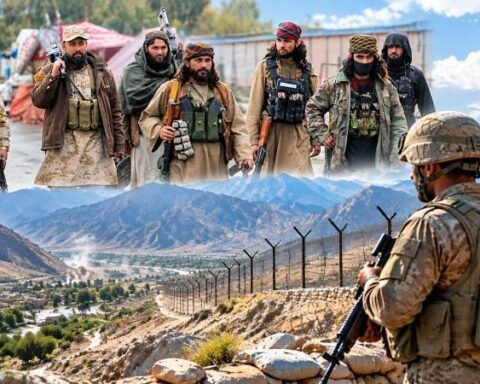
The name matters. The khawarij of history were known for declaring their own violence righteous while turning it on the very people they claimed to speak for. That description fits uncomfortably well. A group that claims to champion the Baloch but blows up the road the Baloch drive on, burns the trucks Baloch drivers operate, and abducts Baloch workers from a construction camp is not defending anyone. It is spending the province’s future to buy attention for itself.
And the state’s designation of these groups as Fitna al Hindustan reflects its assessment that the campaign is externally sponsored, which is why officials frame the fight as one against proxies rather than a genuine local movement. You do not have to accept every detail of that assessment to see the practical reality on the ground. The damage lands on local people.
Grievance and violence are different things
None of this means Balochistan has no concerns worth raising. Access to jobs, services, water and a fair share of development are legitimate conversations, and they belong in parliament, in the press, in jirgas and on the street. Peaceful protest is not terrorism, and officials have repeatedly said the two should never be confused.
But no grievance is answered by demolishing a bridge. Nobody in Sotgan gains a school, a clinic or a job from a collapsed span. The terrorists offer nothing to build, only something to break.
What comes next
Three things would help. First, quick restoration. A rebuilt or temporary crossing sends a stronger message than any statement, because it shows that violence cannot hold a road hostage for long. Second, better protection for critical points along key highways, from intelligence to patrols to community reporting. Third, more investment in local jobs and services, so that young people see a future that does not run through a gun.
The people of Balochistan have shown extraordinary resilience. They have rebuilt roads, reopened markets and carried on through hardship most of us would find hard to imagine. The terrorists can destroy concrete and steel, but they have never managed to break the will of the communities that depend on those bridges. The excavator at Sotgan will be forgotten. The bridge, rebuilt, will carry people for decades.