
Regional Ambitions and the Test of Domestic Stability
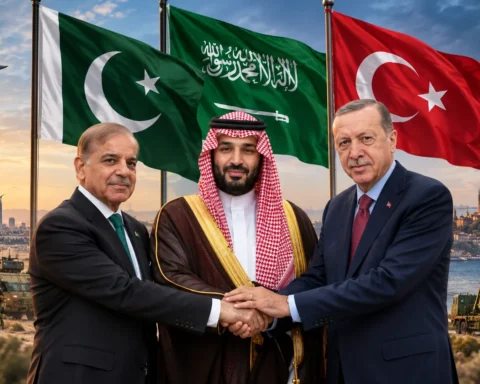
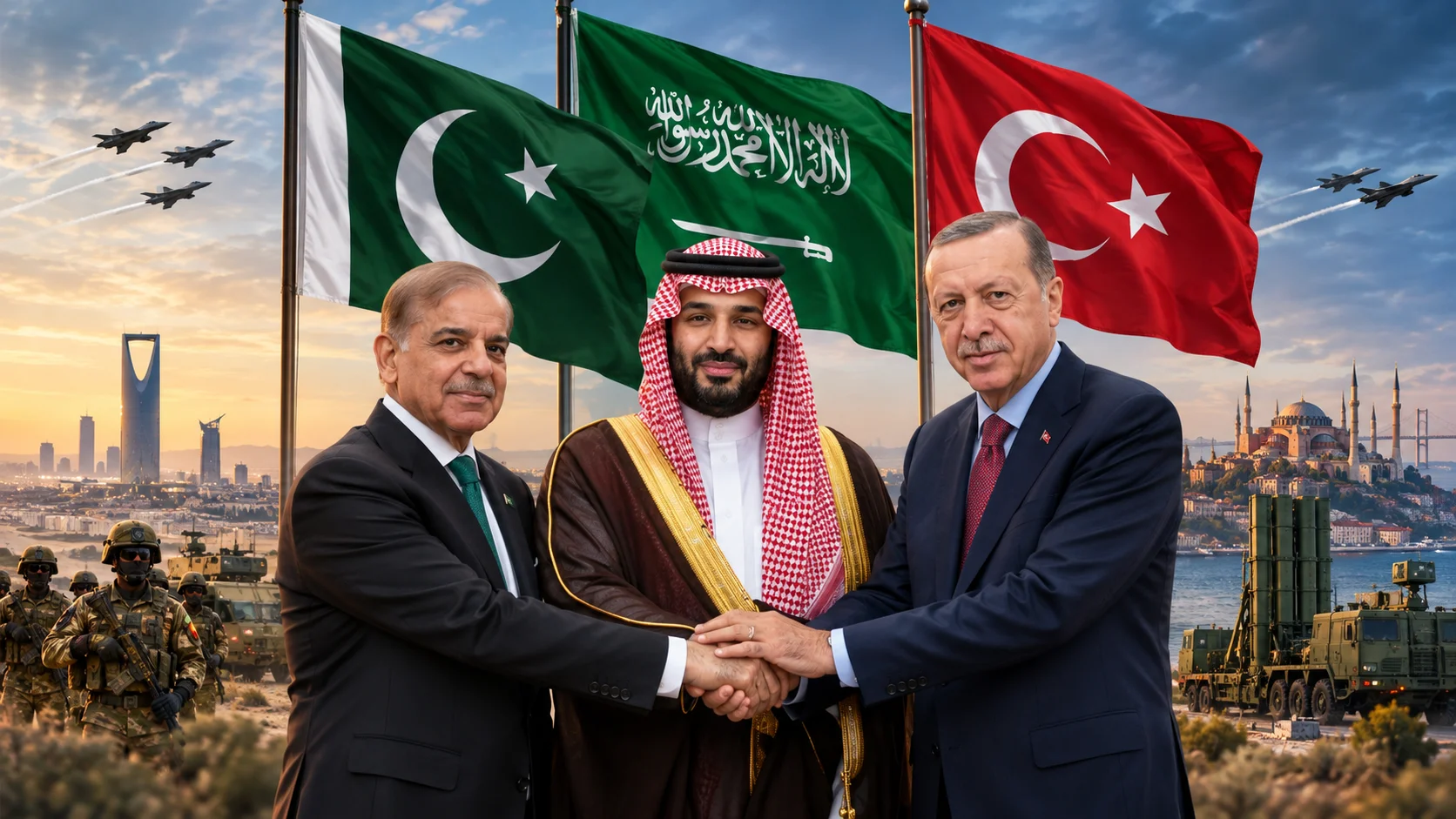
Pakistan’s growing defence partnership with Saudi Arabia and Turkiye comes at a time when regional security is becoming increasingly unpredictable. The Makkah Joint Defence Agreement, signed on August 7, 2026, establishes a framework for collective defence, stating that an armed attack against one signatory will be regarded as an attack against all. As the official announcement from Turkiye explains, the agreement builds on longstanding political, economic and military relationships. Yet its long term importance will depend not simply on the commitment expressed by the three governments, but on their ability to turn that commitment into practical cooperation.
For Pakistan, the agreement offers an opportunity to strengthen its regional influence and deepen two important strategic relationships. Saudi Arabia brings substantial economic resources and an established security partnership with Islamabad, while Türkiye contributes military expertise and a growing defence industry. Pakistan, meanwhile, has extensive military experience and longstanding links with the Gulf. The Radio Pakistan report on the agreement highlights the three countries’ shared objective of improving collective deterrence. However, a successful partnership will require more than diplomatic statements.
It needs regular military consultations, intelligence sharing arrangements, joint training and clear procedures for responding to threats.
The agreement has already moved beyond its initial announcement. On October 5, the three countries held an emergency meeting of their strategic political and defence committee in Riyadh to discuss threats facing Saudi Arabia. According to the Pakistani Foreign Office’s joint statement, the participants agreed to advance practical implementation of their collective defence commitments. Pakistan’s appointment of retired Lieutenant General Nauman Mahmood as the alliance’s first secretary general also indicates an effort to establish an institutional structure. The government’s announcement on the Makkah Accord further reaffirmed that the partnership is intended to support regional stability rather than create a new confrontational bloc.
Saudi Arabia’s immediate security concerns explain why the agreement matters. Attacks involving missiles and drones have exposed the vulnerabilities of important infrastructure and transport networks across the region. On October 15, the Associated Press reported that Saudi led forces had intercepted a missile directed towards Medina and destroyed a drone over the Eastern Province. These developments demonstrate the importance of air defence, surveillance and coordinated responses to emerging threats. They also highlight the risks of allowing regional conflicts to expand. A credible defence partnership should discourage aggression while preserving diplomatic channels that can prevent further escalation.
Turkiye’s position will be particularly important in determining how the alliance operates. Ankara has considerable experience in defence manufacturing, electronic warfare and military technology, but it also has independent foreign policy interests. Turkish Foreign Minister Hakan Fidan said that his country was examining defensive assistance for Saudi Arabia while ruling out an offensive role. As reported by Reuters on October 8, the distinction between defensive support and participation in offensive operations remains central to Ankara’s approach. This suggests that cooperation may develop through technical assistance, air defence and intelligence rather than automatic participation in every regional confrontation.
The broader diplomatic environment also demands caution. The Financial Times’ analysis of the Saudi Houthi conflict has highlighted the difficulty of protecting Saudi interests against increasingly complex threats. Meanwhile, the Reuters report on the postponed EU Gulf summit illustrates how deteriorating security conditions can affect diplomacy and regional economic planning. Pakistan, Saudi Arabia and Türkiye therefore have an interest in strengthening deterrence without allowing their new partnership to become another source of geopolitical polarisation.
However, Pakistan’s external ambitions must be considered alongside developments at home. On October 11, President Asif Ali Zardari promulgated emergency and Governor’s Rule in Khyber Pakhtunkhwa, effectively suspending the PTI led provincial government. Federal authorities cited worsening terrorism and the provincial administration’s alleged failure to address the security situation. PTI rejected the decision, arguing that it undermined provincial autonomy and was politically motivated.
The official announcement carried by Radio Pakistan sets out the government’s position, while Al Jazeera’s report on the emergency describes the political dispute surrounding the decision.
The controversy deepened when reports emerged that only 16 protest activities had been recorded across the province following the emergency declaration, with average participation below 100 people. According to the intelligence report described by The News, the only gathering exceeding 500 participants took place in Bara on October 13, before dispersing following police action. The October 15 report on the demonstrations presents the figures as evidence of limited public mobilisation. Nevertheless, the term “symbolic” requires careful interpretation. A small protest can communicate political opposition even when it attracts relatively few participants. Without independent verification and broader public opinion evidence, these figures cannot establish that the population supports emergency rule or has abandoned PTI.
The Indian Express analysis of the KP crisis points towards the larger challenge facing Islamabad: restoring security while managing political divisions and questions of constitutional authority. The government must demonstrate that emergency measures are necessary, proportionate and consistent with constitutional requirements. At the same time, provincial leaders must be held accountable for their responsibilities towards public safety. Counterterrorism cannot succeed through political confrontation alone, it requires credible institutions, cooperation between authorities and public confidence.
The lesson for Pakistan’s new defence partnership is clear. International agreements can strengthen a country’s security, but they cannot substitute for effective governance at home. The Makkah Accord offers Pakistan, Saudi Arabia and Türkiye a meaningful opportunity to improve defensive coordination and contribute to regional stability. Its success, however, will depend on transparent commitments, careful diplomacy and a shared understanding of the limits of military power. Pakistan must demonstrate that it can pursue strategic cooperation abroad while protecting constitutional order, addressing terrorism and maintaining public trust at home. Ultimately, the strongest alliance will be one that prevents conflict rather than merely promises to respond when conflict begins.