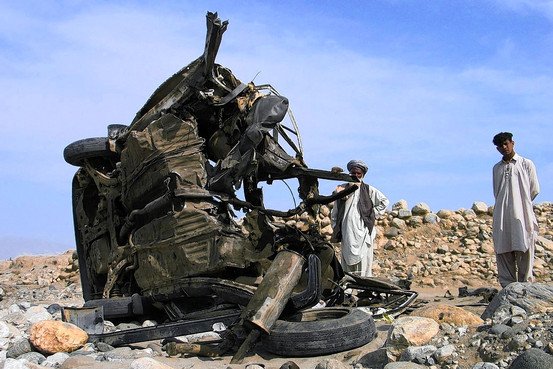

A disturbing image reportedly emerging from Afghanistan’s Logar province raises a question that goes well beyond one militant, one explosive device, or one border. The material is said to show an Afghan militant preparing a remotely operated improvised explosive device while weapons and ammunition lie nearby and two young children, reportedly his sons, remain within close proximity. If the circumstances depicted are verified, the scene illustrates one of the most troubling features of contemporary terrorism. Militant activity does not merely threaten intended targets. It can place families, neighbourhoods and children in immediate danger long before an explosive device reaches its intended destination.
IED preparation is inherently hazardous. Explosives, detonators, electrical components and ammunition can turn an ordinary room or compound into a lethal environment. Keeping children close to such activity is therefore not an incidental detail. It demonstrates how the boundary between militant infrastructure and civilian space can become dangerously blurred. Afghanistan already carries an enormous burden from explosive hazards. In April 2026, the United Nations reported that explosive ordnance was killing or injuring around 50 people every month in Afghanistan and that almost 80 percent of those casualties were children.
The presence of children around suspected militant activity creates another difficult problem. Civilians, particularly children, remain protected persons and their presence does not disappear simply because an armed actor may be operating nearby. At the same time, civilian proximity cannot itself transform weapons storage, bomb making or militant planning into civilian activity. These two principles must be held together. Counterterrorism operations must distinguish between combatants and civilians and take feasible precautions to prevent civilian harm. Armed groups, meanwhile, carry their own responsibility not to expose families or communities unnecessarily to military danger.
That distinction matters especially along the Afghanistan Pakistan frontier, where accusations, counter accusations and military action have increasingly become entangled. Pakistan maintains that militants operating from Afghanistan have organized and supported attacks against Pakistani targets. The Taliban authorities reject accusations that Afghanistan provides terrorist sanctuaries. This dispute is not merely bilateral rhetoric, however. A February 2026 report by the UN Security Council’s Analytical Support and Sanctions Monitoring Team stated that no member state supported the Afghan de facto authorities’ assertion that terrorist groups were absent from the country. The report further assessed that Tehrik e Taliban Pakistan had been given greater liberty and support by the de facto authorities and linked this environment to increased attacks against Pakistan.
Recent violence has made the issue even more urgent. On September 26, a suicide bombing at a police checkpoint in Dera Ismail Khan killed security personnel and civilians, after which gunmen also attacked an ambulance carrying casualties. The TTP claimed responsibility. Such incidents help explain why Islamabad increasingly treats militant infrastructure beyond its western border as a direct national security concern.
But civilian protection cannot become secondary in that confrontation. The consequences are already visible. UNAMA said on October 1 that at least ten civilians, most of them children, were killed in airstrikes in Afghanistan’s Kunar and Helmand provinces. It reported more than 1,100 civilian deaths and injuries from cross border armed violence during 2026 and again called for de escalation, respect for international law and prevention of civilian harm. Pakistan said the October 1 strikes targeted militant hideouts, while Afghan authorities rejected that account and reported civilian casualties.
This is precisely why alleged cases of militants operating beside family members deserve serious scrutiny rather than propaganda from either side. If an individual prepares an IED while children are nearby, those children do not become participants in his actions. Nor should their presence be exploited later to erase evidence of genuine militant activity. Every incident should instead be examined on its facts. Who was present, what activity was taking place, what intelligence existed, what precautions were possible and whether international law was respected are questions that must be answered through evidence rather than slogans.
There is also a responsibility resting on Afghanistan’s de facto authorities. Their territory should not provide operational space for organizations conducting attacks across international borders. The February UN monitoring report described TTP as benefiting from a permissive environment, while international concern over terrorist organizations operating from Afghanistan has persisted. Addressing that problem requires more than denying individual allegations. It requires visible action against training facilities, explosives networks, weapons movement, financing, recruitment and cross border infiltration.
For Pakistan, the strategic objective should remain equally clear. Terrorist infrastructure threatening Pakistani citizens must be addressed, but counterterrorism effectiveness ultimately depends on intelligence accuracy, distinction and civilian protection. Civilian casualties can deepen resentment, complicate diplomacy and provide militant organizations with material for recruitment and propaganda.
The reported Logar episode therefore represents something larger than a disturbing image. If authenticated, it would show how militant activity can endanger the very families living beside those responsible for violence. Children should never become camouflage, shields, propaganda instruments or collateral participants in an adult’s militant enterprise. Afghanistan’s rulers have an obligation to ensure that their territory is not used for cross border terrorism, while all actors confronting terrorism have an equal obligation to protect civilians. Security and civilian protection are not competing principles. A credible counterterrorism policy requires both.