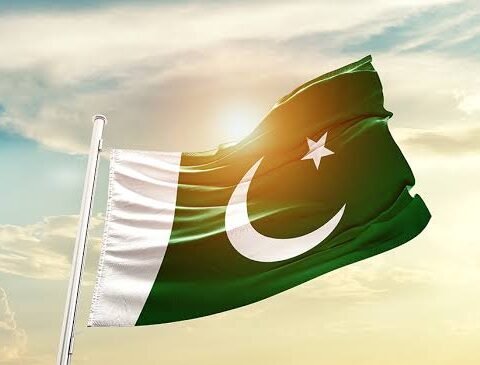
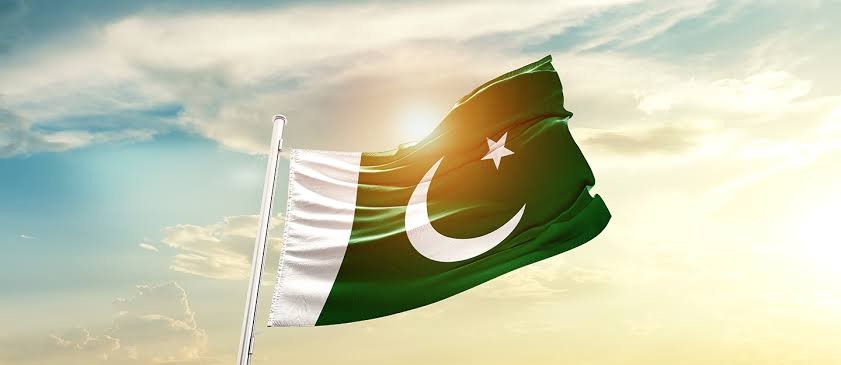

Every year, August 14 fills Pakistan with green and white. Flags appear on homes, streets and public buildings, patriotic songs return to the airwaves, and families participate in celebrations that connect one generation with another. Yet Independence Day is much more than an annual festival. It commemorates the culmination of a long political struggle that transformed the aspirations of the Muslims of the Indian subcontinent into an independent state. Pakistan’s creation on August 14, 1947, represented freedom from British colonial rule, but it also embodied a larger aspiration for political representation, dignity, self-government and the right of a people to determine their own future.
The historical road to Pakistan was neither short nor straightforward. British influence expanded dramatically after the Battle of Plassey in 1757, eventually developing into colonial domination over most of the Indian subcontinent. By the beginning of the twentieth century, political consciousness had intensified among different communities. The Partition of Bengal in 1905, the establishment of the All-India Muslim League in 1906, the Lucknow Pact of 1916 and subsequent constitutional struggles increasingly shaped Muslim political thinking.
Questions of representation, safeguards, provincial autonomy and political identity became central to the debate over the future constitutional structure of British India
Muhammad Ali Jinnah emerged as the principal political leader of this struggle. His constitutional approach initially emphasized Hindu-Muslim cooperation, but changing political circumstances persuaded him that Muslims required firm constitutional guarantees to preserve their political interests. His famous Fourteen Points of 1929 articulated demands for federalism, provincial autonomy and adequate Muslim representation. By 1940, the Lahore Resolution gave a new direction to Muslim politics by calling for independent political arrangements in Muslim-majority regions. Under Jinnah’s leadership, the Muslim League increasingly transformed this demand into a mass political movement.
The decisive developments came in 1947. The June 3 Plan provided the framework for the partition of British India, while the Indian Independence Act formally created the legal basis for two independent dominions. The Radcliffe Boundary Commission was responsible for demarcating the borders between the new states. Independence, however, came with an extraordinary human cost. Partition triggered one of the largest migrations of the twentieth century. Millions crossed newly drawn borders, while communal violence claimed countless lives and separated families, communities and properties that had existed together for generations.
When Pakistan emerged as an independent country on August 14, 1947, celebrations were therefore accompanied by uncertainty and immense responsibility. Muhammad Ali Jinnah became Pakistan’s first governor-general, and Karachi served as the new state’s first capital. The government inherited enormous administrative, financial and humanitarian challenges. Refugees required housing, food, employment and security.
Institutions had to be established almost from the ground up. Government departments needed personnel, resources were limited, and relations with neighboring India were immediately complicated by unresolved disputes
What makes Pakistan’s early survival particularly significant is the determination with which its people responded to those difficulties. Refugees rebuilt their lives, civil servants established institutions, businesses restarted economic activity, and ordinary citizens contributed whatever they could to the new state. Pakistan was not born into stability or abundance. It had to construct its administrative, political and economic foundations while simultaneously dealing with displacement, insecurity and institutional shortages. The perseverance demonstrated during those formative years remains one of the most important lessons of independence.
This is why August 14 should carry significance beyond ceremonial celebration. Independence gave Pakistan the sovereign authority to establish its own parliament, courts, administrative institutions, foreign policy and national priorities. It enabled the country to develop a distinct political and cultural identity rooted in its Islamic heritage while reflecting the linguistic, ethnic and regional diversity of its people. Freedom created opportunities, but it also imposed responsibilities. Political independence can only achieve its full meaning when accompanied by effective governance, justice, education, economic opportunity and equal citizenship.
The way Pakistan celebrates independence has also changed. Traditional flag-hoisting ceremonies, parades, national songs, speeches and community gatherings remain an important part of the occasion. Children wear green and white, buildings are illuminated, and the national flag becomes visible across cities and villages. Social media has added another dimension.
Pakistanis at home and abroad now participate through digital campaigns, photographs, videos, online discussions and virtual events. The Pakistani diaspora can celebrate alongside people inside the country despite being separated by thousands of kilometres
Yet patriotism should not become limited to flags, slogans and social-media posts. A meaningful Independence Day should also encourage national reflection. Pakistan has achieved important milestones since 1947. It has developed major industries, built extensive infrastructure, created internationally respected institutions and made advances in agriculture, science, technology, healthcare, education and defence. Its strategic location connecting South Asia, Central Asia, China, the Middle East and the Arabian Sea gives it considerable geopolitical importance.
Pakistan’s large and youthful population, expanding digital economy and growing technological capabilities offer further opportunities for national progress
At the same time, independence requires continuous renewal. Economic inequality, inadequate education, population pressures, governance weaknesses, political polarization, climate vulnerability and unemployment remain serious challenges. The proper response is neither despair nor denial. It is national commitment. The same determination that enabled Pakistan to survive its difficult beginnings must now be directed toward building stronger institutions, investing in human capital, promoting innovation and ensuring that citizens experience the practical benefits of independence in their everyday lives.
August 14, therefore, represents both memory and responsibility. It is a day to remember those who struggled, sacrificed and migrated for the creation of Pakistan, but it is equally a day to consider what kind of Pakistan future generations will inherit. Independence was achieved in 1947, but nation-building is an ongoing process. The most meaningful tribute to the Pakistan Movement is to transform freedom into prosperity, constitutionalism, justice and opportunity. Seventy-nine years after independence, Pakistan’s greatest strength remains the resilience of its people and their belief that the country can continue moving forward. The celebration of August 14 should renew that belief and turn patriotism into a collective commitment to building a peaceful, stable and prosperous Pakistan.