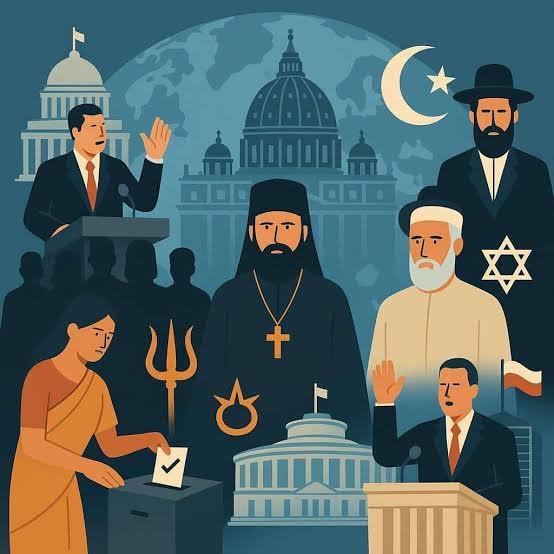

Religion carries enormous moral authority in Pakistani society. That authority can inspire charity, patience, justice and service. Yet the same emotional attachment to faith can be manipulated when religious language becomes a means of acquiring influence, followers, money or political authority. Islam itself draws a sharp distinction between sincere devotion and religion performed for worldly advantage. The Qur’an warns believers not to exchange the revelations of Allah for a small price. Qur’an 2:41 therefore speaks beyond material payment alone. It offers a powerful warning against turning sacred teachings into instruments of personal ambition.
The Prophetic teaching that actions are judged according to intentions provides an equally important standard. Sahih al-Bukhari begins with this principle because intention gives moral meaning to conduct. A person may speak continuously about faith, sacrifice and religious duty, but the outward appearance of religiosity cannot settle the question of sincerity. When religious symbolism is accompanied by intimidation, hatred, personal glorification or a demand for unquestioning obedience, citizens have every reason to examine conduct rather than slogans.
This distinction becomes particularly important in confronting violent extremism. Extremist movements frequently attempt to wrap political objectives, revenge, militancy or struggles for authority in religious vocabulary. Yet a religious label does not transform an unlawful act into worship. Pakistan’s official national narrative against terrorism and extremism explicitly rejects armed resistance against the state, violent enforcement of religious interpretations, takfir and terrorism committed in the name of religion. It also states that individuals and groups cannot take the law into their own hands.
Sahih Muslim 1905a offers a disturbing reminder of why appearances cannot be enough. It warns that deeds outwardly associated with sacrifice, learning or generosity may lose their spiritual value when performed for reputation. This principle directly challenges performative religiosity. When someone invokes religion primarily to become famous, command followers, collect resources or build personal authority, the public performance of faith cannot by itself establish righteousness.
The Qur’an makes the same point in Surah Al Ma’un, condemning those who pray simply to be seen by others. Qur’an 107:4–6 exposes a form of religiosity that has appearance but lacks sincerity. This has obvious relevance in the age of viral speeches and short video clips. A carefully staged sermon, emotional slogan or dramatic display of piety can travel across social media within minutes. Yet religious authenticity cannot be measured through views, applause or the intensity of rhetoric.
The danger becomes greater when disagreement with a preacher, commander or movement is portrayed as disagreement with Islam itself. Such thinking places individuals beyond ordinary scrutiny. Qur’an 53:32 rejects self-righteousness by reminding believers not to declare themselves pure because Allah knows best who possesses true righteousness. Religious credentials therefore cannot become a shield against questions about violence, finances, methods, intentions or accountability.
Pakistan’s constitutional framework also places religious freedom within a system governed by law and public order. Article 20 protects the right to profess, practise and propagate religion subject to law, public order and morality. Article 19 similarly protects expression while recognizing legally defined restrictions relating, among other matters, to public order and incitement to offences. Political and religious participation consequently exists within a constitutional framework rather than through self-appointed armed enforcement.
Pakistan’s wider counter-extremism approach increasingly recognizes that security measures alone cannot defeat violent ideas. The National Prevention of Violent Extremism Policy approved in December 2024 emphasizes community engagement, peacebuilding, education, rehabilitation and the involvement of religious leaders in countering extremist behaviour. This approach matters because extremism is not only a battlefield problem. It is also a struggle over legitimacy, identity, persuasion and the interpretation of religious obligation.
Young Pakistanis are especially important in this environment. They encounter religious material from thousands of online sources, often without knowing a speaker’s scholarly background, context or objectives. Popularity is easily mistaken for authority. Confidence can be mistaken for knowledge. Anger may be presented as courage. The Qur’anic instruction in 16:125 offers another model, calling people toward the way of Allah with wisdom and good instruction. Religious communication grounded in wisdom should deepen understanding, not convert emotion into blind obedience.
There is also a simple moral test. What does a religious message produce? Does it create humility or arrogance, compassion or hatred, learning or unquestioning loyalty? Does it protect innocent life, or make violence appear heroic? Qur’an 5:8 commands believers to remain committed to justice even where hostility exists. That standard leaves little space for arguments suggesting that noble ends automatically excuse unjust means.
Pakistan therefore needs religious discourse that is confident without being coercive, principled without becoming intolerant and politically aware without turning faith into a weapon for personal power. The country’s revised National Action Plan similarly identifies militancy, extremist propaganda, religious and sectarian persecution, terrorist financing and violent extremism as matters requiring sustained action.
The deepest answer to religious showmanship is not less religion. It is greater sincerity. Genuine faith does not require personality cults, fear or manufactured sanctity. It produces humility, service and responsibility. Those who speak in the name of religion should therefore be judged not by the volume of their slogans but by the integrity of their conduct. Sacred language belongs to God. It should never become currency in a contest for worldly status, political authority or personal command.