
When suffering crosses borders, a new report from Geneva puts India’s Muslim minority crisis under the international spotlight
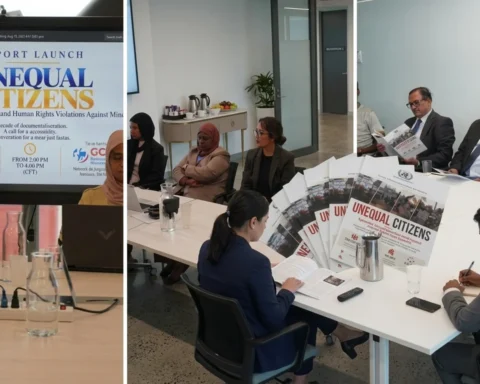
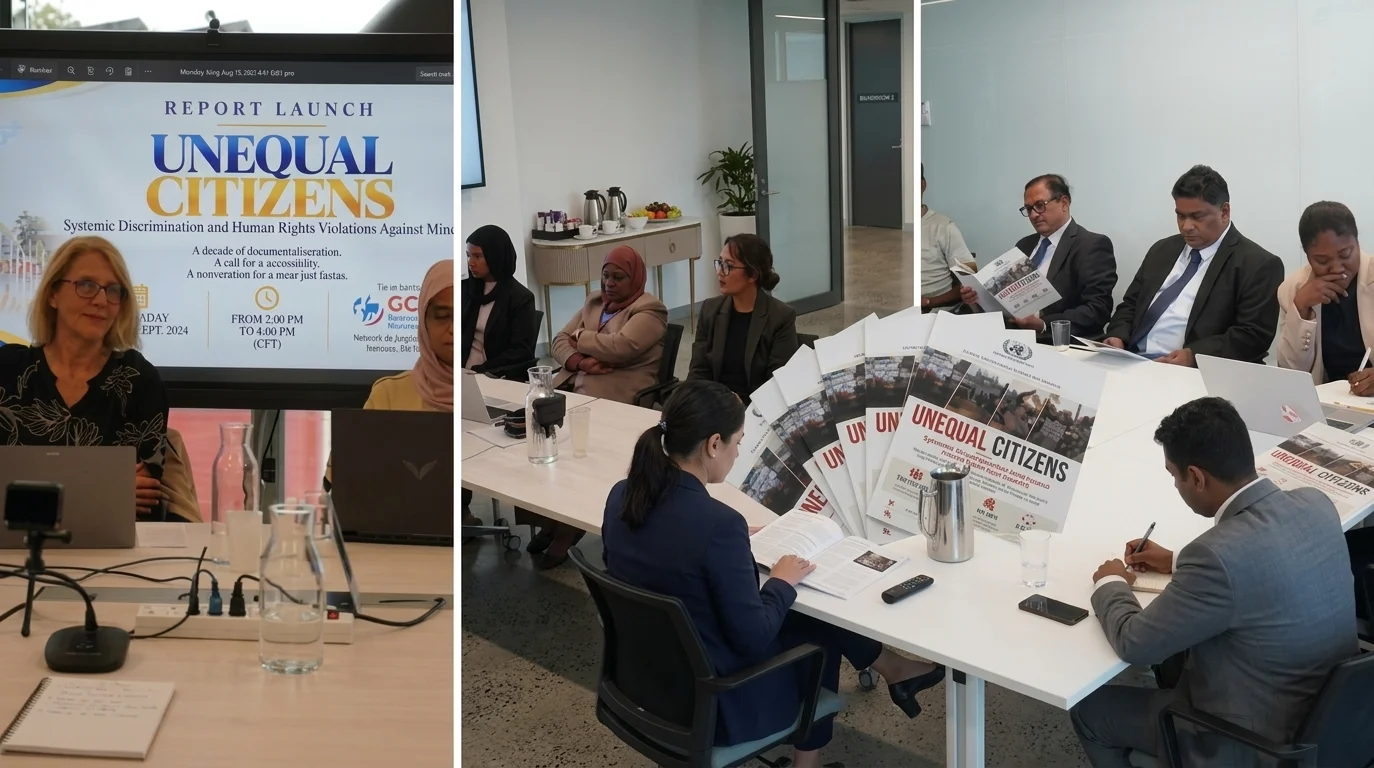
There are moments in history when the pain of a people grows too large to be contained within national borders. September 30, 2026, was one such moment. On the sidelines of the 63rd session of the United Nations Human Rights Council in Geneva, Arete Academy Geneva convened a side event at the Geneva Centre for Security Policy to present and debate a damning new report on the systematic discrimination, state sanctioned violence, and human rights violations targeting Muslims in India. The room was full of UN experts and international observers. The findings were hard to ignore.
The report, titled
“Unequal Citizens: Systemic Discrimination and Human Rights Violations Against Muslims in India”
, covers the period from 2014 to 2025, tracking what it describes as a sustained and worsening pattern of persecution under the BJP government’s Hindu nationalist governance. India’s Muslim population numbers over 200 million, making them the country’s largest religious minority. But size has offered no protection. If anything, the scale of the community has made it a more visible political target.
A Pattern the World Has Seen Before
An independent panel of international jurists has identified credible evidence of widespread and systematic human rights violations against Muslims in Assam and Uttar Pradesh, violations which may amount to international offenses, including crimes against humanity. These are not the words of activists or politicians. The panel members carry professional experience from Rwanda, the Balkans, and Myanmar, contexts where the world learned, too late, what happens when warning signs go unheeded.
The report points to a sustained environment of hostility marked by repeated instances of hate speech by political leaders and growing social polarisation, with one of the strongest conclusions being the absence of effective domestic remedies. When the very mechanisms meant to protect citizens become either compromised or inaccessible, what remains for those left behind?
The Bulldozer as a State Symbol
No image captures the crisis more viscerally than the bulldozer. What began as a local enforcement tool has become a national emblem of what critics call “bulldozer justice”, a broader strategy where Muslim homes, businesses, and places of worship are systematically razed under the pretext of removing unauthorized encroachments, relying on selectively enforced municipal bylaws that are otherwise widely ignored.
The numbers are staggering. A compilation covering 2020 to 2026 identified at least 2,166 reported instances involving mosques, madrasas, shrines, and other Muslim religious and community properties in government demolition, removal, and eviction drives across India. Each number represents a family, a community, a history reduced to rubble, often with no meaningful warning and no legal recourse.
Between January and April 2026 alone, mosques, madrasas, shrines, and Muslim owned homes were systematically demolished across Uttar Pradesh, Assam, Delhi, Karnataka, Gujarat, Uttarakhand, and other states. India’s own Supreme Court declared such demolitions unconstitutional in November 2024, yet authorities in Kushinagar proceeded to demolish part of the Madni mosque in egregious contempt of the top court’s order, demonstrating a pattern of executive impunity.
When a state defies its own highest court to pursue punitive demolitions against a minority, it signals something far darker than administrative failure. It signals intent.
Law as a Weapon
The discrimination does not stop at the bulldozer. The Waqf Amendment Act 2025 could expand state control over Muslim owned religious properties, raising serious concerns about the expropriation of religious sites and the facilitation of Muslim erasure from the public sphere. This legislation did not arrive in a vacuum. It follows a string of laws, the Citizenship Amendment Act, National Register of Citizens proposals, anti conversion statutes, and interfaith marriage restrictions, each adding another layer of legal pressure on India’s Muslim population.
Rohingyas and Bengali origin Muslims were unlawfully deported or pushed back, and new immigration rules stripped asylum seekers of protection, while mass forced evictions of Muslims in Assam left thousands homeless. Most alarmingly, in some constituencies Muslims comprised 95 percent of the names deleted from electoral rolls, with over nine million names removed from West Bengal’s voter lists alone, approximately 12 percent of the electorate, while the Supreme Court barred around two million pending appellants from casting their votes.
When a minority cannot vote, it cannot be heard. When it cannot be heard, it can be more easily erased.
International Bodies Are Speaking Up
The Arete Academy report did not emerge in isolation. In June 2025, independent UN human rights experts warned that arbitrary and punitive demolitions are an aggravated form of human rights violation, especially egregious when they target minorities, and stated that Muslim communities have been disproportionately targeted, particularly after religious violence or protests, without adequate notice, resettlement, or alternative housing.
Human Rights Watch documented how angry rhetoric by national broadcast networks and social media helped fuel Hindu mob attacks against Muslims, particularly Kashmiri students, vendors, and workers across various Indian states, who faced intimidation, threats, and assault.
The panel has called on the UN Human Rights Council to establish an independent fact finding mechanism to investigate alleged violations in India and to preserve evidence for possible future accountability processes. The international community has been urged to act, not just observe.
The Uncomfortable Truth
India presents itself to the world as the largest democracy on earth. That claim carries weight and deserves respect. But democracy is not merely an electoral exercise, it is a covenant between a state and all of its citizens. When nearly 200 million people face an intensifying pattern of mob violence, state sanctioned demolitions, discriminatory legislation, and systemic hate, democracy’s promise rings hollow.
The previous report in 2022 warned that Muslims were at risk of becoming a persecuted minority within India and called for preventive and corrective measures. Those measures were not taken, and the situation has continued to deteriorate.
Geneva has spoken. The question now is whether the world will simply file the report, or act on it. History has a way of judging those who knew, documented the warning signs, and chose silence anyway. The time for watching is over. The time for accountability is now.