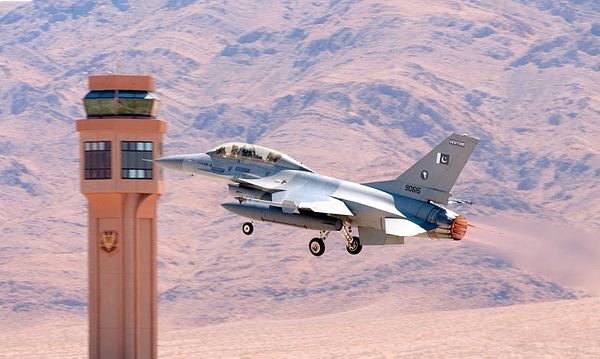

Eighteen months after the Pakistan-India air confrontation of May 2025, the argument over what happened in the skies has still not settled. That alone should make observers cautious about sweeping declarations. The latest assertion that the Pakistan Air Force could effectively do “nothing” during the confrontation raises an obvious question. If its performance was so inconsequential, why does the episode continue to require explanation, reinterpretation and increasingly confident claims long after the fighting ended?
Military history is rarely written in the first hours after a conflict. Governments release selective information, armed forces protect operational secrecy and political establishments naturally seek to shape public perception. South Asia is no exception. Both Pakistan and India have presented competing accounts of the May confrontation, particularly over aircraft losses. The exact numbers remain disputed, and they should be treated as such. But uncertainty over the final scorecard does not justify pretending that the PAF was operationally irrelevant.
Modern air warfare is no longer simply a contest between individual fighter pilots. It is increasingly a contest between integrated systems. Radars, airborne early warning platforms, electronic warfare, long-range missiles, command-and-control centres, secure data links and ground-based air defences now operate together to create a common operational picture. The side that detects earlier, communicates faster and makes better decisions can offset disadvantages in numbers.
Pakistan entered the confrontation against an air force with greater numerical depth and a larger inventory of advanced combat aircraft. Yet numerical superiority did not translate into uncontested operational freedom. The PAF was able to remain engaged, contest the battlespace and employ its networked air-defence architecture in a manner that forced Indian planners to take the threat seriously.
The more useful lesson from May 2025 is therefore institutional rather than theatrical. The PAF appears to have benefited from years of investment in interoperability between fighters, sensors, airborne surveillance, electronic warfare assets and command structures. In modern combat, the aircraft launching a missile may be only one component of a much wider kill chain. Target information may originate from another platform, while engagement decisions are supported by several layers of surveillance and command.
This type of integration matters because it reduces the importance of platform prestige. Air forces do not win wars simply because they own an expensive aircraft. They win by ensuring that platforms are connected, commanders understand the battlespace and pilots receive timely, reliable information.
The Indian Air Force remains a formidable military institution, and dismissing its capabilities would be as unserious as dismissing Pakistan’s. India possesses considerable resources, advanced aircraft and a large defence-industrial base. But serious militaries also study setbacks, miscalculations and operational surprises. They do not benefit when professional lessons are overshadowed by domestic political messaging.
When military narratives become heavily politicised, the temptation is to convert every confrontation into an absolute victory. Losses become difficult to acknowledge. Operational shortcomings become reputational liabilities. Public messaging begins to replace professional assessment. Over time, this can become dangerous because armed forces learn less from episodes that are packaged primarily for political consumption.
There is no need to inflate every battlefield claim in order to establish the PAF’s credibility. The stronger argument is the simpler one. Pakistan demonstrated that a smaller air force, if properly integrated and professionally prepared, can impose costs and deny an adversary easy dominance. That conclusion does not depend on accepting every aircraft-loss figure circulated after the confrontation.
The central issue is not whether one side can produce a more dramatic number than the other. The real issue is whether the PAF retained combat effectiveness, integrated its assets successfully and compelled the IAF to operate in a contested environment. On that measure, describing the Pakistani response as “nothing” appears more political than analytical.
Future air wars in South Asia are likely to be decided increasingly by networks rather than by aircraft alone. Electronic warfare, data fusion, long-range targeting, airborne surveillance and integrated air defence will shape outcomes well before pilots see each other. That means Pakistan and India will both have to invest not merely in new platforms, but in the systems connecting them.
For Pakistan, the challenge is to preserve the institutional advantages demonstrated during the confrontation. Training standards, command discipline, electronic warfare capability and real-time information sharing require constant investment. Operational success in one crisis cannot become an excuse for complacency.
For India, the challenge is equally serious. A large air force must continuously examine whether its numerical and technological advantages are being translated effectively into operational outcomes. Public confidence may be maintained through official statements, but military effectiveness is maintained through internal criticism, honest lessons and adaptation.
The confrontation offered a glimpse of how a future South Asian air war might unfold. It showed that numbers alone do not guarantee superiority, that expensive aircraft are only as effective as the system surrounding them, and that networked warfare can reshape the balance between larger and smaller forces.
If Pakistan’s air force had genuinely failed to influence the confrontation, the matter would have faded quickly from strategic discussion. Instead, the encounter continues to shape debate over tactics, aircraft losses, missile employment, air-defence integration and the future of regional air power.
The PAF did not need to dominate every dimension of the confrontation to prove its relevance. It needed to remain operational, contest the airspace, impose risk and complicate the calculations of a larger adversary.