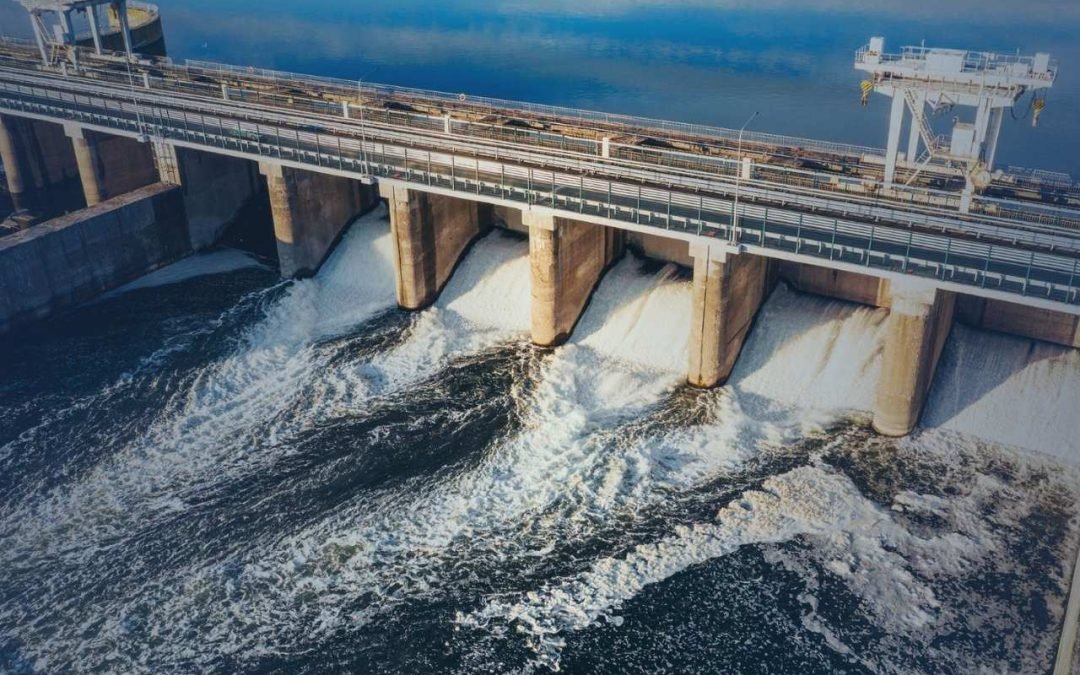

India’s 240 MW Uri-I Stage-II Hydroelectric Project on the Jhelum River is more than another infrastructure milestone. It is a political signal in concrete, tunnels and turbines. In normal circumstances, a run-of-river hydropower scheme could be defended as a clean-energy investment and a response to rising electricity demand. But in the charged hydro-political environment of the Indus Basin, especially after India’s suspension of participation under the Indus Waters Treaty, such projects carry a sharper meaning. They expand upstream leverage while deepening downstream anxiety, particularly in Pakistan, where agriculture, food security and rural livelihoods depend on predictable flows from the western rivers.
The project, located in the Mohura-Boniyar area of Baramulla District in Kashmir, has entered its main construction phase with underground excavation works beginning at Adit-3. Planned around two 120 MW units, it is expected to generate around 932 million units of electricity annually. These may appear to be technical details, but they sit within a broader strategic pattern: India is accelerating hydropower development on rivers whose consequences cannot be treated as local or internal.
The Jhelum is a transboundary river, and unilateral control over shared waters has long been recognized as a source of instability between India and Pakistan
The central problem is not hydropower itself. South Asia needs cleaner energy, resilient grids and serious climate adaptation. The problem is the manner in which India is pursuing upstream development: with insufficient transparency, delayed disclosures and a tendency to treat treaty mechanisms as irritants rather than safeguards. The Indus Waters Treaty endured wars, crises and diplomatic breakdowns because it created predictability. Its strength lay not only in allocating rivers, but in requiring communication, data-sharing, design scrutiny and dispute resolution. When those mechanisms are weakened, water begins to resemble an instrument of pressure.
For a lower riparian state, uncertainty is not an abstract diplomatic inconvenience. It affects sowing decisions, reservoir planning, flood preparedness, hydropower scheduling and food supply chains. Farmers do not plan crops on political assurances; they plan them on water availability. Irrigation authorities cannot manage canals through statements; they require timely hydrological data. When upstream infrastructure expands without meaningful information-sharing, downstream planners are pushed into the dark.
This is especially dangerous in the Indus Basin, where Pakistan’s agrarian economy is exposed to flow variability and temporary disruptions can produce price shocks, livelihood stress and social discontent
India’s defenders often argue that run-of-river projects are permissible under the treaty. That point, while legally relevant, is incomplete. Permissibility is not a blank cheque. The treaty’s spirit rests on cooperation, prior information and technical confidence-building. A project can be framed as non-consumptive and still raise legitimate concerns if its design, timing, cumulative impact or operating procedures are not transparently shared. In a basin burdened by mistrust, the combined effect of multiple upstream projects matters as much as any single dam or powerhouse. Uri-I Stage-II must therefore be viewed alongside a wider hydro-development trajectory that Pakistan sees as narrowing its economic and strategic space.
The timing makes the concern sharper. Climate change is altering snowmelt patterns, intensifying floods, aggravating drought risk and making river flows less predictable. In such conditions, cooperative water governance should become more transparent, not less. Instead, India’s posture appears increasingly unilateral. By withholding or delaying critical hydrological and technical data, New Delhi weakens the confidence-building architecture that kept the Indus system from becoming an open strategic flashpoint.
That is a dangerous precedent for South Asia, where water insecurity intersects with nationalism, militarized borders and nuclear rivalry
The broader implication is that water is being pulled into the logic of coercive statecraft. When a powerful upstream state signals that treaty commitments can be suspended and project disclosures can be delayed, it changes the psychological balance of the basin. Downstream communities begin to see every tunnel, barrage and powerhouse not as development, but as vulnerability. That perception may be dismissed in official statements, but it cannot be ignored. Trust, once eroded in transboundary river systems, is difficult to rebuild. Institutions lose credibility, technical forums become politicized, and disputes migrate from engineering tables to security establishments.
Uri-I Stage-II should therefore be treated as a warning sign. India may present the project as clean energy and regional development, but the absence of robust transparency turns it into a source of strategic unease. If New Delhi wants its hydropower expansion to be seen as lawful and benign, it must restore credible information-sharing, respect treaty procedures and engage downstream concerns in good faith. The Indus Basin cannot afford a future in which every upstream project becomes a crisis, and every downstream concern is dismissed as obstruction. Water should remain a domain of cooperation, not leverage. For millions dependent on the Jhelum and wider Indus system, the issue is not only electricity generation in Kashmir. It is the security of fields, food, livelihoods and futures. Peace will not be secured by controlling rivers, but by governing them transparently, lawfully and cooperatively.