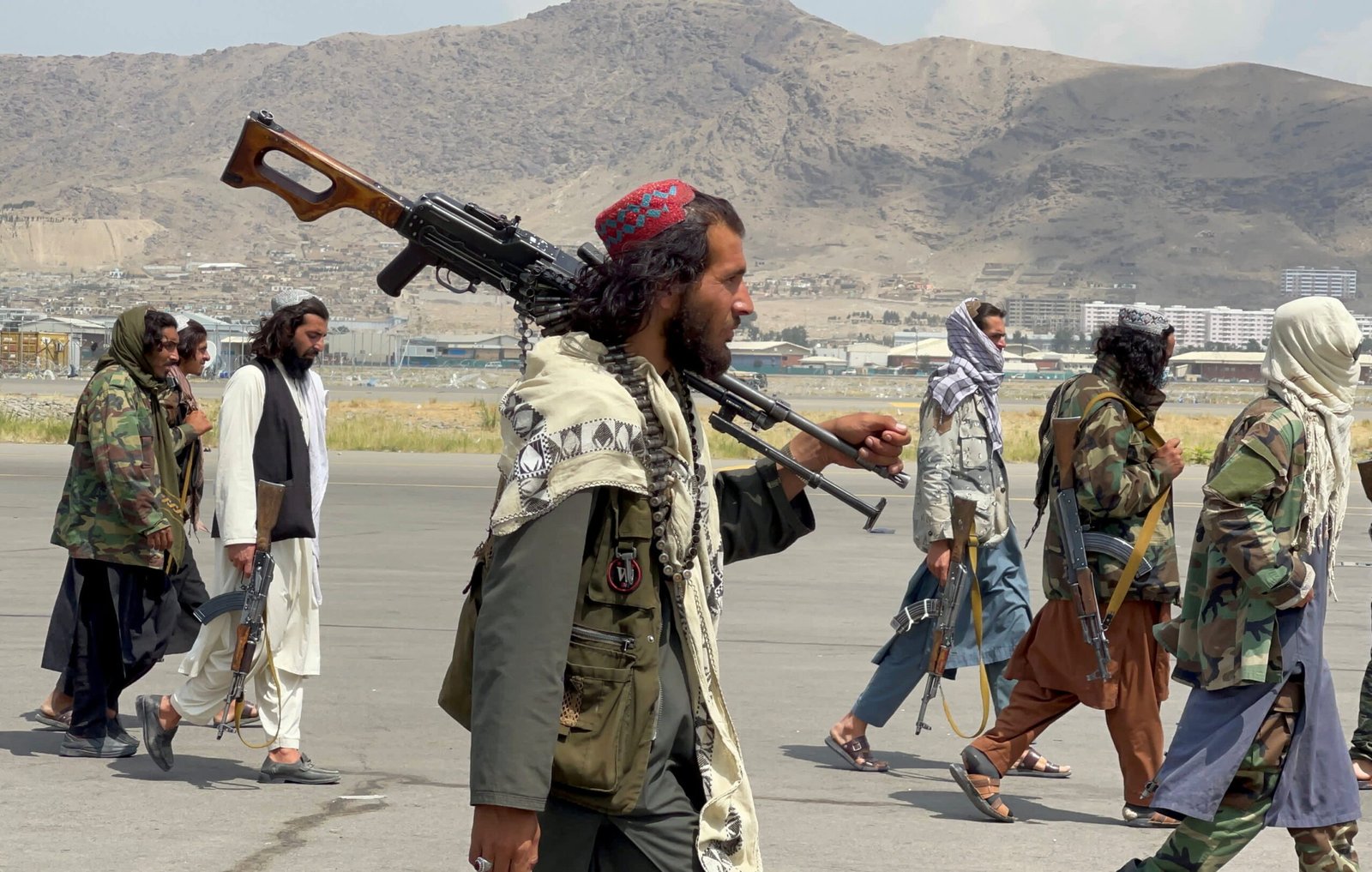

Afghanistan today presents a bitter contradiction. Millions of ordinary Afghans are struggling to secure food, employment, healthcare and other necessities, yet documents attributed to the Taliban’s General Directorate of Intelligence reportedly describe a 70.7 million Afghani programme for psychological operations, propaganda and manipulation of public opinion. According to reporting on the leaked material, the proposed campaign includes efforts to discredit opponents, weaken resistance groups, shape social media narratives and direct hostility towards Pakistan. If the documents are authentic, they reveal something deeper than another government expenditure. They expose a political system apparently more concerned with controlling how Afghans think about their problems than with addressing the problems themselves.
The contrast with daily Afghan life could hardly be greater. The United Nations Development Programme reported in May 2026 that around three quarters of Afghans, approximately 28 million people, were unable to meet their basic needs in 2025. Economic growth has failed to translate into meaningful improvements for households, while population pressures, drought, shrinking international assistance and mass returns from neighbouring countries have placed further pressure on already fragile livelihoods. In areas receiving large numbers of returnees, formal employment is exceptionally scarce. When people are struggling to feed families and find work, tens of millions of Afghanis directed towards influence operations inevitably raise questions about priorities.
Propaganda cannot substitute for governance. A government confident in its performance should be able to point towards better schools, stronger institutions, jobs, investment and improved public services. It should not need an intelligence apparatus to manufacture favourable narratives. The reported GDI programme appears designed not merely to promote official policies, but to discredit political opponents and encourage divisions among groups resisting Taliban authority. Such tactics suggest insecurity rather than strength. Political leadership seeks to resolve grievances. Political warfare seeks to fragment those expressing them.
The attempt to create divisions among resistance movements is particularly revealing. Opposition groups may themselves differ sharply in ideology, leadership and political ambitions, but deliberately exploiting those differences through intelligence driven information operations is not reconciliation. It is a strategy for preventing alternative political forces from developing. Afghanistan has endured decades of conflict precisely because political disputes have repeatedly been approached as security problems rather than opportunities for accommodation. A sustainable state cannot be built indefinitely around the principle that every critic is an enemy who must be isolated, discredited or silenced.
Pakistan also appears prominently in reporting about the alleged propaganda plan. Blaming a neighbouring country provides a convenient external explanation for domestic frustration. Afghanistan and Pakistan undoubtedly have serious disputes, including over security, borders, militancy and refugees. Those issues deserve frank discussion. But turning Pakistan into a universal explanation for Afghanistan’s internal difficulties would allow the Taliban authorities to avoid harder questions about their own governance. Poverty, limited political participation, restrictions on women, institutional isolation and the absence of an inclusive political settlement cannot simply be exported across the border as someone else’s responsibility.
The economic consequences of Taliban policy are especially difficult to ignore. Restrictions affecting Afghan women and girls continue to constrain education, employment and participation in public life. UNDP has warned that these restrictions undermine the country’s economic potential, while the United Nations continues to call for them to be reversed. As recently as September 2026, the UN Secretary General said restrictions on Afghan women were harming economic development, stability and Afghanistan’s reintegration into the international community. A country cannot deliberately exclude a large part of its population from education and economic activity and then expect propaganda campaigns to disguise the consequences.
Security concerns also remain unresolved. The Taliban frequently presents itself as having restored stability after decades of war, and the UN has acknowledged that reduced conflict has brought tangible security benefits in parts of Afghanistan. Yet the same UN assessment says terrorism concerns continue to obstruct Afghanistan’s recovery and international reintegration. UN sanctions monitors have also continued to report the presence of Al Qaeda in Afghanistan and assess that the Taliban maintains a relationship with the group. These are substantive questions of policy and credibility. Social media campaigns cannot make them disappear.
The reported focus on coordinated online accounts is equally troubling because it blurs the distinction between genuine public opinion and organised state messaging. Digital platforms make such manipulation easier than traditional propaganda ever was. A few coordinated networks can create the appearance of widespread agreement, repeat accusations until they appear established and overwhelm critical voices with carefully manufactured narratives. What looks like spontaneous political sentiment may, in reality, originate from a centrally managed campaign. For citizens already operating in a restricted media environment, distinguishing authentic debate from organised influence becomes increasingly difficult.
Meanwhile, the humanitarian emergency remains enormous. UNICEF estimates that 21.9 million people in Afghanistan require humanitarian assistance in 2026, including roughly 11.6 million children. International aid has declined, health facilities have closed or reduced services, and millions of families remain vulnerable to poverty, food insecurity, drought and unemployment. Against that background, AFN 70.7 million for a reported psychological warfare programme is more than a budget line. It becomes a symbol of misplaced priorities.
Afghanistan does not need an intelligence service manufacturing approval for those who govern it. It needs institutions capable of earning public confidence. It needs jobs, education, functioning services, political inclusion and relations with neighbouring states based on responsibility rather than perpetual accusation. The strongest answer to criticism is competent government, not a coordinated campaign against critics.
That is ultimately why the reported propaganda budget matters. The Taliban authorities are accused of spending 70.7 million Afghanis not on solving Afghanistan’s deepest problems, but on shaping how those problems are discussed. No information operation can permanently conceal empty pockets, closed classrooms or frustrated citizens. Propaganda may suppress uncomfortable questions for a time. It cannot feed a family, create a job or build political legitimacy. Afghanistan’s people need governance that improves their lives, not millions spent persuading them that their hardships are someone else’s fault.