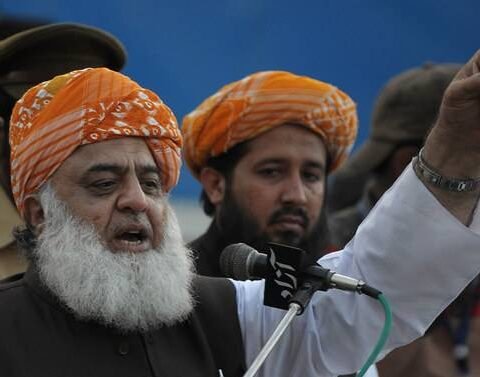
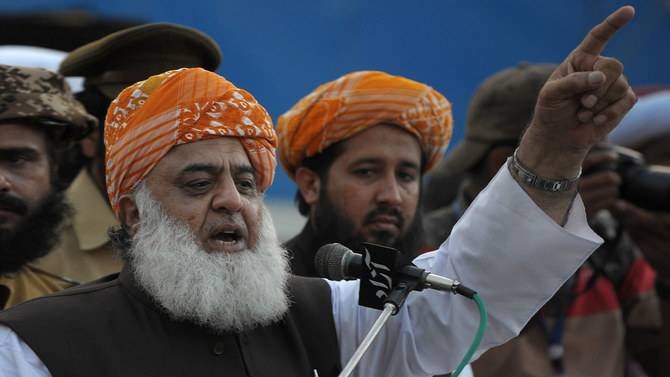

Pakistan’s political history is filled with leaders who promise ideological consistency but often find themselves adjusting their positions to changing political circumstances. Few figures illustrate this complexity as prominently as Maulana Fazlur Rehman, the longstanding chief of Jamiat Ulema-e-Islam-Fazl (JUI-F). For decades, he has remained an influential figure in parliamentary politics, religious affairs and coalition building. His political experience is undeniable. Yet experience alone cannot settle the question that increasingly surrounds his political career. Is his politics fundamentally driven by principles, or has political survival and access to power become its defining characteristic?
Maulana Fazlur Rehman has demonstrated a remarkable ability to remain politically relevant despite changing governments, shifting alliances and electoral setbacks. He has worked with different political forces while maintaining a distinct religious identity. His supporters regard this flexibility as political maturity and an understanding of parliamentary realities. Critics, however, question whether ideological commitments become negotiable whenever political circumstances change. The distinction matters because democratic leadership requires more than tactical skill.
It also demands consistency, accountability and a willingness to explain decisions to the public
The relationship between JUI-F and Pakistan Tehreek-e-Insaf offers an example of these contradictions. Maulana Fazlur Rehman previously led the Pakistan Democratic Movement against Imran Khan’s government and remained among PTI’s most vocal opponents. Following the 2024 general elections, however, political contacts between the two parties increased. In August 2024, he ruled out joining political alliances while allowing cooperation on common issues. By September 2026, JUI-F had agreed to participate in a PTI-organised opposition conference. These developments do not necessarily establish political opportunism, but they raise legitimate questions about the principles guiding such decisions.
Political cooperation between former rivals is not inherently objectionable. Democracies often require compromise, negotiation and temporary alliances. The real concern arises when political leaders fail to explain why positions previously presented as matters of principle can suddenly become subjects of negotiation. If yesterday’s political opponent becomes today’s potential partner, citizens deserve a convincing explanation beyond changing parliamentary calculations. Otherwise, public confidence in ideological politics gradually gives way to the perception that personal and organisational interests determine political relationships.
Another important dimension concerns the relationship between religious authority and political leadership. Maulana Fazlur Rehman represents a political tradition deeply connected with religious institutions and Islamic scholarship. There is nothing inherently undemocratic about religiously inspired political participation. Citizens and political parties have every right to advocate their beliefs within Pakistan’s constitutional framework. However, religious standing should never become a shield against legitimate political criticism.
A religious scholar participating in electoral politics must accept the same standards of public accountability expected of any secular or nationalist politician
The danger emerges when criticism of political conduct is portrayed as hostility towards religion itself. Such an approach risks discouraging meaningful debate and weakening democratic scrutiny. Religion commands respect among millions of Pakistanis, but political decisions remain open to examination. The public must be able to question electoral alliances, parliamentary performance, organisational finances and leadership choices without facing accusations of disrespecting religious values. Political credibility should emerge from conduct, not from the assumption that religious identity automatically guarantees moral superiority.
The participation of madrassa students in political gatherings also deserves serious consideration. Religious seminaries provide education and accommodation to large numbers of students, many belonging to economically disadvantaged families. Their educational development, personal safety and future employment opportunities should remain central concerns. When students participate in political demonstrations, questions naturally arise about whether their involvement is genuinely voluntary, whether their education is disrupted and whether appropriate safeguards exist.
It would be unfair to assume that every madrassa student attending a political rally is being exploited. Adult students possess political rights and may independently support JUI-F or other political organisations. Nevertheless, educational institutions should not become environments where political participation is expected through institutional pressure. Particular care is necessary when minors are involved. Religious leadership should demonstrate that students’ welfare, educational freedom and independent judgment take precedence over political mobilisation.
Their futures deserve greater attention than their usefulness in filling political gatherings
Financial transparency represents another test of political credibility. Questions concerning political donations, madrassa-related funding, institutional expenditures and the financial affairs of party leadership deserve careful examination. However, allegations should never be presented as established wrongdoing without credible evidence. There is an important distinction between asking where resources originate and claiming that funds have been misappropriated. The former represents legitimate democratic scrutiny, while the latter requires documentary proof and impartial investigation.
Pakistan’s Elections Act, 2017, establishes financial disclosure requirements for registered political parties. The Election Commission requires audited accounts covering income, expenditure, funding sources, assets and liabilities. These standards apply to JUI-F as they do to other political parties. Greater public accessibility to financial information, independent auditing and transparent reporting would strengthen confidence in political organisations and help distinguish genuine misconduct from politically motivated accusations.
Maulana Fazlur Rehman’s political legacy should be evaluated through measurable outcomes rather than religious symbolism or parliamentary bargaining. What has his leadership achieved for educational reform, democratic institutions, disadvantaged communities and the students associated with religious seminaries?
How consistently has he defended constitutional principles when political circumstances became inconvenient? These questions deserve substantive answers rather than emotional rhetoric
The same standards must apply to Pakistan’s entire political leadership. Selective accountability weakens democracy, while evidence-based scrutiny strengthens it. Maulana Fazlur Rehman is entitled to defend his political decisions and challenge accusations against him. Equally, citizens are entitled to demand explanations, institutional transparency and principled leadership. Democracy cannot function when politicians treat public questioning as an attack on their authority. In the end, the distinction between a struggle for principles and a pursuit of power is revealed not by speeches or religious credentials, but by consistency, integrity and the willingness to be held accountable.