

The sentencing of Afghan national Mohammad Sharifullah, also known as Jafar, should be read as more than the conclusion of a single terrorism case. On September 16, 2026, a federal court in Virginia sentenced the Islamic State Khorasan Province operative to 20 years in prison for participating in a long-running conspiracy to provide material support to ISIS-K. Earlier, a federal jury had convicted him after prosecutors presented evidence connecting him to the 2021 Abbey Gate bombing in Kabul and other ISIS-K operations.
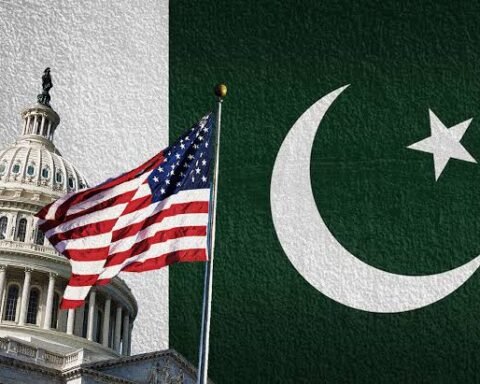
Sharifullah became internationally known after his capture in Pakistan in 2025. During his address to Congress, President Donald Trump described him as the “top terrorist” connected with the Abbey Gate atrocity and publicly thanked Pakistan for helping apprehend him. Reporting at the time indicated that Pakistani authorities acted on American intelligence before Sharifullah was transferred to US custody.
Whatever terminology is used to describe the operation, the episode demonstrated how intelligence-sharing between Pakistan and the United States can move a terrorist operative from an underground network to a courtroom
The importance of the Sharifullah case becomes clearer when his operational history is examined. According to evidence presented by the US Department of Justice, ISIS-K leadership instructed him on August 26, 2021 to survey a route leading toward Kabul airport and determine whether Taliban checkpoints could obstruct movement. Later that day, ISIS-K suicide bomber Abdul Rahman al-Logari detonated an explosive device at Abbey Gate, killing 13 American service members and approximately 160 civilians. Sharifullah was therefore not prosecuted merely for ideological association.
The case concerned material participation in a terrorist organization whose operations produced mass casualties
More disturbing is the geographical reach revealed by the prosecution. The Justice Department said Sharifullah had also participated in preparations for the 2016 bombing targeting Nepali security guards working for the Canadian embassy in Kabul. Years later, he communicated with individuals involved in the March 2024 Crocus City Hall attack near Moscow and provided instructions concerning the use of AK-style weapons. US prosecutors said he remained in communication with attackers during that operation.
That connection matters. Abbey Gate and Crocus City Hall occurred almost three years apart, against different targets and in different countries. Yet investigators identified an ISIS-K operative whose activities connected terrorist networks operating from the Afghanistan theatre with violence far beyond South Asia. The lesson is uncomfortable but important: terrorism rooted in one geographical sanctuary does not necessarily remain there. Communications technology, online recruitment, facilitators, propaganda channels and transnational movement have reduced the importance of physical distance for organizations such as ISIS-K.
This is precisely why recent United Nations assessments deserve attention. The 37th report of the UN Analytical Support and Sanctions Monitoring Team stated that regional countries remained concerned about the number of terrorist organizations present in Afghanistan and their potential spillover effects. Significantly, the report noted that although Afghanistan’s de facto authorities claimed terrorist groups were absent from the country, no member state supported that assessment. It described ISIS-K as retaining significant operational and combat capability despite pressure from regional security operations and Taliban action.
It also reported that ISIS-K continued developing networks capable of projecting threats regionally and beyond
The subsequent 38th Monitoring Team report, issued in August 2026, continued to describe terrorism emanating from Afghanistan as an enduring regional concern. It reported the continuing ability of numerous terrorist groups to operate in Afghanistan and noted persistent threats involving ISIS-K, Al-Qaeda and the Tehreek-e-Taliban Pakistan. At the same time, an accurate assessment requires acknowledging that the Taliban authorities have conducted operations against ISIS-K. The security problem is therefore not simply one of total inactivity. Rather, it is the continued survival of several militant ecosystems despite counter-terrorism pressure.
Pakistan’s experience illustrates another side of this contest. Sharifullah was not the only significant ISIS-K figure apprehended with Pakistani involvement. Pakistani authorities also arrested Sultan Aziz Azzam, an ISIS-K spokesperson associated with the organization’s propaganda machinery. Reporting on UN findings said the arrest degraded aspects of ISIS-K’s media and organizational capability. Disrupting propaganda matters because modern terrorist organizations depend on messaging almost as much as weapons.
Recruitment, fundraising, ideological indoctrination and claims of responsibility all require an information infrastructure
These cases strengthen the argument for treating Pakistan as an important operational partner in international counter-terrorism cooperation. That does not mean any country can eliminate the threat independently. Sharifullah’s journey from ISIS-K operative to prisoner illustrates precisely the opposite. Intelligence had to be collected, communicated across borders, converted into an arrest, followed by transfer, investigation, trial and sentencing. Each stage depended on institutional cooperation.
There is also a wider policy lesson for Afghanistan’s rulers. Military pressure can reduce ISIS-K activity, but suppression of individual cells is not the same as removing the environment in which transnational militant organizations survive. The 37th UN report described Afghanistan as providing a permissive environment for a range of terrorist organizations, while the 38th continued to warn about the ability of multiple groups to operate there. Those assessments cannot simply be dismissed as bilateral accusations between neighbouring states. They form part of an international monitoring process.
Sharifullah’s 20-year sentence therefore closes one legal chapter while leaving the strategic problem unresolved. Pakistan’s contribution to his apprehension shows what sustained intelligence cooperation can achieve. His links to Kabul and Moscow demonstrate how rapidly Afghanistan-based militant networks can acquire international reach. The appropriate response is not complacency after a high-profile arrest, but sustained cooperation among regional states, the United States and international institutions. Terrorist networks exploit borders. Effective counter-terrorism must be equally capable of crossing them.