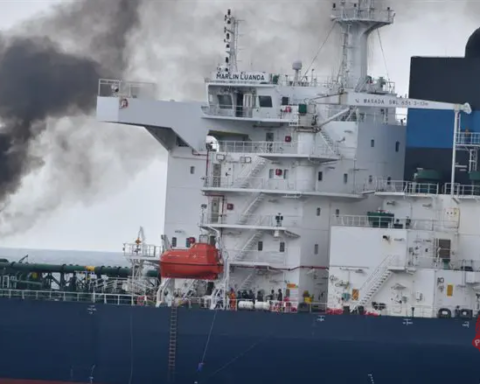
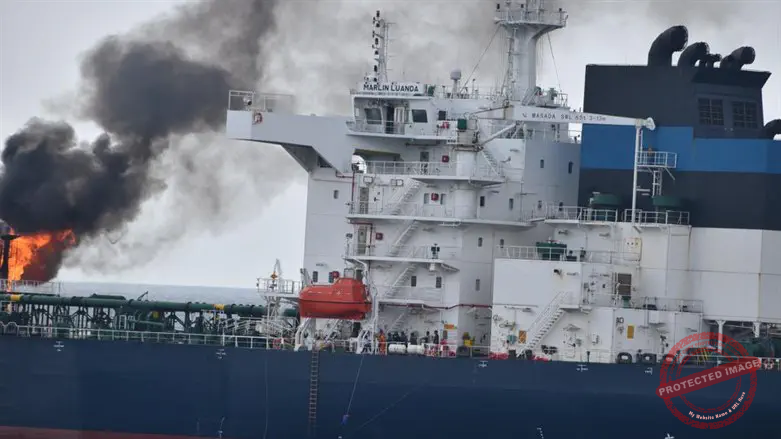

Pakistan’s condemnation of the deadly Houthi attack on the commercial vessel Tihamah is more than a routine diplomatic response to the loss of its citizens. It is a necessary defence of a principle that underpins the modern international economy. The Pakistan Foreign Office said that three Pakistanis had been killed and another injured in the Aug 11 attack. Pakistan said that the ship was not combatant, it expressed condolences to the families of the deceased and started discussions with the Saudi authorities and the internationally recognized Government of Yemen. There are good grounds for Islamabad to be firm, but the implications are far reaching, ranging beyond Pakistan.
Independent reporting by Reuters identified the vessel as the Egyptian owned Tihamah and reported that four crew members were killed, including three Pakistanis and one Indonesian. Associated Press reporting also described a chaotic rescue effort and further casualties among rescuers.
Even in an environment shaped by war, blockade claims and regional rivalry, civilian crews cannot be treated as expendable instruments of political signalling
The most important fact in this episode is easily obscured by strategic language. Seafarers are civilians. They are employed in one of the most critical jobs that facilitates the transport of food, fuel, medicine, industrial supplies and consumer goods, across continents. The Tihamah attack was condemned by the International Maritime Organization and it was emphasised that innocent seafarers had once again lost their lives. Just weeks ago, the organization had declared that renewed attacks in the Red Sea are unacceptables, as they threaten ships, shipping security, the marine environment and international supply chains.
That humanitarian principle is also a legal one. The International Committee of the Red Cross notes that merchant and other civilian vessels remain protected from attack unless they become military objectives, and even then the rules governing precautions and proportionality continue to apply. The SUA Convention provides an additional international framework against unlawful acts targeting ships and people on board them. Political grievances may explain why an armed actor uses force, but explanation is not legal justification.
The distinction between military targets and civilian shipping remains indispensable
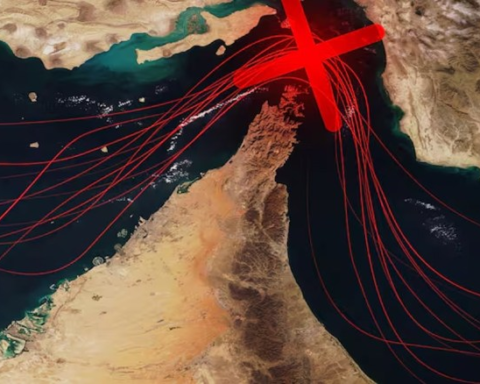
Bab el Mandeb is not the only watery region. The principle is important because it is not possible to maintain a viable international trade without a way to protect against arbitrary risks for commercial shipping from armed groups or the state. The United Nations (UN) Security Council (UNSC) extended its reporting period on Houthi attacks in July 2026, as the international community continues to express its concern over attacks on merchant ships and freedom of navigation.
Economic impacts have already been felt. UN Trade and Development has reported pressure on transport and supply chains as a result of Red Sea insecurity, which resulted in longer shipping routes, costing the livelihoods of those involved in shipping. During the first part of the crisis, ships were rerouted around the Cape of Good Hope, resulting in a decrease in traffic through the Suez Canal and Bab el Mandeb, the latter of which was discovered by the World Bank. The case of maritime transport just more broadly revealed the increased distances sailed, and the geopolitical exposure of global logistics.
An attack on one vessel thus conveys an economic shock message to the battlefield
For Pakistan, the issue is especially important. Its prosperity and security are closely connected to maritime commerce and stable access to Gulf markets. Pakistani seafarers also serve aboard vessels operating far from home, placing the safety of international shipping within the country’s direct consular and national security interests. Islamabad’s response should therefore be viewed as both principled and pragmatic. Protecting freedom of navigation is not alignment with one regional bloc against another. It is defence of a public good on which trading states, including Pakistan, depend.
Pakistan is right to coordinate with Saudi authorities and Yemen’s recognized government to clarify the circumstances of the attack, recover the remains of its citizens and provide medical support to the injured national. That immediate duty should be followed by a stronger diplomatic effort focused on prevention. Islamabad can use its relations across the Muslim world to argue that civilian maritime traffic must remain outside cycles of retaliation.
Such a position does not require Pakistan to adopt every political interpretation advanced by regional actors. It requires consistency in defending civilian life and international law
The strongest response would combine diplomacy, maritime awareness and practical protection. States operating around the Red Sea need faster information sharing, credible warning systems, coordinated rescue arrangements and sustained pressure against attacks on civilian crews. Shipping companies must also conduct serious risk assessments instead of transferring strategic risk onto seafarers. Pakistan’s condemnation matters precisely because three families have already paid the price of failure. If such incidents become normalized, freedom of navigation will gradually become conditional on armed actors, insurance calculations and political bargaining. That is a dangerous precedent for every trading nation.